When you ask an AI a question, you are not simply invoking a clever text generator. You are triggering a stack of software and hardware decisions that reach from the app interface down to chips, network fabrics, storage systems, and power infrastructure. In practical terms, every prompt is a small economic event: it consumes compute, touches data, and creates demand for infrastructure that increasingly looks more like a utility than a consumer software feature.
That matters because the next phase of AI will not be decided only by model quality. It will also be shaped by latency, cost per query, retrieval accuracy, data governance, and whether companies can afford to run these systems at scale. The question users ask is simple. The system behind the answer is not.
The prompt is only the start
The visible act of asking an AI a question hides several invisible steps. First, the user’s text is tokenized, meaning it is broken into chunks the model can process. Those tokens are then passed through a model architecture that estimates what should come next based on patterns learned during training. If the system is a basic chatbot, the model generates a response directly. If it is a more capable product, the request may be routed through additional layers: search, retrieval from internal documents, tool use, safety filters, memory systems, and sometimes a second model that checks the first.
That routing is not just product design; it is infrastructure design. A consumer-facing app might answer in one shot, while an enterprise system may first search a knowledge base, re-rank results, inspect the user’s permissions, and only then call a large language model. Each extra step improves usefulness in some cases, but it also adds latency, complexity, and cost.
In plain English: the “answer” you see may be the last move in a much longer decision tree.
Inference is where the bill gets paid
The industry often talks about model training because it is dramatic: months of computation on large clusters of GPUs, massive datasets, and eye-popping capital outlays. But for most deployed AI services, the recurring cost center is inference—the process of running a trained model to produce an answer.
Inference economics are especially important because every prompt uses real hardware in real time. The model must load parameters, process input, generate output token by token, and do so fast enough that users do not abandon the session. This is where GPUs, high-bandwidth memory, interconnects, and data-center design become central business variables rather than background technology.
For providers, the key question is not simply whether a model is powerful. It is whether that power can be delivered at a price that makes sense. A highly capable model that is too slow, too expensive, or too power-hungry may remain a demo while a more efficient system becomes the product that actually scales.
Why response quality depends on the pipeline around the model
Many users assume model quality is determined only by parameter count or benchmark performance. In production, however, response quality often depends on the surrounding pipeline. Retrieval-augmented generation, or RAG, is one of the most important examples. Instead of relying solely on what the model memorized during training, the system can retrieve relevant documents from a database and feed them into the prompt.
This changes the behavior of the AI in ways that matter commercially. A customer-support assistant can reference current policies instead of outdated training data. A legal or compliance tool can cite internal documents. A manufacturing assistant can pull maintenance manuals or spare-parts instructions rather than improvising from general knowledge.
But RAG also introduces new failure modes. If retrieval returns the wrong documents, the model may answer confidently using irrelevant context. If permissions are poorly designed, sensitive information can leak across users or departments. If the vector database or search layer is misconfigured, the system may miss the exact facts the business depends on. In other words, the AI can be as good as the information plumbing feeding it.
Latency is an invisible product feature
Users notice speed before they notice architecture. A response that arrives in two seconds feels conversational; one that takes ten seconds feels broken, even if it is more accurate. That means latency is not a minor technical metric. It is a core part of the user experience and, by extension, adoption.
Latency comes from multiple sources: network travel, queuing delays on overloaded GPUs, retrieval from databases, safety checks, tool execution, and the model’s own generation speed. Larger models often reason better but respond more slowly and cost more per token. Smaller models can be faster and cheaper but may struggle on complex tasks. This is why many deployed systems now use model routing: simple queries are sent to efficient models, while harder ones are escalated to larger systems.
That routing logic has business significance. It lets companies control spend while preserving quality where it matters. It also raises a strategic question for vendors: the winner is not always the largest model, but the one that can deliver useful answers reliably at acceptable cost.
Safety checks are not just policy theater
Before an AI answers, many systems run the prompt and the output through safety layers. These can look for self-harm content, illegal instructions, regulated advice, personal data, or attempts to bypass guardrails. Some systems also classify whether the request should be answered at all or should be reframed into a safer response.
This matters because the industry is no longer operating in a vacuum. AI systems are being deployed into customer service, healthcare-adjacent workflows, education, finance, coding, and public-sector environments. In each of those settings, a bad answer is not just a user inconvenience. It can become a legal, reputational, or operational problem.
Safety layers, however, are not free. They can block legitimate requests, add latency, and create new forms of model brittleness. A system that is overly cautious may frustrate users and reduce trust. A system that is too permissive may create downstream liability. The design challenge is to make the guardrails specific enough to be useful without making the product feel inert.
The infrastructure stack behind one answer
From the outside, the AI experience looks like software. Under the hood, it is a tightly coupled chain of infrastructure decisions. The model runs on accelerators such as NVIDIA GPUs or other AI chips. Those accelerators depend on high-speed networking to move data between servers. They sit in data centers that need power delivery, cooling systems, and enough grid capacity to support dense, continuous workloads.
This is one reason AI has become such an important industrial and policy story. The marginal cost of a prompt may be tiny to a user, but the aggregate demand across millions of users can be enormous. That demand drives capex for cloud providers, colocation operators, chipmakers, power utilities, and grid equipment vendors. It also creates pressure on permitting, water usage, local energy markets, and the timing of new generation projects.
When a company launches a popular AI feature, it is not merely shipping an app update. It may be committing to a new class of infrastructure demand. That has implications for procurement, long-term power contracts, cloud budgets, and the geographic footprint of compute.
Why enterprise buyers care more than consumers do
For consumer users, the central issue is often convenience. For enterprises, the central issue is control. Companies want to know where data is stored, whether prompts are logged, which model handled the request, whether outputs can be audited, and how the system behaves when it cannot answer confidently.
That is why enterprise AI often looks more conservative than the public version. Companies may insist on private connectors to internal systems, identity and access controls, document-level permissions, audit trails, and human review for sensitive outputs. They may also prefer smaller specialized models for specific tasks rather than one giant model for everything.
These decisions are not just IT hygiene. They affect labor, productivity, and vendor lock-in. The more an enterprise builds workflows around one AI stack, the harder it becomes to switch providers later. That makes model selection, governance, and infrastructure architecture strategic choices, not procurement footnotes.
Policy will increasingly follow the prompt
As AI becomes embedded in everyday workflows, regulators will care less about the abstract notion of intelligence and more about how these systems operate in practice. Questions about data retention, model transparency, copyrighted training data, output provenance, consumer protection, and workplace monitoring all become more concrete when every interaction is a logged, billable event.
There is also a broader macroeconomic angle. If AI systems become the interface through which people search, write, code, and make decisions, then control over the stack becomes a concentration-of-power issue. A few companies may end up mediating access to critical information flows, with consequences for competition, labor markets, and public discourse.
That is why the seemingly narrow question of “what happens when I ask an AI a question?” now sits at the intersection of chip supply, cloud capacity, energy policy, enterprise software, and digital governance. The answer begins with a prompt, but the stakes extend far beyond the text box.
The real takeaway
The most useful way to think about AI is not as a single model but as a service stack. The prompt triggers inference. Inference consumes scarce compute. Retrieval, routing, and safety systems shape the result. Data centers and power infrastructure make the whole thing possible. Business value depends on keeping that stack fast, reliable, and affordable.
For readers, the important shift is to stop treating AI answers as magic. They are engineered outputs produced by a system with real costs, real constraints, and real policy exposure. That makes every question you ask part of a much larger industrial machine.
Sources and further reading
- NVIDIA and other accelerator vendor technical documentation on inference and GPU architecture
- OpenAI, Anthropic, and Google DeepMind product and safety documentation
- U.S. National Institute of Standards and Technology (NIST) AI Risk Management Framework
- European Union AI Act text and implementation guidance
- Cloud provider architecture papers on retrieval-augmented generation, model routing, and inference optimization
- Data center and grid planning materials from utility regulators and regional transmission organizations
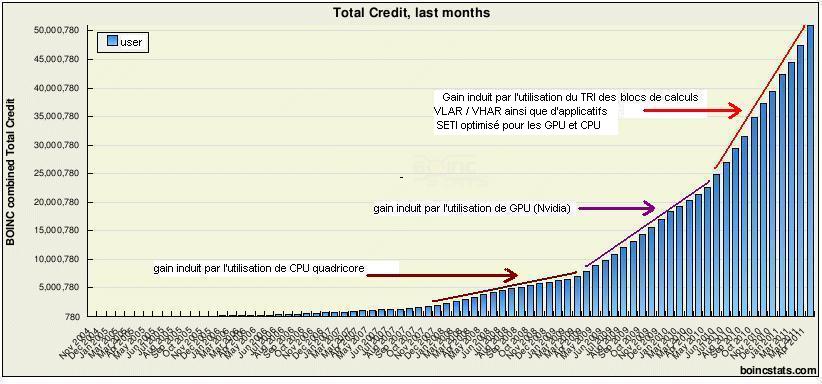
Image: Gain induit CPU- GPU- TRI2.JPG | printed screen of my own statistique from http://boincstats.com/stats/boinc_user_graph.php?pr=bo&id=1210 | License: CC BY-SA 4.0 | Source: Wikimedia | https://commons.wikimedia.org/wiki/File:Gain_induit_CPU-_GPU-_TRI2.JPG