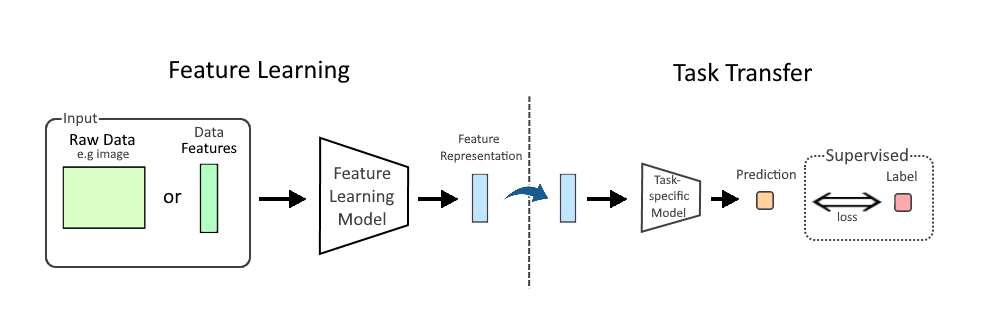
Deep learning in plain English
Deep learning is a way of teaching computers to recognize patterns by stacking many layers of simple mathematical operations. Instead of programming every rule by hand, engineers show a model large amounts of data and let it adjust itself until it can make useful predictions. That is the basic idea behind today’s most capable image classifiers, speech systems, recommendation engines, and large language models.
For beginners, the most important thing to understand is that deep learning is not magic and it is not intelligence in the human sense. It is a statistical system trained to reduce error on a specific task. It can be remarkably effective when the data, compute, and architecture are right. It can also be brittle, expensive, and opaque. Those tradeoffs matter for anyone trying to deploy AI in the real world.
Why “deep” matters
The word deep refers to the number of layers in a neural network. A shallow model might learn a direct relationship between inputs and outputs. A deep model learns in stages. Earlier layers detect simple features, while later layers combine those features into more abstract representations. In computer vision, for example, early layers may detect edges or textures, while deeper layers help identify shapes, objects, or faces.
This layered structure is what gives deep learning its power. It can learn from raw data in ways older machine learning systems often could not. That is one reason deep learning became dominant in image recognition, natural language processing, and speech recognition. It handles messy, high-dimensional data better than many handcrafted approaches.
The basic building block: the neural network
A neural network is made up of nodes, or neurons, connected by weighted links. Each neuron takes in numbers, performs a calculation, and passes the result to the next layer. The weights determine how strongly one input influences another. During training, the network adjusts those weights to improve its performance.
The process is best understood as error correction at scale. The model makes a prediction, compares that prediction with the correct answer, and updates its weights to reduce the gap. This happens many times, across many examples. Over time, the network learns which patterns matter.
A simple example is spam detection. A model might be shown thousands of emails labeled as spam or not spam. It may learn that certain words, sender patterns, formatting cues, and link structures correlate with unwanted mail. It does not “know” spam the way a person does, but it can still become highly accurate at sorting it.
Training versus inference
Beginners often lump all AI work together, but in practice there are two separate phases: training and inference.
Training is when the model learns from data. This is the expensive part. It requires large datasets, heavy computation, and careful tuning. Most of the deep learning industry’s attention on GPUs, accelerators, memory bandwidth, and data center power consumption comes from this stage.
Inference is when the trained model is used to make predictions on new data. A photo app classifying images, a chatbot generating responses, or an industrial vision system spotting defects on a factory line are all doing inference. Inference can be less computationally intense than training, but at scale it becomes a major infrastructure problem of its own.
That distinction has practical implications. Companies may spend months training a model in a centralized data center, then deploy it across millions of devices or requests where latency, cost, and energy efficiency become the main concern.
Why deep learning runs on GPUs
Deep learning relies on a kind of math that is highly parallelizable. Neural networks perform huge numbers of matrix multiplications and related operations, and those operations can be broken into many smaller pieces. That makes GPUs, and increasingly specialized AI accelerators, a natural fit.
Central processing units, or CPUs, are designed for general-purpose control and branching logic. GPUs were built to handle many similar operations at once, which is exactly what deep learning workloads require. Over time, chip makers and cloud providers have built entire stacks around this reality, from CUDA software and tensor cores to high-bandwidth memory and networking fabrics that keep clusters fed with data.
This is why deep learning is not just a software story. It is also a semiconductor story, a rack-scale infrastructure story, and a power and cooling story. The model may be abstract, but the machinery beneath it is very physical.
What the model is really learning
Deep learning systems are often described as if they “understand” meaning, but a more accurate description is that they learn statistical relationships in data. They are good at capturing patterns that repeat often enough to be useful. They are less reliable when the situation changes, the data is scarce, or the task requires grounded reasoning beyond pattern matching.
That limitation matters. A model trained on past examples can struggle with rare events, edge cases, or environments that differ from its training data. In industrial settings, this is one reason teams still need human oversight, robust testing, and fallback systems. A visually impressive model is not necessarily a safe one.
For this reason, deployment is often as important as model quality. A system that performs well in a lab may fail when sensors drift, lighting changes, product mixes vary, or users ask questions in unexpected ways. Deep learning works best when organizations treat it as one part of a larger engineered system, not a self-contained oracle.
Common architectures: from images to language
Different deep learning tasks use different architectures. The oldest widely used family is the convolutional neural network, or CNN, which is effective for images because it looks for local patterns and spatial structure. CNNs helped drive early breakthroughs in computer vision and industrial inspection.
Recurrent neural networks, or RNNs, were once common for sequences such as speech and text, though they have largely been displaced by newer approaches in many applications.
Today, the most important architecture in generative AI is the transformer. Transformers process data by paying attention to relationships between tokens, whether those tokens are words, image patches, or other representations. Their flexibility helped them become the backbone of modern large language models and a growing range of multimodal systems.
For beginners, the main takeaway is that architecture shapes behavior. The model’s structure influences what kind of data it handles well, how expensive it is to train, and how it will scale.
Why deep learning became so dominant
Deep learning rose because three things came together: more data, more compute, and better algorithms. The internet produced massive datasets. GPUs and distributed training made it possible to process them. And improvements in optimization and model design made large networks practical.
That combination created a powerful flywheel. Better models encouraged more investment in training infrastructure, which enabled larger models, which in turn delivered better results on important tasks. The result is the current AI stack, where frontier progress is tightly linked to access to compute, advanced memory, and efficient networking.
For industry readers, this is the key strategic point: deep learning has transformed AI from a niche software discipline into an industrial system with supply-chain dependencies. Training capacity now depends on chip availability, energy contracts, cooling design, and cluster utilization, not just algorithmic ambition.
Limits, costs, and failure modes
Deep learning has real constraints. It often requires enormous labeled datasets or expensive self-supervised training runs. It can be difficult to interpret. It may amplify bias present in the data. And it can be costly to deploy at scale, especially when models are large and request volumes are high.
There are also operational costs that are easy to underestimate. Training jobs can occupy scarce GPU clusters for weeks. Inference fleets require steady power and low latency. Data pipelines need governance. Model updates need monitoring for drift and regressions. In other words, deep learning introduces an ongoing systems burden, not just an initial development effort.
That is why some use cases are a better fit than others. Tasks with abundant data and measurable outcomes—inspection, search ranking, forecasting, language generation, fraud detection—tend to benefit most. Problems requiring strict correctness, small datasets, or clear causal reasoning may need different approaches, or at least hybrid systems with rules, retrieval, and human review.
What beginners should focus on first
If you are new to deep learning, start with the training loop: input data goes in, the model makes a prediction, the error is measured, and the weights are updated. That simple cycle is the foundation of everything else. Once that clicks, the rest becomes easier to place.
Then learn the distinction between model size, data quality, and compute. Bigger models are not automatically better. Bad data can swamp architectural elegance. And without enough compute, a promising design may never reach useful performance.
Finally, keep the real-world deployment context in view. A deep learning model is only valuable if it can be run reliably, affordably, and safely in the environment where it is needed. That is where the economics of chips, cloud capacity, memory bandwidth, and energy use become part of the AI story.
The bottom line
Deep learning is best understood as a layered pattern-learning system trained on examples and powered by large-scale computation. Its strengths are clear: it excels at tasks with rich data and repeating structure, and it has unlocked major advances in vision, speech, search, and language. Its weaknesses are equally real: it can be expensive, opaque, and fragile outside its training distribution.
For Teranova readers, the most important lesson is that deep learning is not just a software breakthrough. It is a systems-level technology that links algorithms to semiconductors, data centers, energy infrastructure, and deployment economics. That is why understanding the basics matters. It is the shortest path to understanding where modern AI actually runs—and what it costs to keep it running.
Sources and further reading
- Deep Learning, Ian Goodfellow, Yoshua Bengio, and Aaron Courville
- Stanford CS231n: Convolutional Neural Networks for Visual Recognition
- Google Research papers on transformers and attention mechanisms
- OpenAI, Anthropic, and Meta AI technical overviews and system cards, for deployment and model behavior context
- NVIDIA CUDA documentation and tensor core architecture materials
Image: Feature Learning Diagram.png | Own work | License: CC BY-SA 4.0 | Source: Wikimedia | https://commons.wikimedia.org/wiki/File:Feature_Learning_Diagram.png