Google’s place in AI is still strategic, not cosmetic
The easiest mistake to make about Google in AI is to judge it by product choreography alone: a model launch, a demo, a chatbot update, a naming change. That misses the actual source of the company’s leverage. Google still matters because it owns more of the AI stack than most of its competitors can realistically control, from custom silicon to cloud distribution to the software layers that tie training and inference together.
In a market that increasingly rewards access to compute, power, and distribution as much as model quality, that matters. Google is not just another consumer-facing AI company trying to keep up with a faster startup cycle. It is one of the few firms with the scale to influence supply chains, shape pricing, and absorb the capital costs of building AI infrastructure that can run for years, not quarters.
That does not mean Google is unchallenged. OpenAI, Anthropic, Meta, Microsoft, Amazon, and a growing field of model and infrastructure specialists have all narrowed the distance in different ways. But the competitive frame is different when a company can design its own chips, run them in its own data centers, sell them through its own cloud, and distribute the results across Search, Workspace, Android, and YouTube. In AI, that is not redundancy. It is strategic insulation.
Compute is the real moat, and Google helps build its own
AI today is constrained less by ambition than by physical reality. Training frontier models and serving them at scale requires enormous clusters of accelerators, sophisticated networking, cooling systems, power delivery, and supply agreements that often stretch across multiple vendors and geographies. Nvidia remains the dominant supplier of general-purpose AI accelerators, but Google’s long-running investment in Tensor Processing Units, or TPUs, gives it an important escape hatch from total dependence on merchant silicon.
TPUs matter for two reasons. First, they let Google optimize hardware for its own workload patterns, which is especially valuable in inference, where latency, throughput, and cost per token often matter more than raw benchmark theater. Second, they create bargaining power. Even if Google still buys plenty of external chips—and it does, across its cloud and internal operations—it is not forced to build every AI roadmap around someone else’s shipping cadence, pricing structure, and allocation decisions.
This is a bigger deal than it sounds. The AI boom has turned accelerators into a strategic input closer to oil than software. If you depend entirely on one supplier, you inherit that supplier’s constraints. If you have an in-house path for meaningful workloads, you can balance performance against cost, adjust deployment strategies, and reserve scarce external hardware for jobs that truly need it. That is a real competitive advantage, even if it rarely shows up in a product keynote.
There is also a supply-chain angle here. Custom silicon is not a magic wand; it still requires access to advanced fabrication, advanced packaging, memory, networking gear, and enough electrical and thermal infrastructure to keep the system alive. But Google’s scale gives it a way to negotiate across those layers more effectively than a startup or mid-sized cloud provider. It can commit to long-horizon infrastructure planning in a way that smaller players cannot. In practice, that means it can keep building when the market gets tight, which is often when strategic advantages matter most.
Google Cloud turns AI into a business, not just a demo
If silicon is the hidden backbone, Google Cloud is the commercial delivery system. AI has created a peculiar market where model capability alone is not enough. Enterprises want reliable access, data governance, security controls, integration with existing systems, and predictable economics. Google can package its models and infrastructure into a platform that enterprise buyers can actually procure.
That matters because the AI business is increasingly a margin story. Training costs are high, but inference—the act of serving models to users—can become even more important over time as usage scales. The companies that win are not necessarily the ones with the flashiest demos. They are the ones that can deliver enough performance at a cost structure customers will accept.
Google has an important opportunity here. It can align model development with cloud economics, using its own infrastructure to lower internal costs and then selling similar capabilities outward. This is not a trivial loop. A company that owns the stack can learn from its own deployment patterns, tune systems for efficiency, and offer customers a more integrated service than a vendor stitching together third-party pieces.
That said, Google Cloud is not in a simple dominant position. Amazon Web Services has the broadest enterprise footprint, Microsoft has an unusually strong distribution advantage through Azure and its partnership ecosystem, and both are aggressively investing in AI. But Google’s AI story becomes much more durable when viewed through cloud economics: it can compete not just on model quality, but on the unit economics of serving those models at scale.
Search, Workspace, Android, and YouTube give Google a distribution edge few rivals can match
Distribution is often underestimated because it looks less dramatic than model launches. In reality, it is one of Google’s strongest assets. The company already sits in front of billions of users through Search, Chrome, Android, YouTube, Maps, Gmail, Docs, Sheets, and other products that are deeply embedded in daily work and consumer behavior.
That gives Google an enormous advantage in product iteration. It can introduce AI features into existing workflows rather than asking users to adopt an entirely new platform. In enterprise software, that often matters more than raw intelligence. A model that saves five minutes inside Gmail or helps a team draft documents inside Workspace may be more commercially valuable than a more impressive benchmark score elsewhere.
This is also where Google’s pricing strategy becomes important. The company can experiment with bundling AI features into products users already pay for, or into services where AI may improve retention and raise the value of a subscription. That changes the economics of AI adoption. Instead of charging only for model access, Google can monetize uplift across search behavior, cloud usage, productivity subscriptions, and advertising-adjacent services. For customers, that can be convenient. For competitors, it is difficult to match without a similarly broad product surface.
There is a catch, though: distribution is only an advantage if the product experience is strong enough not to erode trust. Google has to balance speed with accuracy, especially in consumer search and workplace tools where errors are highly visible. The company’s scale makes mistakes more consequential. If AI features degrade the core experience, the distribution edge can become a liability. That tension is central to Google’s AI execution.
The company’s real challenge is not relevance. It is coherence.
Google is not struggling to be part of AI. It is struggling, at times, to make its AI strategy feel unified. That is the difference between having assets and deploying them cleanly.
On one side, Google has deep technical credibility: research talent, infrastructure, silicon, and experience operating huge systems. On the other, it has a product portfolio so broad that AI integration can feel uneven across surfaces. The company must decide where AI should be embedded quietly, where it should be the headline feature, and where it should remain infrastructure behind the scenes. Those decisions affect pricing, user trust, and long-term platform control.
This is especially true because the AI market is shifting fast from novelty to procurement. In the early phase, everyone wanted a model demo. Now buyers care about token costs, latency, data residency, model selection, uptime, GPU or TPU availability, and whether a vendor can support production workloads without constant heroics. That is a better environment for Google than the hype cycle alone would suggest. It rewards companies that can actually operate at industrial scale.
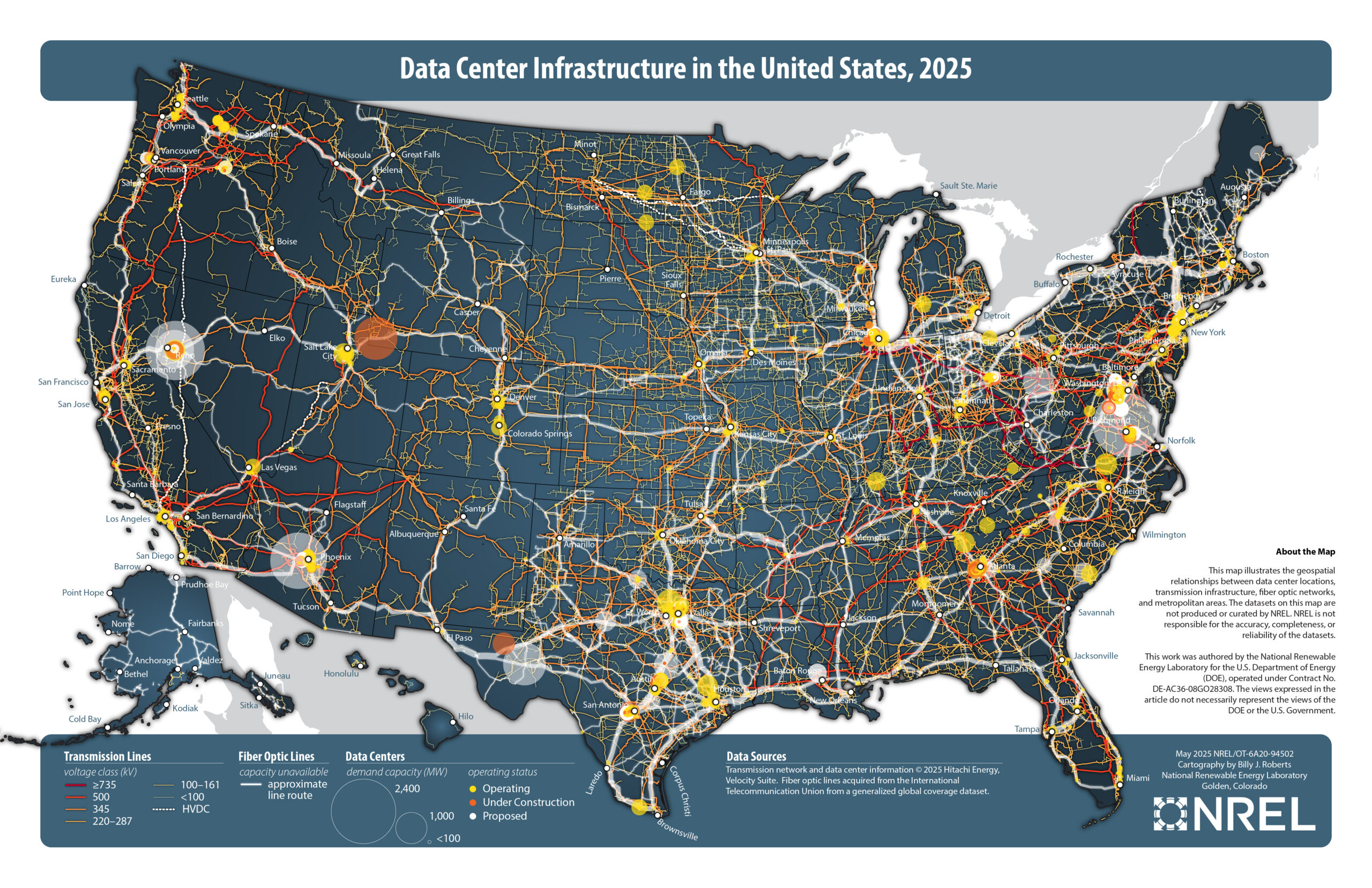
It also exposes the places where Google must keep investing. Data centers need more power, more efficient cooling, more robust networking, and better utilization. Chip design has to keep pace with model evolution. Cloud sales teams have to translate technical strength into enterprise adoption. Consumer products have to improve without breaking the habits that made them valuable in the first place. None of that is optional.
What Google’s position says about the AI industry
Google still matters because AI is becoming an infrastructure business, not just a software race. The companies with the deepest control over compute, power, packaging, cloud distribution, and customer access will be the ones best positioned to survive the next phase. Google has pieces of that stack that most competitors would love to own.
That does not guarantee victory. The AI market is large enough for multiple winners, and Google has already shown that incumbency alone does not prevent strategic drift. But it does mean the company’s importance cannot be measured by whether it is the loudest voice in the room. It should be measured by whether it can keep building the systems everyone else depends on.
That is why Google still matters. Not because it always feels like the most exciting AI company, but because it remains one of the few companies with the industrial depth to shape what AI becomes when the demos end and the deployment begins.
Sources and further reading
- Google Alphabet annual reports and earnings materials
- Google Cloud product documentation and AI platform announcements
- Google Research and TPU technical overviews
- Public materials from Microsoft, Amazon Web Services, and Nvidia for competitive context
- Enterprise procurement and cloud pricing documentation, subject to editorial verification
Image: Data center infrastructure in the United States.jpg | https://research-hub.nrel.gov/en/publications/data-center-infrastructure-in-the-united-states-2025-map | License: Public domain | Source: Wikimedia | https://commons.wikimedia.org/wiki/File:Data_center_infrastructure_in_the_United_States.jpg