By 2030, the robotics companies that matter most will not necessarily be the ones with the most viral demos. They will be the ones that can do the harder, less glamorous work: source motors, sensors, batteries, and semiconductors at scale; ship reliable systems into messy real-world environments; and make the economics work for customers who measure return on investment in months, not years.
That distinction matters because robotics is not one market. It is a stack of markets with very different constraints. Industrial arms live or die on uptime and integration. Warehouse robots depend on fleet software and deployment speed. Humanoids face a brutal combination of mechanical complexity, safety requirements, and cost reduction. Service robots must win trust in public environments. In each case, the winners will be defined by execution more than vision.
Below is a strategy-first look at the robotics companies to watch in 2030, with an emphasis on what makes each one technically or strategically distinctive.
1. ABB: The industrial incumbent with the deepest manufacturing moat
ABB remains one of the clearest examples of a robotics company whose advantage is not a single product but a system: manufacturing scale, installed base, global service infrastructure, and long relationships with industrial buyers. In robotics, that combination is difficult to replicate. Industrial customers want predictable uptime, spare parts availability, and integration with existing factory software. ABB’s moat is built around those boring but essential requirements.
The company’s strategic strength is that it sells into environments where reliability is worth more than novelty. Its robots are embedded in automotive, electronics, and general manufacturing lines that cannot afford experimental failures. That gives ABB recurring pull-through in software, maintenance, and upgrades. The challenge is price pressure, especially as Chinese competitors continue to push lower-cost industrial automation. ABB’s response has been to move further into higher-value software, vision, and connected systems rather than compete only on hardware price.
For 2030, ABB is less a moonshot and more a benchmark: if the market is still growing, ABB should remain one of the few firms capable of monetizing that growth at scale.
2. FANUC: The precision player with a conservative, durable model
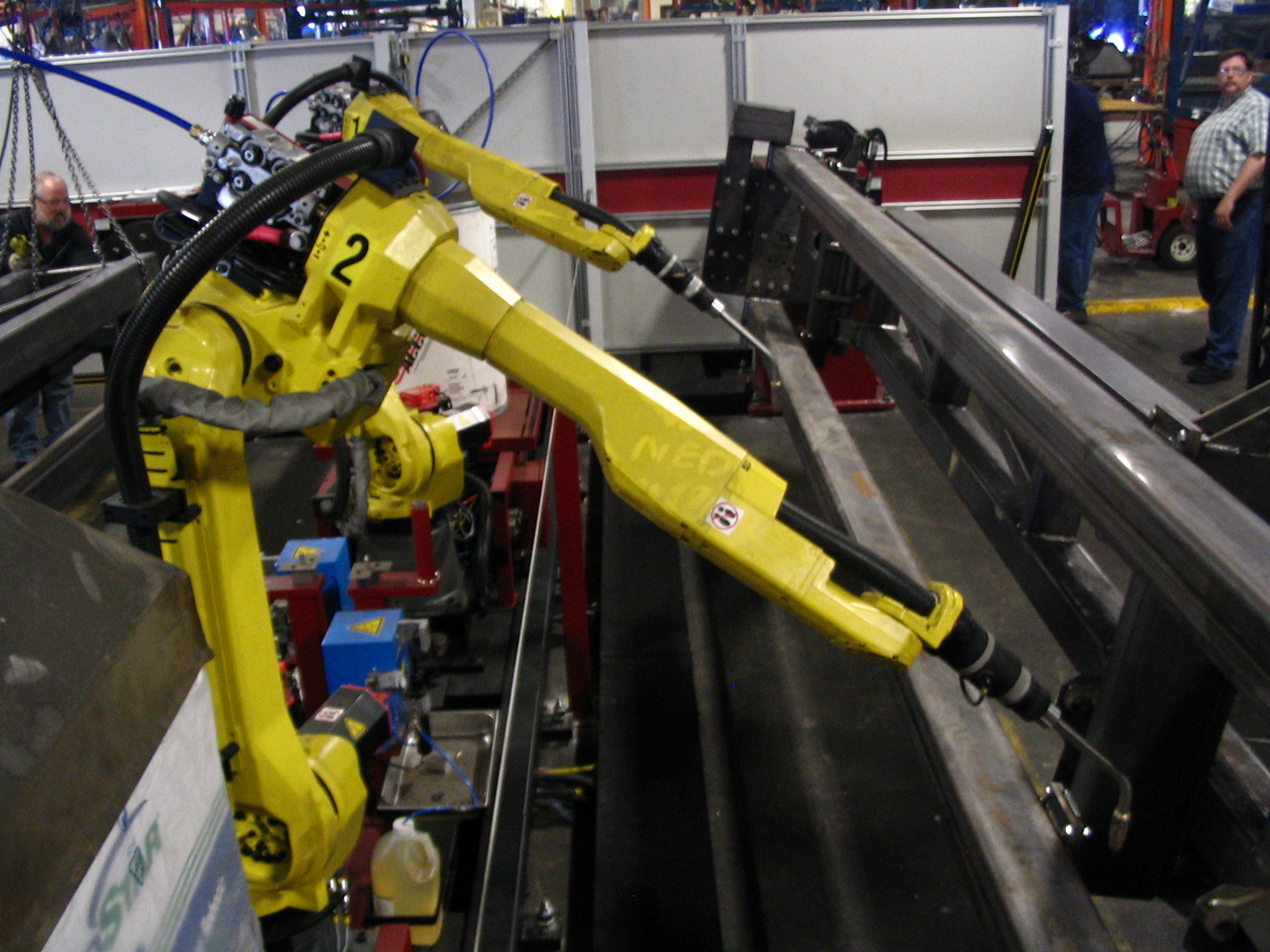
FANUC has spent decades turning factory automation into a repeatable business. Its strength is not just robot arms, but the ecosystem around them: control systems, service support, and a reputation for durability. In a sector that often gets distracted by futuristic use cases, FANUC’s strategy is grounded in the economics of industrial customers who want machines that simply keep running.
What makes FANUC distinctive is its operational discipline. The company is famously conservative in capital allocation and product development, but that caution is part of the strategy. It helps maintain margins and avoids overcommitting to unproven product categories. The risk, of course, is that the next wave of robotics may reward faster software iteration and more flexible machine learning integration than FANUC traditionally prefers.
Still, if industrial robotics remains centered on repeatable tasks, FANUC’s supply chain discipline and installed-base economics make it one of the most resilient players to watch.
3. Yaskawa: The motion-control specialist that benefits from hidden infrastructure
Yaskawa is often grouped with other industrial robotics companies, but its real value lies in motion control and automation infrastructure. That is strategically important because robotics is only partly about the robot itself; it is also about the electronics, drives, and control systems that make precise movement possible. Yaskawa’s portfolio gives it exposure across that stack.
This is a good place to look for long-term strength because motion control is sticky. Once a factory standardizes on a supplier’s ecosystem, switching becomes costly and risky. Yaskawa can benefit from this lock-in, particularly in Asia, where manufacturing density and automation investment remain high. The company’s challenge is that the market is increasingly asking for software-defined flexibility, not just deterministic motion. To stay competitive by 2030, Yaskawa will need to keep expanding its digital and integration capabilities while defending its hardware reliability advantage.
4. Amazon Robotics: The warehouse company that treats robotics as operations, not spectacle
Amazon Robotics may be the most important robotics operation in the world that does not sell robotics as a standalone product. Its advantage is not a brand pitch; it is scale, data, and operational feedback. Amazon has spent years turning warehouse automation into a logistics discipline, and that matters because warehouse robotics is one of the few segments where deployment speed and software iteration can create compounding gains.
What makes Amazon distinctive is the way it integrates robotics into supply chain economics. Robots are not there to impress; they are there to reduce cycle times, increase throughput, and improve labor efficiency across a massive fulfillment network. That internal use case gives Amazon an unusually rich testing ground for navigation systems, fleet coordination, and warehouse orchestration software.
For outside observers, the key signal is not whether Amazon shows off new robot models. It is whether its systems continue to reduce cost per package handled. If that metric improves, it strengthens the case that warehouse robotics will be one of the most scalable automation categories by 2030.
5. Boston Dynamics: The autonomy company with the strongest brand and one of the hardest problems
Boston Dynamics is still the company most closely associated with advanced robot mobility, and that brand carries real strategic value. But the deeper story is that its technical work sits at the frontier of locomotion, manipulation, and perception. Those are extremely hard problems. A robot that can walk is impressive; a robot that can walk, perceive, and do useful work economically in dynamic environments is far more consequential.
Boston Dynamics’ distinctive advantage is engineering sophistication. Its machines have pushed the state of the art in balance, movement, and physical interaction. The company’s challenge is commercialization. The robotics market does not pay for elegance alone. It pays for systems that can survive deployment, be maintained at acceptable cost, and deliver a measurable labor or operational advantage.
By 2030, Boston Dynamics will be judged less by demos and more by whether it has found durable product-market fit in inspection, logistics, or industrial use cases where mobility is a real advantage. If it does, it will be one of the most influential robotics companies of the decade.
6. Figure AI: The humanoid challenger built around software leverage and capital intensity
Figure AI represents the most ambitious end of robotics investing: humanoid systems designed to operate in environments built for humans. The thesis is powerful. If robots can be made to fit existing warehouses, factories, and service spaces without major retrofitting, deployment barriers come down dramatically. But the execution burden is enormous.
Figure’s strategic appeal lies in software leverage. A humanoid platform can potentially address many tasks if perception, dexterity, and control improve enough. That creates a potentially large market. The catch is cost. Humanoids require expensive components, robust actuation, advanced sensors, and substantial compute. The companies that win this category will need not just better AI, but better sourcing, assembly, and unit economics.
That is why supply chain execution is central to Figure’s story. If the company can secure reliable access to motors, battery systems, custom parts, and the compute needed for training and inference, it can move from concept to platform. If not, the market remains a lab demonstration.
7. Agility Robotics: The most commercially disciplined humanoid bet
If Figure embodies ambition, Agility Robotics represents a more commercially cautious approach. Its systems have been tied closely to logistics and warehouse workflows, which is important because the fastest path to scale in robotics is usually through constrained, high-value tasks rather than general-purpose autonomy. Agility’s distinction is that it appears to treat humanoids as labor tools first and technological statements second.
That matters for pricing and execution. A robot that can do one or two painful tasks reliably in a warehouse can be easier to sell than one that promises broad human-like flexibility but arrives with a high price tag and uncertain support model. Agility’s ability to keep the product focused, manufacturable, and serviceable may prove more valuable than being first to impress investors.
By 2030, the companies that survive in humanoids may be the ones that behave less like moonshot labs and more like industrial systems businesses. Agility fits that pattern better than most.
8. Tesla Optimus: The platform play with unmatched manufacturing ambition
Tesla’s Optimus effort deserves attention not because it is the most mature robot today, but because Tesla has one of the strongest manufacturing and cost-down cultures in advanced hardware. That is a meaningful advantage in robotics, where many promising systems fail when they move from prototype to mass production.
The real strategic question is whether Tesla can translate its experience in batteries, motors, power electronics, AI, and manufacturing automation into a humanoid platform with real utility. If it can, the company could do something few others can: use manufacturing scale to force robot prices down over time. That would matter more than technical elegance alone.
Still, Optimus faces the same hard constraints as every humanoid program: dexterity, reliability, training data, safety, and field service. Tesla’s edge is not that those problems are easy. It is that Tesla has a corporate culture built around attacking hard hardware problems at scale.
The real filter for 2030: Can the business survive contact with the factory floor?
The robotics companies most likely to matter in 2030 share a few traits. They have access to supply chains that can support production, not just prototypes. They are building around workflows where the customer can measure savings clearly. And they understand that the robotics business is as much about service, integration, and uptime as it is about machine learning.
That is why the next five years will probably punish generic “AI robot” narratives. The winners will not simply have better models or more compelling demos. They will have disciplined execution: lower bill of materials, better manufacturing partnerships, stronger maintenance systems, and products that fit real budgets.
If you want to know which robotics companies will matter in 2030, watch for three things: who can actually source components at scale, who can price into a real deployment model, and who can keep robots working after the press release fades. In robotics, that is where the future is decided.
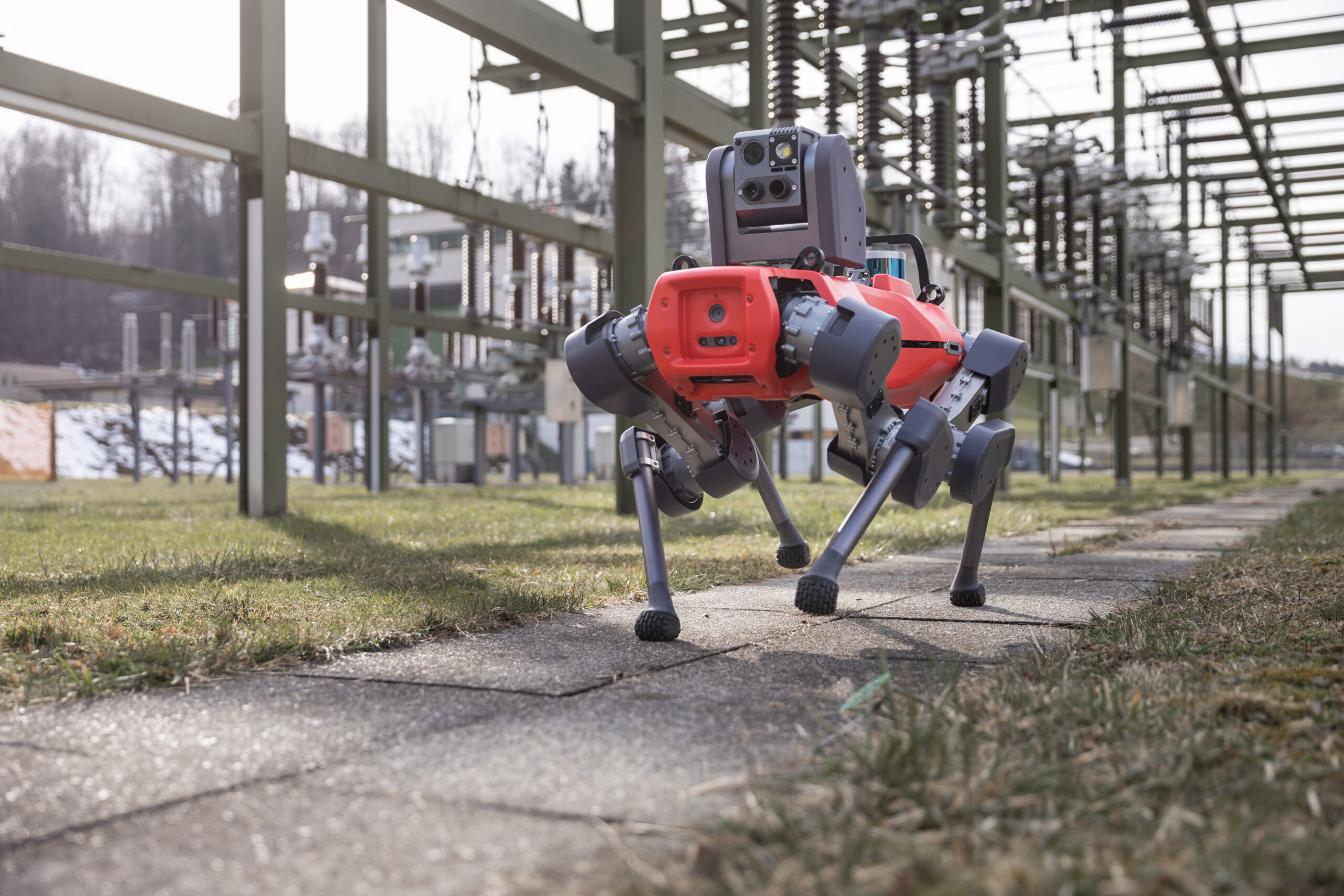
Image: Anymal-robot-inspection-power-grid.jpg | Own work | License: CC BY-SA 4.0 | Source: Wikimedia | https://commons.wikimedia.org/wiki/File:Anymal-robot-inspection-power-grid.jpg