The real challenge begins after training
Training a model gets the headlines, but deployment is where AI becomes a product. Once a model is moved out of a notebook or research cluster and into a live service, the problem changes shape. The question is no longer simply whether the model is accurate enough. It is whether it can answer fast enough, serve enough users, stay within budget, recover from failures, and keep doing all of that as traffic rises or falls minute by minute.
That is why AI deployment at scale is best understood as an infrastructure problem. Large models pull on almost every layer of the stack: accelerator choice, memory capacity, interconnect bandwidth, storage, scheduling, observability, security, and power. In practice, the company shipping the model is also designing a small computing system around it.
For smaller applications, the service might run on a single GPU or a modest cluster. At larger scale, especially with generative AI, the system often becomes a distributed serving pipeline. Requests must be routed, inputs tokenized, prompts and context assembled, the model executed, outputs filtered, and results returned within a latency target that users can tolerate. Every step adds overhead.
Inference is a different workload than training
One reason deployment is harder than it first appears: training and inference stress hardware in different ways. Training is a throughput-heavy, batch-oriented process. Inference is a latency-sensitive, user-facing service. A model that trains efficiently on a large cluster may still perform poorly when serving one prompt at a time under real-world traffic.
This distinction matters because it shapes the hardware and software decisions behind deployment. Training can sometimes tolerate long jobs, dense checkpointing, and aggressive batching. Inference has to balance many requests at once without making users wait too long. That pushes teams toward optimized runtimes, careful batching strategies, caching, quantization, and, in some cases, model distillation or smaller specialized variants.
For large language models, the constraint is often not just compute but memory and data movement. The model weights must fit somewhere accessible enough to respond quickly, and the system must repeatedly move tokens through the network between host memory, accelerator memory, and sometimes across multiple accelerators. In other words, the bottleneck is frequently not the arithmetic itself but getting the right data to the right chip fast enough.
Why GPUs are only part of the story
GPU selection matters, but it is not the whole deployment equation. Modern AI serving depends on the entire platform around the accelerator: HBM capacity, PCIe or NVLink-style interconnects, network fabric, storage architecture, and the orchestration layer that decides where each workload runs. A powerful GPU underperforms if the rest of the system cannot feed it.
That is why large-scale deployments often use clusters designed specifically for AI inference and not just general-purpose cloud compute. The economics are straightforward: idle accelerators are expensive, and overprovisioning can turn a promising product into a cost center. But underprovisioning is just as risky, because users will notice latency spikes, timeouts, or degraded output quality. The operating model has to absorb demand swings without wasting too much expensive silicon.
In many deployments, companies mix accelerator types. High-end GPUs may handle the most demanding model tiers, while smaller or more efficient chips serve simpler tasks, routing, retrieval, classification, or post-processing. The result is a tiered system, not a single uniform model server. This is one of the biggest practical shifts in AI infrastructure: teams increasingly need a portfolio approach to compute.
Serving stacks turn models into products
A deployed AI service usually sits on top of a serving stack that manages requests from end to end. That stack may include an API gateway, authentication, rate limiting, a model router, a prompt management layer, a vector database or retrieval system, the inference runtime, safety filters, and logging. Each component matters because each one can become a source of latency, failure, or cost.
Retrieval-augmented generation, or RAG, is a good example. Instead of relying solely on model parameters, the application fetches relevant external documents and supplies them as context at request time. That improves freshness and can reduce hallucinations, but it also introduces new operational requirements: indexing pipelines, embedding generation, document freshness policies, and storage systems that can serve relevant content quickly enough to preserve the user experience.
At scale, prompt handling also becomes an engineering discipline. Teams need versioning, template management, regression testing, and guardrails against prompt injection or malformed input. If the prompt changes, the model behavior changes. That means application logic is partly code and partly system design.
Orchestration decides how efficiently the system breathes
Once traffic grows, orchestration becomes one of the most important layers in the stack. Kubernetes often plays a role, but the exact tooling varies. The core problem is similar everywhere: match incoming demand to available compute while respecting latency targets, placement constraints, and failure recovery.
Good orchestration keeps GPUs busy without overwhelming them. It also decides when to scale up, when to drain nodes for maintenance, how to isolate tenants, and how to spread workloads across zones or data centers. In multi-tenant environments, this becomes a balancing act between efficiency and reliability. One noisy workload should not starve another. One failed node should not take down an entire service.
For organizations serving multiple AI products, routing becomes especially important. The system may send simple requests to a lighter model and reserve the biggest model only for hard cases. That saves money and reduces load without forcing every query through the most expensive path. This kind of dynamic routing is increasingly central to real-world deployments.
Cost is not an afterthought; it is the architecture
At scale, AI deployment economics are inseparable from system design. Accelerator time is expensive, power is expensive, cooling is expensive, and bandwidth is expensive. So every optimization has a financial dimension. A slightly faster runtime may reduce the number of GPUs needed. Better batching may improve throughput. Quantization may let a model fit on a smaller device. Caching may reduce repeated work on common prompts.
The basic tradeoff is clear: higher quality models tend to cost more to serve. But “quality” is not one number. For many applications, the right target is not the largest possible model; it is the smallest model that meets user expectations on accuracy, latency, and safety. That is why many teams spend as much time on model selection and inference optimization as they did on training.
There is also a hard physical limit. Data centers are power-constrained, not just chip-constrained. As AI demand grows, deployment planning increasingly depends on available megawatts, cooling design, and utility timelines. For some operators, the bottleneck is no longer procurement alone but whether the site can actually deliver enough power to the rack. This is one reason AI deployment is now tied to energy infrastructure, not just software engineering.
Reliability and observability keep the model usable
A deployed model can degrade in ways that are easy to miss if the team only tracks average accuracy. Real systems need observability: latency histograms, throughput, error rates, token counts, GPU utilization, memory pressure, queue depth, timeout frequency, and model-output quality signals. Without these, a service can appear healthy while quietly getting slower, more expensive, or less reliable.
Monitoring also helps detect model drift. User behavior changes. Input distributions shift. External data changes. Even if the model itself stays frozen, the environment around it does not. A model that worked well during testing may behave differently once real users begin asking broader, messier questions.
That is why production AI usually includes rollback plans, canary releases, and A/B testing. Teams often deploy a new model to a small slice of traffic first, compare behavior against a baseline, and expand only if the results are acceptable. This is standard software practice, but with AI it is more complicated because model behavior is probabilistic rather than deterministic.
Security and governance are now core deployment requirements
As models move into production, they become part of the organization’s security surface. Access controls, secrets management, audit logs, data retention policies, and content filtering all matter. Enterprises also need to think about who can call the model, what data the model can see, where that data is stored, and whether responses can leak sensitive information.
Prompt injection and data exfiltration are especially relevant for retrieval-based systems and agentic workflows. If a model can browse internal documents or invoke tools, the risk profile expands. Governance cannot be bolted on after launch; it has to be embedded in the deployment architecture.
Regulatory pressure is also rising. Depending on jurisdiction and use case, companies may need to document model behavior, data lineage, and human oversight. The exact requirements vary and should be checked against current law and policy guidance during editorial review, especially for deployments in healthcare, finance, employment, or public-sector settings.
What smart deployment teams optimize first
The most effective teams usually focus on a few practical priorities:
- Choose the right model tier. Not every task needs the most capable model.
- Optimize the inference path. Batching, caching, quantization, and routing can materially change unit economics.
- Design for failure. Assume nodes, networks, and dependencies will fail and build graceful fallbacks.
- Measure real usage. Track latency, cost, and quality together, not separately.
- Plan for power and capacity. Compute constraints are increasingly physical as well as digital.
In other words, deployment is not just “put the model on a server.” It is a production system spanning chips, software, operations, and policy. The winners will not necessarily be the organizations with the largest models. They will be the ones that can run the right models reliably, economically, and safely under real traffic.
Sources and further reading
For editorial verification, consult current documentation from NVIDIA on inference and GPU architecture, Google Cloud and AWS guidance on model serving, Kubernetes documentation on orchestration, MLPerf Inference benchmarks, and recent papers or technical blogs on quantization, caching, and retrieval-augmented generation. For policy review, check the latest guidance from the EU AI Act materials, NIST AI RMF, and relevant national data protection authorities.
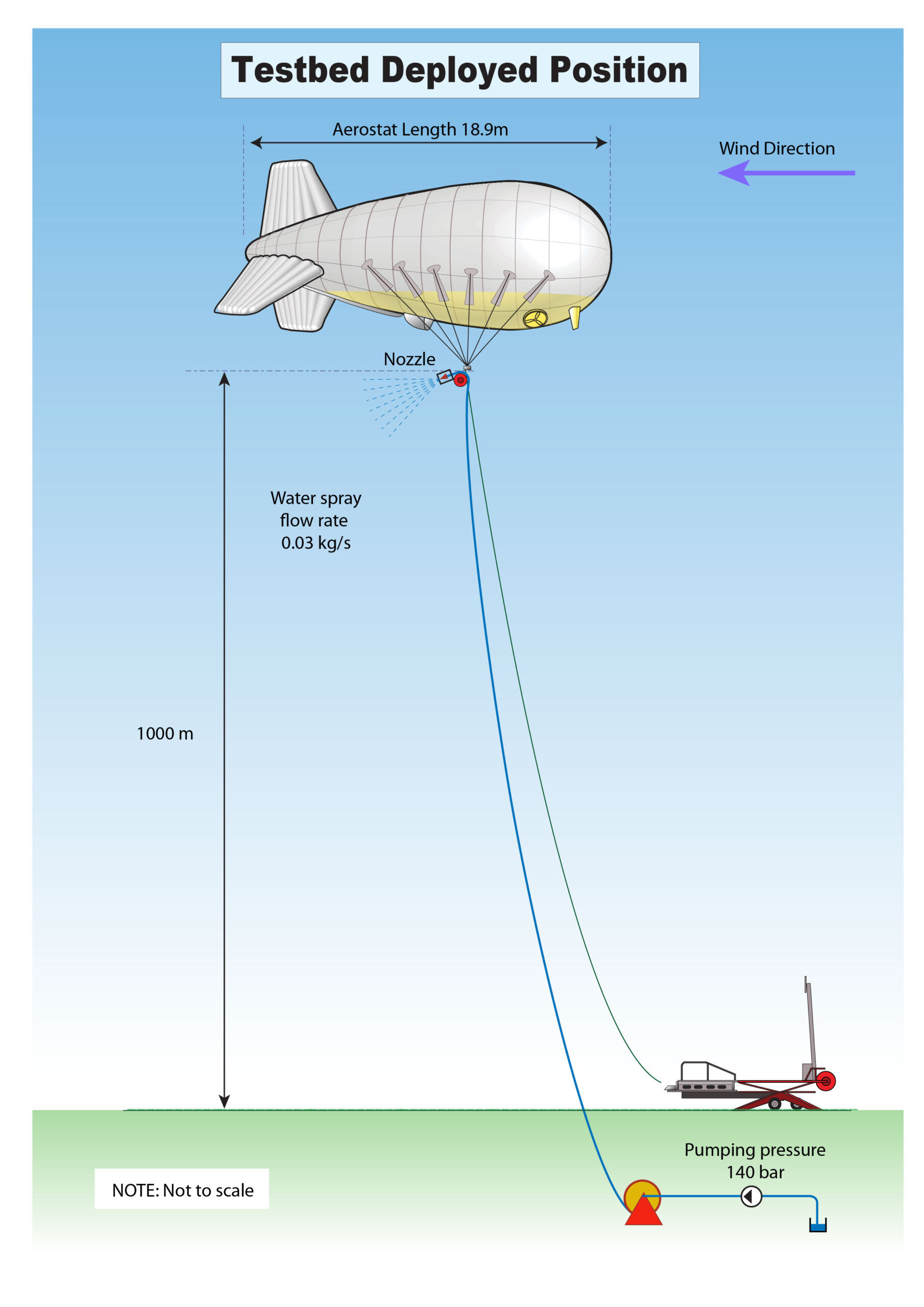
Image: SPICE TESTBED – DEPLOYED POSITION.jpg | Own work – see also Stilgoe J, Watson M, Kuo K (2013) Public Engagement with Biotechnologies Offers Lessons for the Governance of Geoengineering Research and Beyond. PLoS Biol 11(11): e1001707. doi:10.1371/journal.pbio.1001707 | License: CC BY 2.5 | Source: Wikimedia | https://commons.wikimedia.org/wiki/File:SPICE_TESTBED_-_DEPLOYED_POSITION.jpg