Robotics is becoming warehouse infrastructure, not just a gadget
Warehouse robotics has moved past the novelty phase. In modern fulfillment centers, robots are increasingly part of the building’s core operating system: they move goods, sort parcels, shuttle shelves, and in some cases assist with picking and packing. The operational goal is not simply to replace people. It is to make warehouses faster, more predictable, and less dependent on manual travel time—the unproductive walking, driving, and searching that consumes a surprising share of warehouse labor.
That shift matters because warehouses are under constant pressure from e-commerce demand, labor volatility, and the economics of same-day and next-day delivery. The more orders that need to be processed with tight cutoffs, the more a warehouse behaves like a high-throughput factory. Robotics fits that reality because it can turn a sprawling floor into a coordinated flow system, with software deciding what moves, when it moves, and where it should go next.
But the real transformation is not just mechanical. It is architectural. Robotics changes how facilities are laid out, how inventory is stored, how software schedules work, and how capital spending gets justified. The winners are not necessarily the warehouses with the most robots. They are the ones that can integrate automation into a coherent operating model.
The main robotics systems in play
Not all warehouse robots do the same job. The category includes several distinct systems, each with its own economics and deployment constraints.
Autonomous mobile robots (AMRs) move carts, shelves, totes, or finished parcels across the warehouse floor. Unlike fixed conveyors, AMRs can be re-routed in software as demand shifts. They are especially useful in dense fulfillment environments where order profiles change frequently.
Automated storage and retrieval systems (AS/RS) use vertical storage structures, shuttles, cranes, or cube-based designs to store and retrieve inventory with high density. These systems reduce floor space requirements and can dramatically improve inventory access speed, but they usually require more upfront construction planning than mobile systems.
Robotic picking systems use computer vision, grippers, suction tools, and motion planning to handle individual items. This is the hardest part of warehouse automation because products vary wildly in shape, packaging, fragility, and weight. Picking is where software, sensing, and mechanical dexterity collide.
Sortation and palletizing robots handle repeatable tasks such as organizing parcels by destination, stacking cases, or building outbound loads. These applications are often easier to automate because the objects are more uniform and the workflows more structured.
The practical distinction is simple: the more variable the item and the more uncertain the environment, the harder the robotics problem becomes.
Why warehouses are automating now
The push toward robotics is rooted in operational economics. Warehouses are labor-intensive, and labor is expensive not just in hourly wages, but in recruiting, training, turnover, and seasonal staffing. High-volume fulfillment centers also face a persistent productivity problem: people are often paid to move rather than to decide.
Robots reduce that waste by absorbing repetitive travel and handling tasks. An automated system can keep moving for long shifts, operate with stable throughput, and report its own status in real time. That makes forecasting easier, because managers can plan around machine availability instead of depending entirely on workforce scheduling.
Robotics is also being pulled forward by the structure of modern commerce. Retailers and logistics operators increasingly need to handle smaller, more frequent orders rather than large pallet shipments. That creates a high mix of SKUs, more picking complexity, and tighter accuracy requirements. In that environment, software-directed material handling is often more valuable than raw speed alone.
There is a less visible driver too: buildings themselves are expensive. In many markets, adding labor indefinitely is harder than extracting more throughput from the same footprint. Robots are attractive when they help a warehouse do more with less space, especially where industrial real estate is tight or costly.
The systems challenge: robotics only works when the warehouse is redesigned around it
One of the most common misconceptions about warehouse robotics is that it can be dropped into an existing facility like a piece of office software. In practice, successful deployments usually require process redesign. Robots do not merely automate the old workflow; they force the warehouse to become more legible to machines.
That means inventory must be standardized, barcode or vision systems must be reliable, aisle widths may need to be adjusted, and exception handling must be designed in advance. The warehouse floor, in other words, has to become a controlled environment. Even when systems are mobile and flexible, they still depend on a clean digital map, dependable wireless coverage, and robust integration with warehouse management systems.
This integration layer is where many projects succeed or fail. A robot fleet is only as useful as the software that assigns tasks, manages traffic, tracks inventory, and escalates problems. If the warehouse management system does not communicate cleanly with the robotics stack, automation can create a new layer of complexity rather than removing one.
Then there is uptime. Conveyors, sensors, charging stations, navigation systems, and fleet software all need maintenance. A warehouse that becomes dependent on automation must plan for redundancy, service contracts, spare parts, and failover procedures. The technology may look autonomous on the floor, but the operation behind it is deeply dependent on engineering discipline.
Where the economics are strongest
Robotics tends to make the most sense in operations with high volume, repetitive movement, and measurable labor bottlenecks. That is why large fulfillment centers, parcel hubs, and some grocery and retail distribution networks have been early adopters.
It is also why the payoff profile varies so much by use case. A robot that replaces a worker walking long distances to pick items may deliver fast savings. A robot that tries to handle fragile, highly variable goods may never earn back its cost if the exception rate is too high. The key metric is not whether the robot can work in a demo. It is whether it can keep working under real operating conditions, day after day, without creating costly downtime or manual rework.
Capital expenditure is another constraint. Robotics systems often require upfront investment in hardware, software, installation, and facility changes. That can be justified when labor savings, throughput improvements, or space efficiency produce a clear return. But smaller warehouses can struggle to absorb the cost, particularly if order volumes are uneven or seasonal. In those cases, robotics-as-a-service models or phased deployments may be more realistic than a full automation buildout.
The investment case is also shaped by depreciation cycles, maintenance costs, and the pace of technology change. A facility that buys a rigid system too early may find it difficult to adapt as SKUs change or customer demand shifts. That is why modularity matters. Flexible robotics architectures generally age better than tightly specialized ones.
The hidden constraint is not AI—it is variance
Public discussion often frames warehouse robotics as an artificial intelligence story. In reality, the harder problem is variance. Products vary. Packaging varies. Lighting varies. Floor conditions vary. Inventory data varies. Human behavior varies. And warehouses are full of exceptions: damaged cartons, mis-scans, jammed bins, missing labels, and edge cases that do not appear in a vendor demo.
Robots are useful precisely when they can absorb that variance well enough to keep throughput stable. That is why the strongest systems combine machine vision, path planning, fleet orchestration, and human oversight rather than relying on autonomy alone. In many deployments, the goal is not to eliminate people, but to move them to the highest-value tasks: exception handling, quality control, replenishment, and system supervision.
This human-robot division of labor is important because it changes the job itself. Warehouse work becomes less about constant motion and more about managing a live production system. That can improve ergonomics and reduce injury risk from repetitive tasks, but it also raises the skill requirements for operators and maintenance staff. The warehouse of the future still needs people—just different people, trained differently.
The technology stack behind the floor
What looks like a robot on the warehouse floor is really the visible end of a larger stack. At the bottom are motors, batteries, sensors, cameras, and charging systems. Above that sits localization and navigation software. Then comes fleet management, task scheduling, and integration with warehouse execution and management systems. At the top are analytics, forecasting, and operator interfaces.
Each layer introduces its own tradeoffs. Battery design affects uptime. Sensor quality affects navigation accuracy. Network reliability affects fleet coordination. Software architecture affects whether the system can scale from one zone to an entire site. In a warehouse, these issues matter as much as the robot arm or mobile chassis itself.
This is where the semiconductor and compute angle becomes relevant. Robotics depends on embedded compute, edge AI inference, sensors, and networking hardware that must operate reliably in harsh industrial settings. But unlike a data center, the warehouse cannot simply add more power and cooling to solve problems. Hardware must be efficient, rugged, and easy to maintain.
What deployment looks like in the real world
Most warehouse automation rolls out incrementally. Companies typically start with one zone, one task class, or one type of product flow. That approach reduces risk and allows teams to learn how the system behaves under real load before expanding it.
Successful deployments often include simulation or digital planning before installation, careful mapping of traffic patterns, and a clear process for handling exceptions. Training is also critical. Workers need to understand how to cooperate with robots safely, how to respond when a robot stops, and when to escalate to maintenance or software support.
Safety and compliance matter too. Industrial robots must be deployed with attention to pedestrian separation, collision detection, emergency stop behavior, and local workplace regulations. These are not abstract concerns. In a mixed human-machine warehouse, safe operation is part of uptime.
For operators, the central question is whether automation improves total system performance, not just one isolated metric. A robot may reduce picking travel time but increase downstream packing complexity. It may speed up one process while creating bottlenecks in another. That is why warehouse robotics should be evaluated at the system level: throughput, accuracy, utilization, downtime, labor flexibility, and service quality all matter together.
The longer-term impact: warehouses are becoming software-defined facilities
The deepest change robotics brings to logistics is not visible on the floor. It is the move toward software-defined operations. As more warehouse tasks become orchestrated by code, facilities become more responsive to demand swings, inventory changes, and labor availability. The warehouse stops behaving like a static building and starts behaving like a dynamic computing environment with moving parts.
That does not mean full autonomy is around the corner. Warehouses will remain messy, physical places where human judgment is still necessary. But the center of gravity is shifting. The competitive advantage increasingly belongs to companies that can combine robotics, software, facility design, and operational discipline into one system.
In that sense, warehouse robotics is not a futuristic experiment. It is a practical response to a straightforward problem: too much work is still being done by people walking too far, handling too many items by hand, and compensating for systems that are not yet designed for modern fulfillment demand. Robots are changing warehouses because the economics now favor a different kind of building—one built around flow, data, and precision.
Sources and further reading
- Material Handling Industry (MHI) annual industry reports
- Association for Advancing Automation (A3) warehouse automation and robotics resources
- National Institute of Standards and Technology (NIST) materials on robotics and automation
- Amazon Robotics public materials and fulfillment center overviews
- Ocado Group investor and technology documentation on automated fulfillment systems
- Walmart and DHL supply chain automation announcements and facility case studies
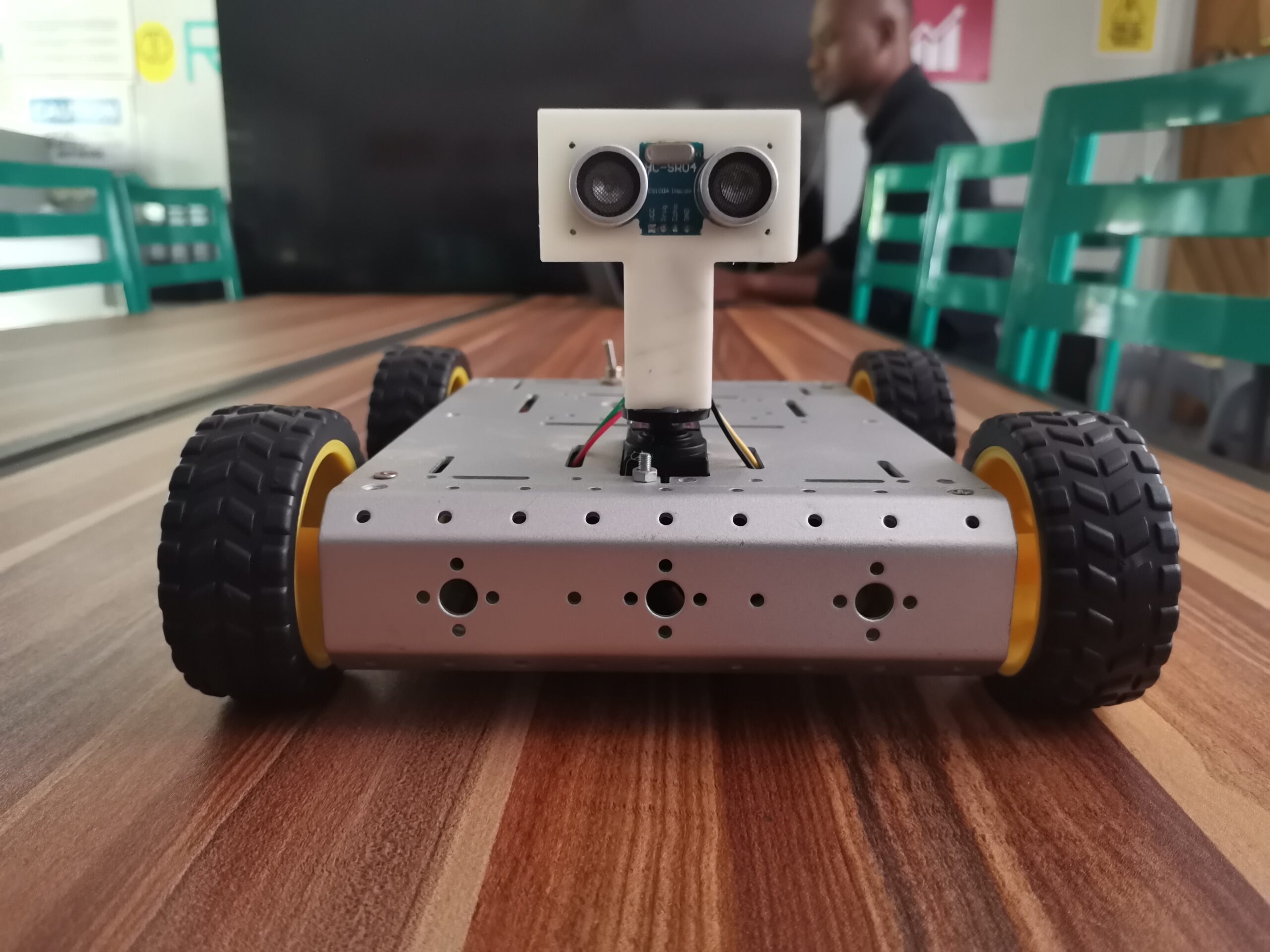
Image: Obstacle avoidance robot car.jpg | Own work | License: CC0 | Source: Wikimedia | https://commons.wikimedia.org/wiki/File:Obstacle_avoidance_robot_car.jpg