What robotic process automation actually does
Robotic process automation, or RPA, is software that imitates the repetitive actions a person would perform in a digital system. Instead of a human copying data from one application to another, logging into a portal, downloading files, rekeying numbers, or checking boxes in a workflow, a bot does the same sequence of steps automatically.
The key point is that RPA does not replace the underlying business system. It sits on top of it, interacting with user interfaces and existing applications the way a person would. That makes it especially useful in organizations where the core systems are old, fragmented, or difficult to integrate directly. In practice, RPA is often used in finance, insurance, healthcare administration, logistics, HR, and customer operations—anywhere a process is repetitive, rules-based, and high-volume.
That is also why RPA matters. Many enterprises do not have the luxury of rebuilding every legacy system from scratch. RPA offers a faster way to remove clerical toil, reduce error rates, and increase throughput without waiting for a full IT transformation.
Why RPA became so popular
RPA rose quickly because it solved a real operational problem: businesses had too many people spending too much time on low-value digital chores. Back-office work often involves transferring information between systems that were never designed to talk to each other. A claims processor might read an email, open a policy system, verify a form, update a spreadsheet, and then enter the result into an accounting platform. A procurement specialist might move invoice data from PDFs into an ERP system. None of those tasks are intellectually hard. They are just tedious, repetitive, and expensive when done by humans at scale.
RPA gave companies a way to automate these workflows without waiting for deep systems integration. Compared with classic software integration, which often requires APIs, data modeling, and coordination across multiple vendors, RPA can be faster to deploy. That made it attractive to business teams that needed results in weeks or months, not years.
It also appealed to executives because the value proposition is easy to understand. If a bot can handle 1,000 transactions a day with fewer errors than a person, the ROI can be straightforward. In many cases, the first wave of RPA deployments focused on simple, visible wins: invoice processing, account reconciliation, order entry, claims validation, and employee onboarding.
How RPA works under the hood
Most RPA systems rely on a combination of workflow logic, screen interaction, and rule-based decision making. A bot is configured with a sequence of steps: open this application, find that field, read this file, extract this value, compare it against a rule, and if it passes, submit the form. Some bots work through direct application interfaces, while others use keyboard and mouse simulation at the user interface level.
That distinction matters. API-based automation tends to be more stable and efficient because it talks directly to software systems in a structured way. UI-based automation is more flexible but also more fragile, because it depends on screens, labels, layouts, and window behavior that can change unexpectedly. If a field moves, a browser updates, or a login page changes, the bot may fail.
Modern RPA platforms usually include a few additional layers: orchestration to schedule and monitor bots, credential management to keep logins secure, logging for audit trails, exception handling for edge cases, and sometimes computer vision or document parsing to improve interaction with unstructured inputs. Some vendors also market “intelligent automation,” which combines RPA with OCR, natural language processing, or machine learning. But the core RPA model remains the same: automate the repetitive digital steps that humans used to perform manually.
Where RPA creates real value
RPA is strongest in processes that are stable, repetitive, and rule-driven. That usually means workflows with clear inputs, clear outcomes, and limited judgment calls. A good RPA candidate has a few common traits: the process happens often, the steps are predictable, the data format is consistent, and the exception rate is low enough that automation can handle most cases without constant human intervention.
In the best deployments, RPA acts like a force multiplier for existing teams. It does not necessarily eliminate jobs; it absorbs the most mechanical parts of the work so people can focus on exceptions, customer issues, or higher-value analysis. In operations terms, this can improve cycle times, reduce backlogs, and make service levels more consistent. It can also create better auditability because bots can be instrumented to log every action, which is useful in regulated environments.
For organizations dealing with labor shortages or rising administrative costs, that matters. RPA can be one of the fastest ways to increase capacity without adding headcount in proportion to volume. That is especially relevant in enterprise back offices, where growth often means more transactions rather than more strategic complexity.
Where the model breaks down
RPA’s biggest weakness is brittleness. It performs well when the environment is predictable and poorly when the environment changes. Businesses, of course, are not static. Software vendors update interfaces, compliance rules shift, product catalogs change, and exceptions pile up. The more a process depends on edge cases, human judgment, or constantly changing data, the less suitable it is for pure RPA.
This is why many early RPA programs struggled after the pilot phase. A bot that works beautifully on a controlled demo can become expensive to maintain once it is exposed to real-world variation. If every process change requires bot reconfiguration, the maintenance burden can erode the original savings. Organizations sometimes discover that they have automated the front end of a broken process rather than fixing the process itself.
Another constraint is that RPA does not solve bad data. If the source data is inconsistent, incomplete, or poorly governed, bots will simply process bad inputs faster. Automation amplifies process quality; it does not create it. That is an important distinction for executives who expect software to clean up operational messiness on its own.
There are also architectural limits. UI-driven bots are often slower and less resilient than direct system integrations. They can be blocked by authentication changes, multi-factor login requirements, or application upgrades. At scale, large bot fleets need monitoring, version control, credential governance, and exception management—otherwise the automation layer becomes another operational system to babysit.
RPA versus true process redesign
One of the most important questions in automation is whether a company should automate an existing process or redesign it entirely. RPA is often chosen because it is the least disruptive option. It can be deployed on top of legacy systems with relatively low upfront cost. That makes it useful for quick wins.
But the long-term ceiling is real. If a process is fundamentally inefficient, automating it may lock in complexity instead of removing it. In that sense, RPA is best understood as a tactical tool, not a substitute for systems engineering. The strongest automation programs usually combine multiple layers: API integration where possible, workflow redesign where necessary, and RPA where legacy constraints make other approaches too slow or too expensive.
This layered view is especially relevant in large enterprises and industrial organizations. The most durable automation strategies do not rely on one technique. They use the right tool for the job: APIs for structured system-to-system communication, orchestration platforms for business logic, RPA for user-interface gaps, and human oversight for edge cases and exceptions.
The strategic lesson: automation is infrastructure, not magic
RPA is valuable because it turns human keystrokes into repeatable software behavior. That sounds simple, but in enterprise operations, simple is often powerful. A bot that removes 10 minutes from thousands of transactions can free up meaningful capacity. A bot that reduces transcription errors can prevent costly downstream rework. A bot that standardizes a compliance workflow can improve control.
Still, the technology works best when it is treated as infrastructure. That means governance, monitoring, process ownership, and a realistic view of failure modes. It also means knowing when not to use it. If a workflow changes constantly, requires interpretation, or can be better addressed through APIs or redesign, RPA may be the wrong layer.
For readers trying to evaluate RPA in practice, the most useful question is not whether bots can automate a task. They can. The real question is whether the process is stable enough to justify automation and disciplined enough to sustain it. That is where RPA succeeds—and where it breaks down.
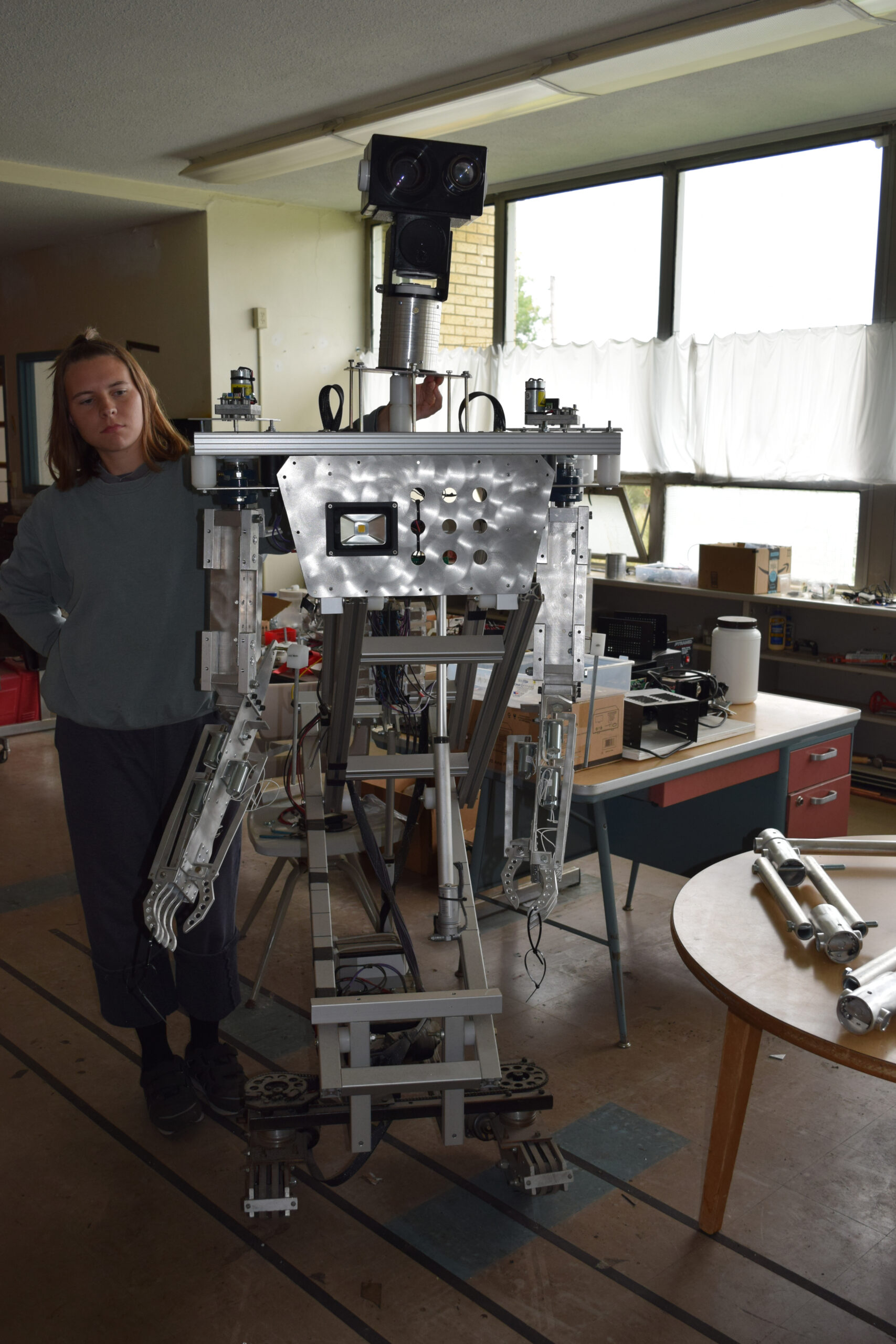
Image: A telepresence robot made from scrap.jpg | Own work | License: CC BY-SA 4.0 | Source: Wikimedia | https://commons.wikimedia.org/wiki/File:A_telepresence_robot_made_from_scrap.jpg