The warehouse is becoming a robotics testbed
Warehouses are one of the clearest places to see robotics move from novelty to necessity. E-commerce, tighter delivery windows, labor shortages, and rising customer expectations have pushed operators to automate not because robots are futuristic, but because manual processes are increasingly expensive to scale. The result is a shift in how fulfillment centers are designed, staffed, and measured.
But the transformation is not a simple story of robots replacing people. In practice, warehouse automation is a portfolio of different technologies, each suited to a different job. Some systems move shelves. Some carry bins. Some sort packages. Some handle pallet loads. Others are still best at human-like tasks such as selecting mixed items from cluttered shelves. The key question is not whether robotics works in a warehouse. It is which robotics architecture fits which warehouse economics.
Three main paths to automation
Most warehouse robotics deployments fall into one of three categories: goods-to-person systems, autonomous mobile robots, and robotic arms for picking or pallet handling. Each comes with a different cost structure and a different operational tradeoff.
Goods-to-person systems bring inventory to stationary workers. These setups often use shuttles, lifts, conveyors, and storage pods. They can dramatically increase pick rates because workers stop walking long distances. That matters in large fulfillment centers, where walking is dead time. The downside is rigidity: once the building and storage layout are built around the system, changing the flow can be expensive.
Autonomous mobile robots, or AMRs, are more flexible. They navigate warehouse floors, move carts or bins, and adjust to changing paths more easily than fixed conveyor networks. That flexibility is one reason AMRs have spread quickly in retail distribution, third-party logistics, and facilities with irregular workflows. Their weakness is that they do not remove all human labor; they usually make human work more efficient rather than eliminating it.
Robotic arms are the hardest category to generalize. They are excellent at repetitive, well-defined tasks such as depalletizing, palletizing, or picking standardized items from controlled environments. They are still much less reliable at handling the chaos of real-world tote bins full of variable products, reflective packaging, or soft goods. In other words, the more structured the task, the more attractive the robot.
The economics are less about labor replacement than labor compression
A common mistake in discussing warehouse robotics is treating it as a binary substitute for labor. The better lens is labor compression: using automation to reduce the number of steps, the amount of walking, the error rate, and the peak staffing required to run a facility. That is where the business case usually lives.
Warehouses rarely automate purely because robots are cheaper than workers on an hourly basis. They automate because labor is difficult to hire, expensive to retain, and hard to scale during demand spikes. Robotics can also reduce the hidden costs of rework, damage, and mis-picks. A single bad pick can ripple into customer service issues, returns, and higher transport costs. Automation that improves accuracy can therefore create value beyond wages alone.
That said, the economics vary sharply by facility type. A high-volume e-commerce operation with a predictable SKU mix may justify a dense automation stack. A regional distribution center handling oversized goods, seasonal peaks, and a messy product catalog may need a more incremental approach. In the second case, the return on investment often comes from selective automation at bottleneck points rather than a full redesign.
Flexibility versus throughput: the core tradeoff
Warehouse operators are constantly balancing flexibility against throughput. Fixed systems can move a lot of product with high consistency, but they are less adaptable when demand shifts or product mixes change. Mobile robots and modular automation systems are easier to reconfigure, but they may not match the raw speed of a highly optimized conveyor-and-shuttle environment.
This tradeoff is especially important in a supply chain that has become less predictable. Consumer demand now swings faster than many warehouses were originally designed to handle. Product catalogs are broader. Order sizes are smaller. Same-day and next-day shipping compresses the time available to process each order. The best deployment is therefore not necessarily the most automated one, but the one that preserves enough flexibility to survive changing conditions without constant rebuilding.
That is why many companies are adopting layered systems. A facility might use conveyors for long-haul movement, AMRs for local transport, and robotic arms for a few specific touchpoints. The resulting architecture is not elegant in the abstract, but it can be economically rational. Warehouses are not laboratories. They are operating environments where uptime, service levels, and labor availability matter more than purity of design.
Why deployment is harder than the demo videos suggest
Robotics vendors often showcase smooth demos: a robot gliding across the floor, a clean pick, a perfect handoff. Real warehouses are messier. Floors are crowded. Lighting changes. Packaging varies. Products arrive damaged. Human workers take shortcuts. Networks go down. Inventory data is imperfect. The challenge is not simply building a robot that can work once, but a system that can survive all the little failures that occur every hour in a live facility.
Integration is often the hardest part. Robots need software that talks to warehouse management systems, inventory databases, scanners, label printers, and routing logic. They also need clear operational rules: what happens when a robot gets stuck, when a pallet is misaligned, or when a tote contains an item that vision systems cannot identify confidently? In many deployments, the true labor savings arrive only after months of tuning, process redesign, and exception handling.
That is why deployment success tends to favor operators that treat robotics as infrastructure rather than a one-off purchase. The facility needs maintenance plans, spare parts, software updates, retraining, and someone responsible for continuous improvement. In other words, a warehouse robot fleet behaves more like a data center than a forklift: it is not enough to buy the equipment. You have to run the system.
The labor question is changing, not disappearing
Robotics is often framed as a job-killing force, but the warehouse story is more complicated. Automation does reduce demand for some repetitive tasks, especially walking-heavy picking and transport work. At the same time, it increases demand for technicians, controls specialists, software operators, maintenance staff, and process engineers. The skill mix changes even when headcount does not collapse.
For workers, the difference can be meaningful. A warehouse where robots handle the most physically punishing tasks may reduce injuries and turnover. But that outcome is not automatic. If automation is deployed mainly to intensify pace without improving conditions, the result can be higher pressure rather than better work. The societal impact depends on whether automation is used to remove drudgery, or simply to extract more throughput from the same labor base.
What matters next: design for the facility you actually have
The next phase of warehouse robotics will likely be less about breakthrough machines and more about smarter deployment choices. The strongest operators will match automation to task economics. They will deploy AMRs where flexibility matters, fixed systems where throughput is king, and robotic arms where the environment is structured enough to support high reliability. They will also design around exceptions, because exceptions are where automation projects often fail.
For buyers, the practical takeaway is straightforward: do not start with the robot. Start with the bottleneck. Map where labor is wasted, where errors happen, where demand spikes hurt most, and where layout constrains performance. The best robotics program is not the most advanced one on paper. It is the one that shortens cycle times, improves accuracy, and survives the messy reality of day-to-day operations.
That is why robotics is transforming warehouses in a way that is both slower and more profound than the headlines suggest. It is not a wholesale replacement of human labor. It is a gradual redesign of warehouse economics—one aisle, one task, and one deployment decision at a time.
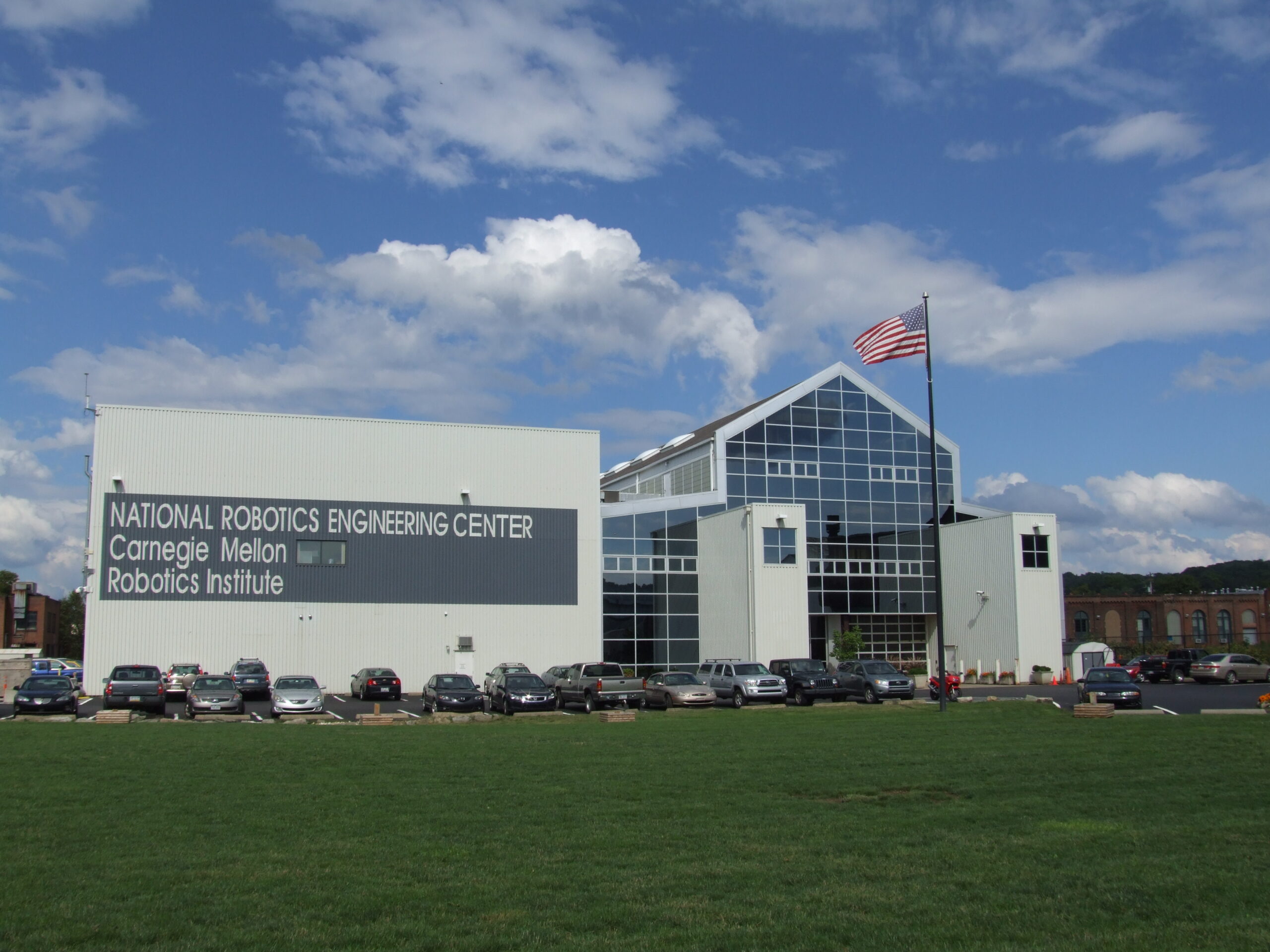
Image: National Robotics Engineering Center.JPG | Own work | License: CC BY-SA 3.0 | Source: Wikimedia | https://commons.wikimedia.org/wiki/File:National_Robotics_Engineering_Center.JPG