Why deep learning matters now
Deep learning sits at the center of today’s AI boom. It is the method behind many of the systems that can generate text, recognize images, recommend videos, translate speech, and flag fraud. If machine learning is the broader field of teaching computers to find patterns, deep learning is the approach that made those patterns searchable at a much larger scale.
That matters for more than product features. Deep learning has reshaped demand for GPUs, memory bandwidth, data center power, and advanced packaging. It has also changed the economics of software. In many cases, the limiting factor is no longer whether a model can be built, but whether it can be trained and served efficiently enough to be useful at scale.
For beginners, the term can sound intimidating. The good news is that the core idea is simple: deep learning uses layered mathematical functions to learn from examples. The details are technical, but the logic is straightforward.
The basic idea: learning from examples, not rules
Traditional software works by explicit instructions. If you want a program to detect an email scam, a developer writes rules: look for certain phrases, check the sender, compare against known bad domains. That works until the patterns change.
Deep learning takes a different route. Instead of hand-coding every rule, you show a model many examples and let it learn the relationships on its own. A spam filter sees thousands or millions of emails labeled “spam” or “not spam.” Over time, it adjusts its internal parameters to make better predictions.
The “deep” in deep learning refers to the number of layers in the network. Each layer transforms the data slightly, passing a more useful representation to the next layer. Early layers may detect edges or simple word patterns. Later layers combine those signals into more abstract features, like “cat face,” “tone of urgency,” or “likely fraud behavior.”
What a neural network actually does
A neural network is a stack of connected mathematical units. Each unit receives inputs, multiplies them by weights, adds a bias, and sends the result through an activation function. That sounds abstract, but the structure is closer to a giant adjustable filter than to a human brain.
Think of a photo classifier. The input is a grid of pixel values. The network processes those values through many layers. At the end, it outputs probabilities: maybe 92% cat, 7% dog, 1% other. Nothing in the model “understands” cats the way a person does. It has learned statistical regularities that are useful for classification.
The magic is not in a single layer. It is in the composition of many layers, each helping the model convert raw inputs into cleaner signals. That layered structure is what allows deep learning systems to handle complex tasks that are hard to describe with fixed rules.
Training: the part where the model learns
Deep learning models learn through training. During training, the model makes predictions, compares them with the correct answers, and measures how wrong it was using a loss function. Then an optimization method, usually some variant of gradient descent, adjusts the weights to reduce that error.
This process repeats many times across huge datasets. If the model predicts the wrong label for a picture of a dog, the system nudges its parameters in a direction that would have made the prediction slightly better. Do this enough times and the network gradually becomes more accurate.
Beginners often imagine training as a single pass over data. In practice, it is more like iterated calibration. The model does not memorize every example in a useful way; it searches for patterns that generalize to new inputs. That distinction is crucial. A model that only memorizes the training set will perform well in the lab and fail in the real world.
There are three terms worth keeping straight:
- Training data: the examples used to teach the model.
- Validation data: separate examples used to tune the model and check progress.
- Test data: held-out examples used to evaluate how well the model generalizes.
If the test data is contaminated by the training set, results can look better than they really are. In industry settings, this is a real risk, especially when teams move quickly.
Why GPUs matter so much
Deep learning is computationally heavy because it involves performing enormous numbers of matrix operations. That makes GPUs especially useful. Unlike CPUs, which are optimized for general-purpose tasks and sequential decision-making, GPUs are built to execute many simple operations in parallel.
That parallelism is a perfect fit for training neural networks. Modern models often need to multiply and add massive arrays of numbers over and over again. GPUs accelerate that workload dramatically, which is why companies such as NVIDIA have become central to the AI infrastructure stack. The same logic also explains the importance of high-bandwidth memory, advanced interconnects, and efficient cooling.
Training large models can consume substantial electrical power and require specialized data center planning. It is not just a software problem; it is an infrastructure problem. The deeper the model and the larger the dataset, the more the bottlenecks shift toward compute availability, memory throughput, and energy costs.
Inference—the process of using a trained model to make predictions—can also be expensive, especially for large generative models. Training is usually the heavier lift, but deployment at scale can turn into a major operational burden of its own.
Common deep learning architectures, in plain English
Different deep learning architectures are suited to different kinds of data. The architecture matters because images, text, and time-series data do not behave the same way.
- Convolutional neural networks (CNNs): Especially effective for images and spatial data. CNNs look for local patterns first, then combine them into larger structures. They became central to computer vision systems.
- Recurrent neural networks (RNNs): Designed for sequences such as speech or text, though they are less dominant now than newer methods. They process data step by step and keep some memory of prior inputs.
- Transformers: The architecture behind many modern language and multimodal models. Transformers use attention mechanisms to decide which parts of the input matter most when making a prediction. They are computationally demanding, but highly flexible.
If you have heard about large language models, you have heard about deep learning in its most visible form. These systems rely on transformer architectures trained on enormous text corpora. They are powerful because they can model relationships across long sequences, not just nearby words.
What deep learning is good at—and where it still struggles
Deep learning excels at pattern recognition when there is abundant data and the task can be framed statistically. That is why it works well for image classification, speech recognition, machine translation, recommendation systems, and anomaly detection.
But it is not a universal problem solver. Deep learning models can be brittle, especially outside the distribution they were trained on. A vision system trained on daylight images may struggle in unusual lighting. A language model can produce confident but incorrect answers because it is optimizing for plausible output, not truth in the human sense.
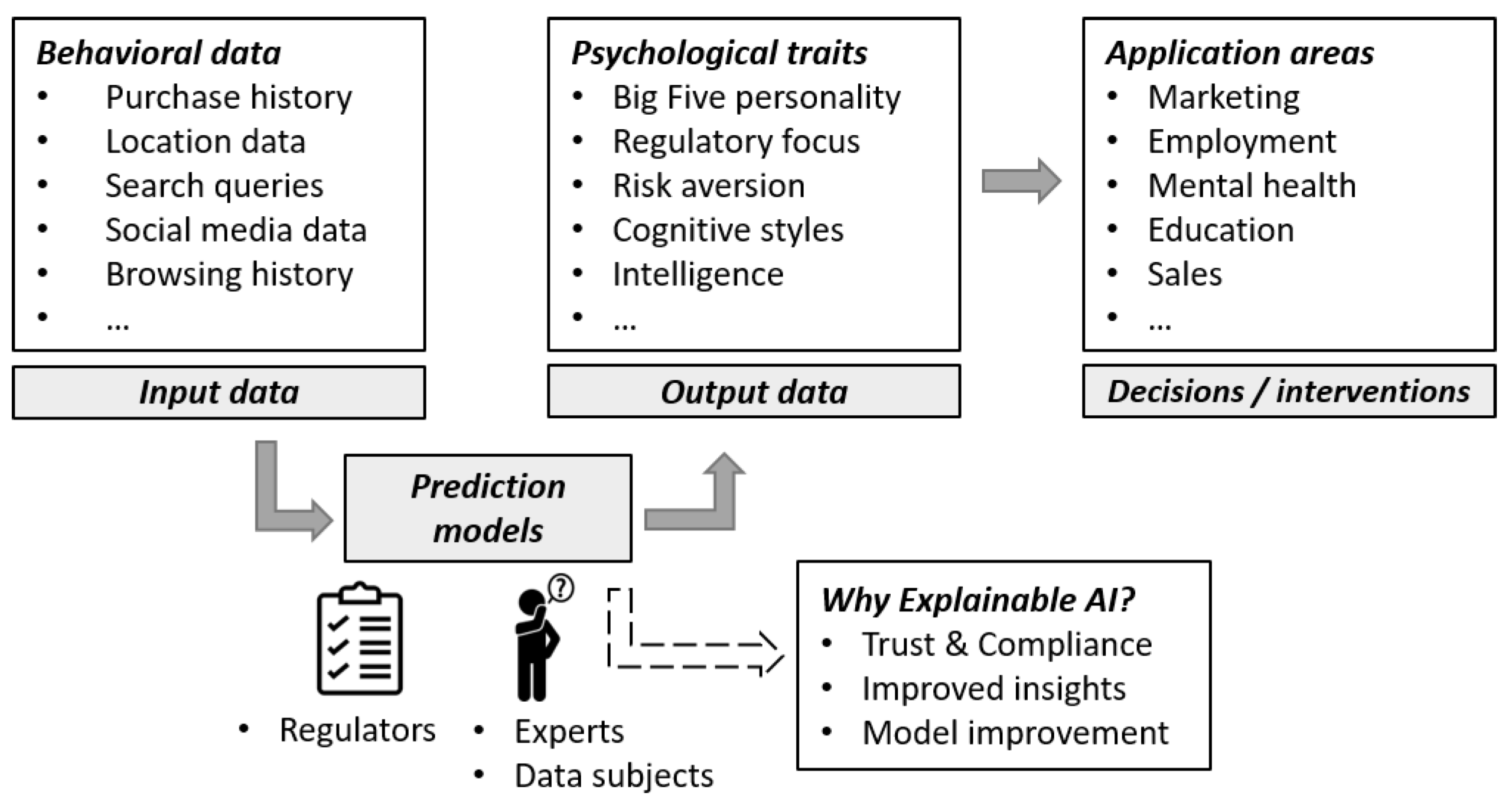
Another limitation is interpretability. It is often hard to explain exactly why a model made a specific decision. That creates challenges in regulated fields such as finance, healthcare, and hiring. A model can be accurate and still be difficult to audit.
There are also practical constraints around data quality. Deep learning systems are only as good as the data they learn from. Bias, missing labels, poor sampling, and stale training sets can all degrade performance. In many deployments, data engineering matters as much as the model architecture itself.
Why deep learning reshaped the tech stack
Deep learning has changed the hardware and infrastructure map of technology. Training large models requires clusters of GPUs, fast networking, and dense data center power delivery. Storage systems must feed the training pipeline at high throughput. Operations teams have to manage temperature, uptime, and power constraints that were less visible in earlier software eras.
That shift has made semiconductors and infrastructure strategy central to AI competition. The question is no longer simply who has the best model idea. It is also who can secure the compute, power, and supply chain needed to run it continuously. For cloud providers, chipmakers, and enterprise buyers, deep learning is as much an industrial systems challenge as it is a research field.
For smaller teams and startups, this changes the calculus. Fine-tuning a pre-trained model may be far more practical than training one from scratch. In many cases, the competitive advantage comes from integrating deep learning into a workflow, not from building the largest model possible.
Key takeaways for beginners
Deep learning is a method for learning patterns from data using multi-layer neural networks. It became important because it handles complex tasks well and scales across large datasets and massive compute systems.
If you are just getting started, keep four ideas in mind:
- Deep learning learns from examples rather than hand-written rules.
- Training is an optimization process that reduces prediction error over time.
- GPUs and data center infrastructure are core to making modern deep learning practical.
- Real-world performance depends on data quality, generalization, and deployment constraints—not just model size.
Understanding those basics makes it easier to read about AI without getting lost in buzzwords. It also helps explain why deep learning is not just a software story. It is a systems story that reaches from datasets and model architectures all the way down to chips, power, and industrial-scale compute.
Sources and further reading
For editorial review and fact-checking, verify against the following widely used references:
- Ian Goodfellow, Yoshua Bengio, and Aaron Courville, Deep Learning
- Stanford CS231n: Convolutional Neural Networks for Visual Recognition
- Google Research papers on transformer architectures
- NVIDIA developer documentation on GPU-accelerated deep learning
- OpenAI and Anthropic technical documentation on model training and inference, where applicable
Image: L’IA explicable & application exploitant la data comportementales pour profilage psychologique.png | https://www.mdpi.com/2078-2489/12/12/518 | License: CC BY 4.0 | Source: Wikimedia | https://commons.wikimedia.org/wiki/File:L%E2%80%99IA_explicable_%26_application_exploitant_la_data_comportementales_pour_profilage_psychologique.png