Transformer models sit at the center of the modern AI boom. If you use a chatbot, a code assistant, an image generator, or a translation tool, there’s a good chance a transformer is doing the heavy lifting under the hood. The term can sound abstract, but the idea is straightforward: transformers are a way for machines to process information by paying attention to what matters most in a sequence.
That simple design choice turned out to be a major breakthrough. It made AI systems better at handling language, more adaptable to different tasks, and far more scalable than earlier approaches. It also helped set off a wave of capital spending in GPUs, memory, networking, and data center power, because transformer models are extremely hungry for compute.
The basic idea: paying attention to relationships
To understand a transformer, start with a sentence. Humans do not read one word at a time in isolation. We infer meaning by looking at relationships between words: who did what, which word modifies another, what a pronoun refers to, and how the whole sentence fits together.
Transformers do something similar. Instead of processing text strictly from left to right, they evaluate how each part of the input relates to every other part. That mechanism is called attention. Attention lets the model decide which pieces of information are most relevant at a given moment.
For example, in the sentence “The GPU overheated because the cooling system failed,” a transformer can learn that “cooling system” is strongly connected to “overheated.” In a longer passage, it can track references across many words or even paragraphs. That is one reason transformers are so effective at language, where meaning often depends on context spread across a long sequence.
Why transformers replaced older AI approaches
Before transformers, the dominant models for sequence tasks were recurrent neural networks, or RNNs, and their variants like LSTMs. Those systems processed data step by step, carrying information forward through a chain. They worked, but they had a major limitation: they were hard to parallelize and struggled with long-range dependencies.
Transformers changed the economics of AI training. Because they can look at many tokens at once, they are much easier to run efficiently on modern hardware. That matters enormously in practice. GPUs and specialized accelerators are built to perform large numbers of matrix operations in parallel, which makes them a natural fit for transformer workloads.
In other words, the transformer was not just a better model. It was a better match for the computing infrastructure the industry was already building out. That alignment helped transform AI from a research field into a massive industrial stack.
What a transformer actually does
A transformer does three core things.
First, it turns input into tokens. Text is broken into small units called tokens, which may be whole words, parts of words, or punctuation marks. The model doesn’t read raw sentences the way humans do. It reads token sequences.
Second, it converts tokens into numerical vectors. These vectors represent meaning in a form the model can process mathematically. Similar words or concepts tend to end up in nearby regions of this numerical space.
Third, it applies layers of attention and feed-forward computation. Attention helps the model weigh which tokens matter most relative to others. Feed-forward layers then transform that information into higher-level patterns. After many stacked layers, the model can generate a prediction: the next word, the next token, a translated phrase, a classification, or an answer.
This is why transformers are so flexible. The same core architecture can be trained to predict text, summarize documents, write code, classify images, or combine text and image inputs in multimodal systems.
Why “next-token prediction” matters so much
Many large language models are trained with a deceptively simple objective: predict the next token in a sequence. Given the words “The server rack is drawing too much…,” the model learns to predict likely continuations, such as “power.”
That sounds modest, but at scale it becomes powerful. To predict the next token well, the model has to learn grammar, syntax, facts, style, relationships, and some level of reasoning about context. Over billions or trillions of tokens, those patterns accumulate into capability.
This training objective is also one reason the modern AI stack is so expensive. Predicting the next token across huge datasets requires massive compute, fast interconnects, and large memory bandwidth. Training frontier models can involve thousands of GPUs operating for weeks or months. That drives demand for advanced packaging, high-bandwidth memory, liquid cooling, and new data center power delivery systems.
Why transformers scale so well
One of the most important features of transformers is that they scale predictably with more data, more parameters, and more compute. In practical terms, this means that when companies invest heavily in training larger models, they often get better performance—though not always efficiently enough to justify the cost.
This scaling behavior changed business strategy across the industry. Hyperscalers, AI labs, and chip companies now plan around large training clusters, inference fleets, and supply chains for power and cooling. A transformer model is not just software; it is a workload with infrastructure consequences.
That is why the conversation around AI has shifted from novelty to capacity planning. The question is no longer only what the model can do, but how much electricity it consumes, how much memory it needs, how many accelerators it occupies, and how quickly organizations can deploy it into production.
Training versus inference: where the costs show up
There are two major phases in a transformer’s life cycle.
Training is the expensive learning phase. The model sees large amounts of data and adjusts its internal weights to reduce error. This is where the biggest upfront compute bills appear.
Inference is when the trained model is used to produce outputs for users. Inference may seem lighter, but at scale it can be just as strategically important. A consumer chatbot serving millions of requests, or an enterprise assistant embedded in workflows, can consume enormous ongoing compute.
This distinction matters for businesses and policymakers alike. Training concentration has tended to favor a small number of well-capitalized firms with access to frontier GPU supply and data center capacity. Inference, meanwhile, spreads costs across customer-facing products and enterprise deployments. That difference influences everything from pricing to regulation to where data centers get built.
Why this matters beyond the AI lab
Transformers are reshaping more than software products. They are changing infrastructure investment patterns. Demand for AI has become a major driver of GPU orders, high-speed networking, memory supply, and new power generation planning. Utilities, regulators, and local governments are now grappling with the physical footprint of model deployment.
For chipmakers, transformers have become one of the most important workload categories in the world. Their dense matrix math creates sustained demand for accelerators optimized for parallel processing. For data center operators, transformer-heavy workloads create pressure for more power per rack, better thermal management, and faster interconnects. For enterprises, the model architecture affects procurement, vendor strategy, and the total cost of ownership of AI projects.
In policy terms, transformers have moved AI from a largely abstract debate to a concrete infrastructure issue. If a model requires thousands of GPUs and megawatts of power, then AI is no longer just about algorithmic capability. It becomes part of industrial planning.
The limitations worth remembering
Transformers are powerful, but they are not magical. They can make confident mistakes, hallucinate plausible-sounding falsehoods, and reflect biases in the data they were trained on. They also do not “understand” language in the human sense. They are statistical systems that learn patterns extremely well.
They also have practical limits. Standard attention mechanisms become expensive as sequence length grows, which is why researchers keep working on more efficient variants. Long-context models, sparse attention methods, and retrieval-augmented systems are all attempts to make transformers more usable at larger scales and lower cost.
That is an important point for anyone following the industry: the transformer is still dominant, but it is not the end of the story. It is the foundation on which the current AI wave was built, and the market is now pushing to make it cheaper, faster, and more capable.
The bottom line
A transformer model is, at its core, a machine for learning relationships in sequences. Its attention mechanism lets it focus on what matters, its layered design lets it build complex representations, and its scalability makes it ideal for the GPU-driven infrastructure that powers modern AI.
That combination explains why transformers have become the default architecture for much of today’s AI industry. They are not just a clever technical idea. They are the reason AI now has material consequences for semiconductors, data centers, energy systems, and corporate strategy. Understanding transformers is a good way to understand why the AI boom looks the way it does—and why it is likely to keep reshaping the technology stack around it.
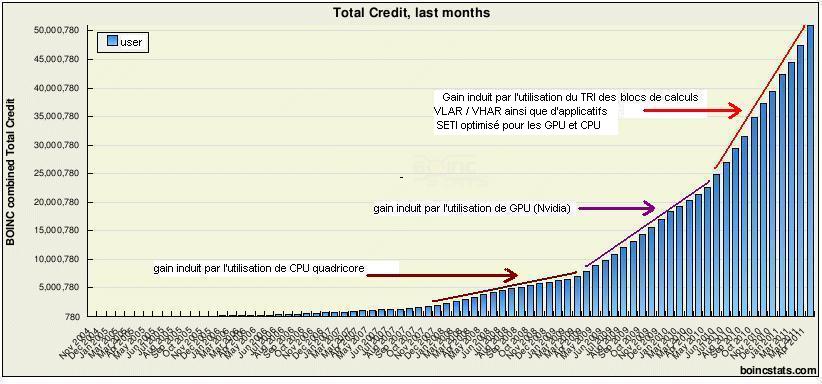
Image: Gain induit CPU- GPU- TRI2.JPG | printed screen of my own statistique from http://boincstats.com/stats/boinc_user_graph.php?pr=bo&id=1210 | License: CC BY-SA 4.0 | Source: Wikimedia | https://commons.wikimedia.org/wiki/File:Gain_induit_CPU-_GPU-_TRI2.JPG