Two companies, two different definitions of victory
The contest between NVIDIA and AMD is often described as a simple chip race, but that framing misses the real fight. This is not just about who can build the fastest GPU or ship the most teraflops. It is about who can define the architecture of AI infrastructure, capture the software layer around it, and become the default choice for hyperscalers, cloud customers, and enterprise buyers trying to scale generative AI.
NVIDIA enters this race as the market leader with a deep moat in software, systems design, and developer mindshare. AMD enters as the most credible challenger, with strong silicon, an increasingly relevant data center portfolio, and the strategic advantage of being the company customers call when they want leverage against NVIDIA pricing and supply constraints. Both are winning in different ways. The harder question is which company is better positioned to convert AI demand into lasting market structure.
NVIDIA’s advantage is not just chips; it is the full stack
NVIDIA’s grip on the AI market comes from a simple but powerful idea: the best chip is not enough if the surrounding software and systems are not equally strong. CUDA, NVIDIA’s proprietary programming platform, remains the company’s most important asset. It is the reason so many AI developers, model builders, and infrastructure teams default to NVIDIA hardware. Once a workflow is built around CUDA libraries, inference optimizations, and NVIDIA’s tooling ecosystem, switching costs rise sharply.
That software advantage is reinforced by product integration. NVIDIA does not sell only GPUs. It sells tightly coupled systems, networking, software, and reference architectures that help customers deploy AI infrastructure faster. Its DGX systems, networking fabric, and broader data center stack make it easier for buyers to scale beyond single accelerators into full clusters. In a market where time to deployment matters almost as much as raw performance, that matters enormously.
There is also a commercial reality: NVIDIA has become the default allocation target for many AI budgets. When cloud providers, AI labs, and enterprise customers plan capacity, they often benchmark against NVIDIA first and negotiate around it second. That gives NVIDIA pricing power, allocation control, and the ability to shape how the market thinks about AI compute performance.
AMD’s strategy is pragmatic: be the serious alternative
AMD is not trying to beat NVIDIA at its own game in the near term. Instead, it is building a credible alternative stack for customers who want performance, better supply optionality, and lower total cost of ownership. That is a smart position in a market where the biggest buyers are not emotionally loyal to one vendor; they are trying to secure enough compute at a reasonable cost.
The company’s MI-series accelerators are the centerpiece of that strategy. AMD has invested heavily in larger memory footprints, high-bandwidth designs, and architectures meant to compete in demanding AI training and inference workloads. Just as importantly, it has been working to improve ROCm, its open software platform, so that developers can port workloads more easily and reduce friction relative to NVIDIA’s ecosystem.
AMD’s challenge is not whether it can build competent AI silicon. It can. The challenge is whether it can build a software and support environment that makes its hardware easy enough to adopt at scale. In AI infrastructure, performance specs matter, but adoption friction often matters more. Customers want chips that fit into existing toolchains, job schedulers, networking stacks, and engineering teams without requiring a rewrite of the whole operation.
The real battleground is the data center buyer
If you want to understand who wins the AI race, ignore the marketing and look at who signs the checks. The real customers are not end users typing prompts into chatbots. They are hyperscalers, cloud providers, sovereign AI programs, model developers, and large enterprises building private AI infrastructure. These buyers care about a handful of practical questions: How much training throughput do we get? How quickly can we deploy? How painful is the software migration? Can we source enough chips? What does the network architecture look like? What will the total system cost be once power, cooling, and operations are included?
NVIDIA is strong because it answers those questions with a coherent system. AMD is strong because it can increasingly answer them with a more cost-conscious alternative. The market does not need AMD to replace NVIDIA everywhere for AMD to matter. It only needs AMD to win enough deployments to change bargaining power. That is already happening. Even where NVIDIA remains dominant, AMD’s presence gives large buyers a second source of supply and a better negotiating position.
This is why AI infrastructure is starting to resemble other mature semiconductor markets: concentration at the top, but persistent demand for a viable second source. In that environment, NVIDIA can remain the premium platform while AMD becomes the strategic counterweight.
Software is the moat; hardware is the entry ticket
In semiconductors, people often obsess over process nodes, bandwidth, and interconnect speeds. Those factors matter, but AI has made software architecture even more decisive. The best accelerator in the world is not useful if developers cannot easily train, optimize, and deploy models on it. NVIDIA understood this early and built an ecosystem that makes its hardware feel like the natural extension of the AI development workflow.
AMD is now fighting to compress that gap. ROCm has improved materially, and the company is making progress with more compatible tooling, better framework support, and stronger ecosystem partnerships. But software ecosystems do not flip overnight. They accrete. They depend on libraries, documentation, developer trust, performance tuning, and years of operational experience. That is why NVIDIA’s lead is so hard to dislodge.
For buyers, this creates a familiar tradeoff. NVIDIA offers lower adoption risk and a mature ecosystem. AMD offers potential cost savings and diversification. The more standardized AI workloads become, the easier it may be for AMD to compete. The more frontier AI remains a race for speed, scale, and system integration, the more NVIDIA’s advantages compound.
Market structure favors the incumbent—unless the buyer changes the rules
The AI hardware market is not static. Demand patterns are being shaped by power availability, capital budgets, export controls, supply chain constraints, and the economics of large-scale training. These forces could either entrench NVIDIA or open the door for AMD, depending on how they evolve.
If AI spending continues to concentrate in a handful of hyperscale and frontier-model customers, NVIDIA’s platform advantage is likely to remain extraordinarily strong. Those buyers value performance, support, and rapid deployment, and they have the engineering talent to absorb complex stacks. In that world, NVIDIA’s lead can persist for a long time.
But if the market broadens toward more cost-sensitive enterprise inference, regional clouds, and vertically integrated AI deployments, AMD’s positioning improves. Inference workloads are often more price-sensitive than training, and many buyers do not need the absolute top-end performance if they can get sufficient throughput at a lower cost. That opens room for a challenger with improving software and competitive silicon.
So who wins?
If “winning” means owning the AI infrastructure platform in the near term, NVIDIA remains the clear leader. Its software stack, system design, and market momentum are still unmatched. It is not merely selling GPUs; it is selling the operating environment of modern AI compute.
If “winning” means becoming the indispensable second source that reshapes pricing, procurement, and buyer leverage, AMD is already succeeding more than many expected. Its role may be less glamorous, but it is strategically powerful. In a market this capital intensive, being the credible alternative is not a consolation prize. It is a business with real influence.
The most likely outcome is not a clean victory for one side. NVIDIA will probably keep the crown, while AMD steadily expands the battlefield. That competition is good for customers, good for the market, and good for the broader AI infrastructure buildout. It is also a reminder that in semiconductors, the winner is rarely the company with the best chip alone. The winner is the company that turns chips into a system, a standard, and eventually, a habit.
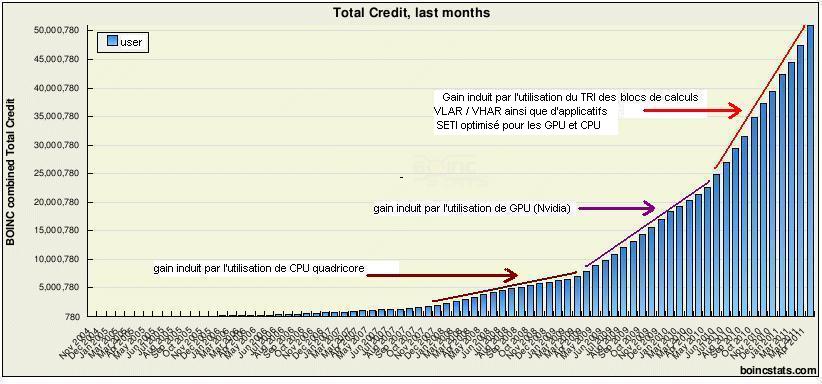
Image: Gain induit CPU- GPU- TRI2.JPG | printed screen of my own statistique from http://boincstats.com/stats/boinc_user_graph.php?pr=bo&id=1210 | License: CC BY-SA 4.0 | Source: Wikimedia | https://commons.wikimedia.org/wiki/File:Gain_induit_CPU-_GPU-_TRI2.JPG