Why robotics is moving from spectacle to systems
Robotics has spent years in a familiar cycle: a breakthrough demo, a surge of attention, and then the hard work of making the machine useful every day in a real environment. By 2030, the companies that matter most will not be the ones that merely look advanced on stage. They will be the ones that can ship robots that operate safely, integrate with existing workflows, survive messy conditions, and still make economic sense after installation, training, maintenance, and downtime are counted.
That shift matters because robotics is no longer just about the robot itself. It is about the full stack around it: sensors, edge compute, fleet software, simulation, power systems, task planning, remote support, and service contracts. In other words, the industry is becoming less like consumer electronics and more like industrial infrastructure. The best-positioned companies are building for deployment, not just for display.
Several categories will shape the robotics market in 2030: warehouse automation, industrial arms, mobile robots, humanoids, and specialized service robots. The companies to watch are those with a credible path in one or more of those categories, plus the capital, distribution, and operational discipline to keep improving after the first sale.
The real test: can a robot earn its keep?
Robotics companies often advertise intelligence, but customers buy uptime. A robot that works 98% of the time in a lab may still fail in production if it cannot handle dust, glare, changing load conditions, variable floor surfaces, network interruptions, or awkward human interactions. The hardest problems are often mundane: battery life, grasping irregular objects, calibration drift, safety certification, and the cost of field service.
That is why the strongest companies are focusing on deployment economics. They are optimizing for total cost of ownership, not just hardware margin. They are also learning to sell robots as part of a service layer, where software updates, monitoring, and maintenance become recurring revenue. This is one reason robotics is increasingly converging with enterprise software and cloud operations, even when the robot appears to be a hardware story on the surface.
Amazon Robotics and the warehouse as an operating system
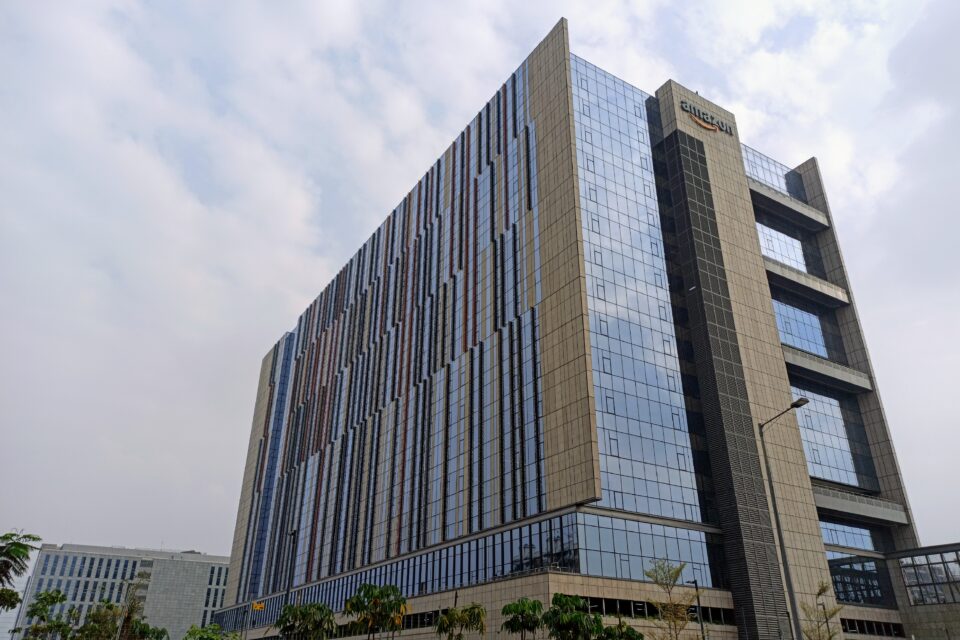
Amazon remains one of the most consequential robotics operators in the world, not because every product it uses is sold externally, but because its warehouses are a proving ground for large-scale automation. The company’s robotics strategy is built around throughput, inventory movement, and workflow orchestration. That is a fundamentally different model from a standalone robot company trying to sell a unit into a customer facility.
What makes Amazon important to watch by 2030 is not just the hardware. It is the operating logic: robots are one layer in a broader logistics system that includes software, routing, fulfillment design, and data-driven process redesign. The company’s approach shows what mature robotics looks like when automation is treated as a system architecture rather than a single product.
For competitors, Amazon sets a high bar. Any warehouse robotics vendor must prove that it can integrate into brownfield facilities, handle mixed SKU environments, and deliver measurable productivity gains without requiring a ground-up rebuild of the site.
ABB, Fanuc, and the industrial incumbents that still matter
In industrial robotics, incumbency still counts. ABB and Fanuc are among the companies most likely to remain important through 2030 because they sit at the center of factory automation, where reliability, long service lifecycles, and integration with industrial controls matter more than novelty. Their advantage is not only installed base; it is the trust customers place in equipment that may run for years in high-volume manufacturing.
These companies are also positioned to benefit from the next wave of factory modernization, especially as manufacturers look to automate welding, machine tending, packaging, inspection, and material handling. The economics are often favorable when robots replace scarce labor, improve consistency, or raise equipment utilization.
The challenge for incumbents is that software expectations are rising. Customers increasingly want easier programming, better simulation, more flexible vision systems, and faster reconfiguration for new product lines. The winning industrial robot companies will be the ones that make automation less brittle and more adaptable.
Symbiotic, Figure, Agility, and the humanoid bet
Humanoid robotics attracts outsized attention because it promises a general-purpose machine form factor that can use human-built environments without requiring total redesign. That is a compelling idea, but it is also the hardest category in robotics. A humanoid must balance dexterity, mobility, perception, battery life, safety, and control software, all while keeping costs low enough for real customers to adopt it.
Companies such as Figure, Agility Robotics, and other humanoid startups have become important to watch because they are testing whether general-purpose robots can move from lab-grade capabilities to economically relevant tasks. The likely near-term path is not household labor; it is controlled industrial and warehouse tasks where the robot can work in structured environments with clear workflows.
Symbiotic and similar operators in this space highlight a larger industry truth: the humanoid race is as much about product strategy as technical ambition. The key question is not whether a robot can walk, but whether it can do useful work repeatedly, safely, and at a cost customers will pay. That usually means starting with narrow applications and expanding only when the reliability data supports it.
Boston Dynamics and the power of platform credibility
Boston Dynamics remains one of the most recognizable names in robotics because it has long understood that motion capability is only the beginning. Over time, the company has moved from viral demonstrations toward a more commercial posture, using the credibility of its engineering to build trust around mobility, inspection, and industrial applications.
By 2030, the company’s importance may lie less in any single product and more in what it represents: the transition from robotics as spectacle to robotics as deployable platform. That transition is difficult because it requires not only mechanical excellence but also software stability, support infrastructure, and customer education.
Robotics buyers often need proof that a platform can handle deployment in real facilities with real workers. Boston Dynamics’ brand gives it an advantage in that trust-building phase, though it still faces the same market test as everyone else: proving value outside the lab.
Dexterity, machine vision, and the companies solving the hard middle
Some of the most important robotics companies by 2030 may not be the most famous ones. They may be the firms working on the hard middle of robotics: object recognition, manipulation, grasping, calibration, and fleet intelligence. This is where many deployments succeed or fail.
Companies focused on machine vision, industrial AI, and manipulation software are critical because a robot needs to understand what it is seeing before it can act effectively. The progress here often comes from better sensors, more diverse training data, simulation environments, and edge inference hardware that can run latency-sensitive models locally.
These companies are especially important in logistics, food handling, manufacturing, and quality inspection. In those settings, small improvements in perception can unlock major gains in utilization. A robot that can identify a larger range of parts, tolerate more variation, or recover from errors with less human intervention can change the economics of an entire workflow.
The hidden moat is service
One of the least glamorous but most durable truths in robotics is that service is a moat. Robots break, drift, need recalibration, and eventually require replacement. Companies that can support fleets effectively tend to earn customer loyalty, reduce downtime, and improve the lifetime value of each deployment.
This is why the best robotics companies by 2030 may look more like operators of an installed base than pure product vendors. They will need field technicians, remote diagnostics, spare parts logistics, software update pipelines, and training programs. The ability to support thousands of units reliably can matter as much as the original engineering breakthrough.
For buyers, this changes procurement. The evaluation shifts from “What can the robot do in a demo?” to “What happens on day 200, after the first software update, when the facility changes layout?” The firms that answer that question well are the ones with staying power.
What to watch across the sector before 2030
If you want a practical way to follow robotics companies over the next few years, look for five signals.
First, deployment breadth: is the robot working in one pilot site or across many customer sites?
Second, task expansion: can the company move from one narrow use case to adjacent ones without a full redesign?
Third, software maturity: does the product rely on constant human intervention, or does it improve with fleet data and remote updates?
Fourth, economics: can the company explain payback periods, service costs, and maintenance assumptions in terms customers can verify?
Fifth, manufacturing and supply chain discipline: can it build consistent hardware at scale without component shortages or quality drift?
Those are the indicators that separate real robotics platforms from expensive prototypes.
The companies most likely to shape the field
By 2030, the robotics landscape will likely be defined by a mix of incumbent industrial leaders, vertically integrated automation giants, and a smaller set of startups that prove they can commercialize at scale. ABB and Fanuc will remain important because factories still demand reliable automation. Amazon Robotics will remain influential because it demonstrates what large-scale internal automation can look like. Boston Dynamics will remain a benchmark for platform ambition and mobility. Humanoid players such as Figure and Agility will be worth tracking because they are testing whether general-purpose robots can become practical labor tools.
But the deeper story is that robotics success is becoming operational, not theatrical. The winning companies will obsess over integration, support, software iteration, and economics. They will make robots that do not just move convincingly, but fit into the way real businesses work.
That is what makes the 2030 outlook so interesting. The field is broadening, but the standard is also rising. In the next phase of robotics, the decisive advantage will belong to companies that can turn a machine into a dependable part of the operating environment.
Sources and further reading
- Company annual reports and investor presentations from ABB, Fanuc, and Amazon
- Boston Dynamics product and company materials
- U.S. National Institute of Standards and Technology (NIST) robotics and automation resources
- International Federation of Robotics (IFR) reports and market overviews
- Public product pages and technical updates from Figure, Agility Robotics, and related robotics developers
Image: Robotics Summer School 2023 (1).jpg | Own work | License: CC BY-SA 4.0 | Source: Wikimedia | https://commons.wikimedia.org/wiki/File:Robotics_Summer_School_2023_(1).jpg