By 2030, the robotics companies worth watching will not simply be the ones with the most ambitious product videos. They will be the ones that can solve a harder problem: turning robots into dependable, costed, maintainable systems that customers can deploy at scale.
That distinction matters. In robotics, the gap between a compelling prototype and a profitable product is wide. Hardware must survive real-world environments, software must handle messy variability, and the supply chain has to deliver motors, sensors, compute modules, batteries, and actuators without constant redesign. The companies most likely to matter in 2030 are the ones building a durable operational edge across those layers.
This is not a list of every interesting robotics startup. It is a strategy readout on the companies that appear best positioned to matter in the next phase of the market, based on technical differentiation, distribution, manufacturing discipline, and execution pathway. Some are already large industrial players. Others are newer names trying to prove that modern robotics can finally scale economically.
What separates a robotics contender from a robotics demo
Robotics companies tend to fail for predictable reasons. They overestimate how quickly a machine can move from lab conditions to customer sites. They underestimate service costs. They ship systems that require too much integration by the buyer. Or they build impressive autonomy but overlook the unglamorous parts of deployment: uptime, replacement parts, software updates, and field maintenance.
The companies that reach 2030 with real market power are likely to share a few traits:
- Clear deployment niche: warehouse picking, industrial inspection, mobile manipulation, cleaning, surgery, agriculture, or logistics where economics can be measured.
- Manufacturing advantage: access to component supply, contract manufacturing, or in-house production that keeps margins from collapsing.
- Software that improves over time: fleet learning, teleoperation fallback, predictive maintenance, and data pipelines that make each deployed unit better.
- Service model discipline: pricing that reflects installation, support, and uptime rather than pretending hardware alone carries the business.
That lens helps separate enduring companies from those likely to remain forever in pilot mode.
Amazon: robotics as an operating system for logistics
Amazon remains one of the most important robotics operators in the world because it does not treat robots as a side business. It uses them as infrastructure. That matters. When robotics is embedded inside a company’s own logistics network, deployment feedback is immediate, and unit economics can be improved at warehouse scale.
The company’s advantage is not just that it has money to spend. It has the highest-value robotics test environment in retail logistics: an enormous, continuously changing fulfillment footprint. Systems such as mobile robots and automated sorting are valuable because they reduce travel time, compress labor requirements in repetitive tasks, and improve throughput. Amazon’s robotics stack also benefits from one of the most important strategic assets in the sector: software integration with warehouse operations.
By 2030, the question is whether Amazon’s robotics remains primarily an internal efficiency engine or becomes a broader platform opportunity. If the company continues to industrialize its warehouse automation, it will remain a benchmark for how logistics robotics can be deployed at scale. Its challenge is that any broad robotics offering would need to compete with specialized vendors that can move faster in specific niches.
ABB and Fanuc: the industrial incumbents with supply-chain gravity
Industrial automation is still where robotics economics are most mature. ABB and Fanuc have spent decades selling robots into factories where customers already understand downtime costs and return-on-investment math. Their strategic strength is not novelty; it is trust, installed base, and manufacturing know-how.
These companies have an advantage many newer robotics startups lack: component and distribution depth. Industrial robots depend on precise motion control, durable gearboxes, actuators, sensors, and service networks. Incumbents with established supply relationships are better positioned to absorb shocks in component pricing or availability. That is particularly important in a world where advanced electronics, power modules, and control hardware can face bottlenecks or regional concentration risks.
Their challenge is pace. Industrial buyers want reliability, but they also want easier programming, faster deployment, and more flexible systems. The company that can combine robust hardware with simpler software interfaces and faster integration will own more of the next cycle. ABB’s newer automation software and Fanuc’s reputation for rugged reliability suggest both will remain significant, but neither can afford complacency as the market shifts toward easier-to-deploy systems.
Boston Dynamics: technical prestige, execution pressure
Boston Dynamics occupies a special place in robotics because it has long represented the state of the art in dynamic mobility. Its machines are visually striking, but the more important question is whether that technical sophistication can be converted into repeatable commercial value.
The company’s strategic challenge is the same one that has long faced advanced robotics firms: advanced motion is impressive, but commercial adoption depends on a narrower list of customer needs. For legged robots and mobile systems, those needs include reliability on uneven terrain, useful payload capacity, battery life, serviceability, and a business case that beats simpler alternatives. In other words, a robot can be better and still not be easy to buy.
Boston Dynamics matters for 2030 because it sits at the intersection of high-end robotics engineering and real deployment pressure. If it can prove that advanced mobility has a practical role in inspection, logistics, or industrial sites, it will define a category. If not, it risks remaining the company everyone admires and few can operationalize.
Figure AI, Tesla, and the humanoid race
The humanoid robotics conversation is where hype most often outruns economics. Yet it is also where strategic stakes are highest, because a general-purpose form factor could eventually address labor shortages across manufacturing, warehousing, and structured service environments.
Tesla has an unusual advantage here: it already knows how to build at scale, optimize supply chains, and bring down the cost of complex electromechanical systems. Its strength is manufacturing discipline, not just software ambition. If humanoid robots ever become mass-market products, companies that understand high-volume production, battery systems, motor control, and vertically integrated cost reduction will matter enormously.
Figure AI is also worth watching because it represents a newer, focused effort to commercialize humanoids. The key question is not whether a humanoid can walk. It is whether it can perform economically useful tasks often enough to justify deployment. The hard problems include dexterous manipulation, perception in cluttered environments, safety certification, and the operational burden of teleoperation and exception handling when autonomy fails.
For both Tesla and Figure AI, the decisive variable by 2030 will be whether the systems can move from staged demos into a service model with clear pricing, uptime guarantees, and target use cases. Humanoids may become important, but not because they are aesthetically futuristic. They will matter if they can replace scarce labor in places where simpler automation is no longer enough.
Symbotic and GXO: warehouse automation becomes financial engineering
Some of the most consequential robotics companies will not look like humanoid pioneers at all. They will look like logistics infrastructure firms. Symbotic is one of the clearest examples of a company trying to convert robotics into a repeatable warehouse system built around storage density, automated movement, and throughput.
The strategic appeal of warehouse robotics is simple: if a customer can reduce labor intensity, improve inventory flow, and use space more efficiently, the economics can be modeled with unusual clarity. That makes the market attractive, but it also makes execution unforgiving. Customers expect measurable gains and fast payback periods.
GXO is relevant here because large logistics operators increasingly shape automation adoption, even when they are not pure robotics vendors. The companies that control warehouses and fulfillment contracts can influence which systems get deployed, how fast, and under what pricing structure. In practice, robotics adoption is often as much about operations management as it is about the machine itself.
For 2030, the winning warehouse robotics businesses are likely to be the ones that can package equipment, software, installation, and ongoing service into a contract customers can underwrite. That is not glamorous, but it is how robotics becomes infrastructure.
Agility and Figure-style startups: the bet on labor substitution
A newer generation of robotics companies is trying to attack labor-intensive tasks directly, often with mobile manipulation systems that can operate in warehouses or factories. Agility Robotics is one of the most closely watched names in this group because it has focused on a practical commercial path rather than just research visibility.
The strategic logic is sound. If a robot can do repetitive handling tasks in environments where work is physically demanding and turnover is high, the buyer does not need science fiction. It needs a dependable labor substitute with predictable costs. That is the economics robotics has been chasing for years.
But the barrier remains high. These systems need robust perception, stable bipedal or mobile locomotion, and enough reliability to support production use. They also need a pricing model that accounts for the full burden of deployment, including integration, fleet monitoring, and repair cycles. Many startups underprice service because they focus on the machine cost and not the operating cost.
That is why this category will likely consolidate. The survivors will not merely be the best engineers. They will be the companies that learn how to sell certainty.
Why supply chain strategy matters more than ever
One of the least discussed but most important forces in robotics is supply chain structure. A company can have a strong AI stack and still struggle if it cannot source actuators, torque sensors, battery packs, embedded compute, or custom gear assemblies on schedule. Robotics is an integration business, which means component risk becomes product risk very quickly.
This is one reason industrial incumbents and vertically integrated companies have such staying power. They often have long-standing relationships with suppliers, more leverage in sourcing, and better visibility into quality control. They are also better positioned to absorb tariff shifts, regional manufacturing changes, and component substitutions.
For younger companies, the lesson is straightforward: control what you can, standardize what you cannot, and design for manufacturability from day one. The company that treats supply chain as an engineering problem, not just a procurement issue, is more likely to survive the transition from prototype to production.
The real test in 2030: can robots earn their keep?
By 2030, the strongest robotics companies will be the ones that can answer a question every buyer eventually asks: does this robot save money, increase output, or reduce risk enough to justify itself?
That answer depends on far more than autonomy. It depends on deployment support, spare parts, operating software, safety systems, labor economics, and the ability to keep machines running in the field. The companies to watch are the ones that understand this full stack and build around it.
Amazon, ABB, Fanuc, Boston Dynamics, Tesla, Figure AI, Symbotic, GXO, and Agility Robotics each represent a different path to relevance. Some are incumbents with manufacturing gravity. Some are integration machines. Some are betting on a future labor model. What they share is not a product category but a strategic challenge: making robotics boring enough to buy at scale.
That is the real benchmark for 2030. The winner will not be the company with the most dramatic demo. It will be the company whose robots show up on time, work reliably, and make the economics easy to defend.
Sources and further reading
- Company annual reports and investor presentations for Amazon, ABB, Fanuc, Tesla, and GXO
- Symbotic public filings and customer disclosures
- Boston Dynamics official product materials and parent-company communications
- Agility Robotics public statements and deployment announcements
- Industrial automation market reports from major analyst firms for verification during editorial review
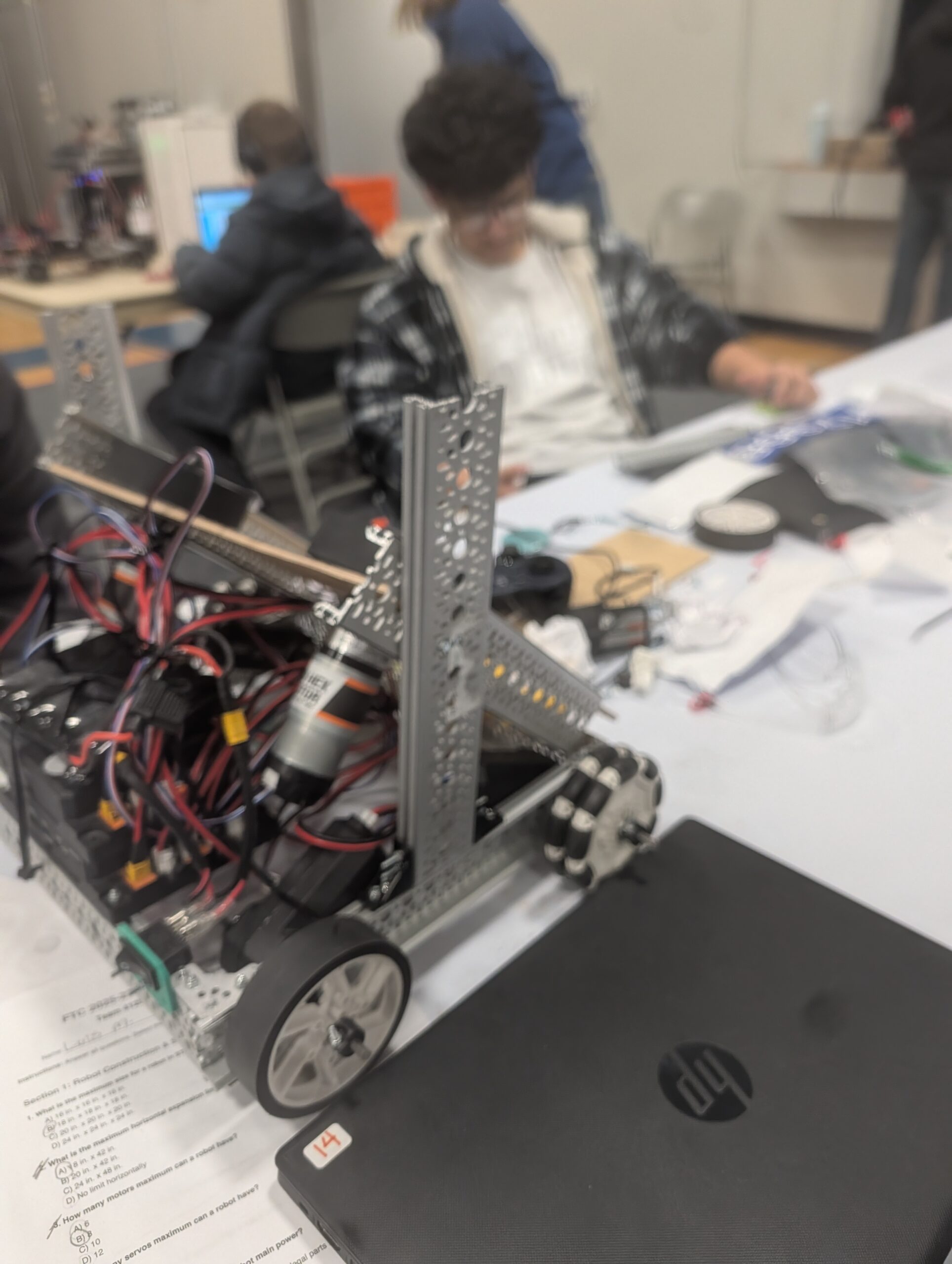
Image: A VEX model constructed by high school student robotics competition.jpg | Own work | License: CC BY 4.0 | Source: Wikimedia | https://commons.wikimedia.org/wiki/File:A_VEX_model_constructed_by_high_school_student_robotics_competition.jpg