Cloud computing and edge computing are not competing buzzwords so much as two answers to the same infrastructure question: where should compute live? One says, centralize it in large data centers and rent it as needed. The other says, push it closer to the source of data so systems can respond faster, use less bandwidth, and keep working when the network is imperfect.
That distinction matters more now than it did a decade ago. The cloud became the default operating model for software because it made scale easier, capital spending more flexible, and deployment faster. Edge computing has gained traction because modern systems increasingly produce and consume data at the boundary of the network: factories, hospitals, retail stores, vehicles, cell towers, warehouses, and utility substations. Those environments cannot always tolerate the round-trip delay of sending every packet to a distant region and waiting for a response.
The basic difference: centralize first, or distribute first?
Cloud computing typically means running applications, databases, storage, and analytics in centralized data centers operated by a public cloud provider such as AWS, Microsoft Azure, or Google Cloud, or in a private data center managed by an enterprise. The defining feature is not ownership alone; it is the architectural model. Compute, storage, and networking are pooled in large facilities, then delivered over the internet or private links.
Edge computing pushes some of that processing outward. Instead of sending raw data back to a central cloud region, an organization processes it on local devices, on-site servers, small colocation facilities, telco edge sites, or embedded systems near where the data is generated. The “edge” can mean a factory floor gateway, a smart camera, a 5G radio access site, or a box in a retail backroom. It is a location strategy, not a single product category.
The easiest way to think about the difference is this: the cloud is excellent at coordination, scale, and heavy lifting. The edge is excellent at immediacy, locality, and resilience. Most modern systems need both.
Why cloud computing won first
The cloud won the first era of enterprise digitization because it solved real business problems. Companies no longer had to buy racks of servers for every new project or overprovision hardware for peak demand. They could spin up infrastructure in minutes, pay for usage rather than idle capacity, and rely on cloud providers to handle much of the operational complexity.
This model works especially well for workloads that are not latency-sensitive: software development and testing, enterprise resource planning, customer relationship management, analytics, batch processing, backup, and many forms of machine learning training. Large cloud regions also concentrate specialized infrastructure—high-density storage, fast network fabrics, and increasingly powerful accelerators such as GPUs and custom chips—into environments that are hard for most companies to replicate themselves.
There is also an economics story here. Hyperscale cloud data centers can spread costs across enormous demand, which often makes them cheaper per unit of compute than a bespoke on-premises deployment. But the cloud is not automatically cheaper in every case. Data egress fees, sustained high utilization, and always-on workloads can change the calculation quickly. That is one reason organizations now scrutinize cloud bills more closely and look for places to keep certain workloads local.
What edge computing adds: lower latency, less backhaul, more control
Edge computing addresses three persistent constraints: latency, bandwidth, and reliability.
Latency is the delay between input and response. For many systems, a few hundred milliseconds is acceptable. For others, it is not. A machine vision system rejecting defective products on a conveyor belt cannot wait for a distant cloud region to classify each frame. An autonomous or highly assisted vehicle cannot depend entirely on a remote data center for split-second decisions. In those cases, local processing is not a luxury; it is a requirement.
Bandwidth becomes a problem when sensors generate more data than it is practical to move. Video streams, high-frequency industrial telemetry, and continuous equipment monitoring can overwhelm networks if every raw feed must travel to the cloud. Processing data locally lets a system send only exceptions, summaries, or compressed outputs upstream. That reduces network load and can lower recurring transport costs.
Reliability matters because edge environments often operate in places where connectivity is intermittent or expensive. A remote mine, an offshore facility, a hospital campus, or a warehouse with spotty backhaul needs systems that continue functioning during network degradation. Local compute provides a buffer between the physical world and the cloud.
There is a fourth reason, less technical but increasingly important: control. Some organizations want sensitive data to remain on-site for privacy, compliance, security, or policy reasons. In sectors such as healthcare, finance, industrial manufacturing, and public infrastructure, keeping certain processing local can simplify governance, even if it does not eliminate regulatory obligations altogether.
Cloud and edge are not substitutes in real deployments
In practice, most serious systems use a layered architecture. The edge handles collection, filtering, inference, and immediate response. The cloud handles fleet management, long-term storage, model training, global analytics, software updates, and cross-site coordination.
Consider a retail chain using smart cameras for loss prevention and inventory management. The cameras or local edge appliances can detect anomalies in real time and flag only relevant events. The cloud then aggregates data from hundreds or thousands of stores, helping the company analyze patterns, retrain models, and roll out software updates centrally.
Or take an industrial plant. Sensors on motors, pumps, and robotic arms may stream data to a local gateway that detects vibration anomalies or overheating before sending a work order to maintenance systems. The cloud can then compare performance across facilities, run predictive analytics, and help management decide where capital spending is needed. The edge makes the plant responsive; the cloud makes the operation intelligible at scale.
This division of labor is why the cloud-versus-edge debate is often misframed. The issue is not which one wins. It is which layer should do which job.
Where the economics get interesting
Infrastructure strategy has a habit of becoming finance strategy. Once an organization moves beyond pilot projects, it has to ask where the real cost sits: in compute, storage, bandwidth, maintenance, field deployment, or downtime.
The cloud is often best for workloads with unpredictable demand or for teams that want to move quickly without building infrastructure operations from scratch. It is also useful when a business wants to absorb fixed costs into variable spend. But cloud-only designs can become expensive when every camera frame, machine reading, or IoT event is shipped across the network even though only a small fraction is actionable.
Edge deployments, by contrast, may require more up-front planning. Organizations need to provision hardware at many sites, secure it physically, patch it remotely, and design for device lifecycle management. Those operational burdens are real. A thousand edge nodes can create a thousand small problems if the management layer is weak.
That is why mature edge strategies depend on orchestration tools, zero-touch provisioning, remote monitoring, and standardized hardware footprints. The hard part is not simply placing compute closer to users. It is managing distributed compute without turning it into chaos.
The hardware shift behind the software story
The cloud-edge split is also a chip story. Central data centers and edge devices need very different silicon profiles. Hyperscale clouds demand high-throughput CPUs, large memory capacity, fast networking, storage accelerators, and in many cases GPUs or specialized AI accelerators for training and inference. Edge systems often need compact, power-efficient chips that can do useful work under tighter thermal and power constraints.
This matters because power is now one of the central constraints in compute infrastructure. Large AI clusters consume enormous amounts of electricity, requiring careful planning around data center power delivery, cooling, and grid capacity. Edge sites may have the opposite challenge: limited available power, limited rack space, and harsh environmental conditions. A plant-floor device or telecom node cannot assume the same cooling and redundancy that a hyperscale facility enjoys.
As AI inference moves closer to the user and the machine, the hardware boundary becomes more fluid. Some inference runs centrally because the model is large or the data is sensitive. Some runs at the edge because latency is critical or because sending every query to the cloud is economically inefficient. The practical architecture is usually hybrid.
Policy, sovereignty, and the geography of data
The cloud-edge discussion is no longer just an engineering issue. It also intersects with policy. Data residency rules, sector-specific compliance requirements, and national security concerns can influence where data is stored and processed. Governments and regulators increasingly care about whether information crosses borders, who controls the infrastructure, and how critical systems behave under disruption.
That is especially relevant for public sector deployments, utilities, transportation, healthcare, and defense-adjacent systems. In these domains, edge computing can provide operational autonomy while cloud systems offer centralized governance and analytics. But decentralization can also complicate oversight. More devices and more sites mean more attack surface, more patching, and more opportunities for misconfiguration.
Security is therefore not a reason to avoid edge computing, but it is a reason to design it carefully. Encryption, device identity, secure boot, software signing, network segmentation, and disciplined update mechanisms are foundational. Without them, “distributed” can quickly become “exposed.”
So which one should a business choose?
The answer depends on the workload, not the slogan.
Choose the cloud when you need scale, central management, rapid deployment, broad analytics, or large shared infrastructure. It is especially strong for back-office systems, training large AI models, development pipelines, and workloads that can tolerate network latency.
Choose the edge when the system must react immediately, operate offline or on poor connectivity, reduce bandwidth usage, or keep certain data local. It is especially strong for industrial automation, retail analytics, telecom networks, real-time safety systems, and field operations.
Choose both when the business has distributed assets and wants the edge to handle the moment of action while the cloud handles the larger system of record. That is the direction many industries are already heading.
The practical takeaway
Cloud computing changed the center of gravity in IT. Edge computing is changing the perimeter. The old model assumed the most important place to process data was somewhere far away, in a data center. The emerging model assumes that the right place depends on the job.
That may sound obvious, but it carries real consequences for capital spending, network design, chip procurement, software architecture, and regulatory compliance. The next wave of infrastructure will not be defined by choosing cloud or edge as a pure ideology. It will be defined by deciding where each layer earns its keep.
Sources and further reading
- National Institute of Standards and Technology (NIST) cloud computing publications
- Cloud Security Alliance guidance on cloud and edge security models
- Intel, NVIDIA, and AMD documentation on edge AI and distributed inference architectures
- Microsoft Azure, AWS, and Google Cloud architecture references for hybrid and edge deployments
- ETSI Multi-access Edge Computing (MEC) specifications
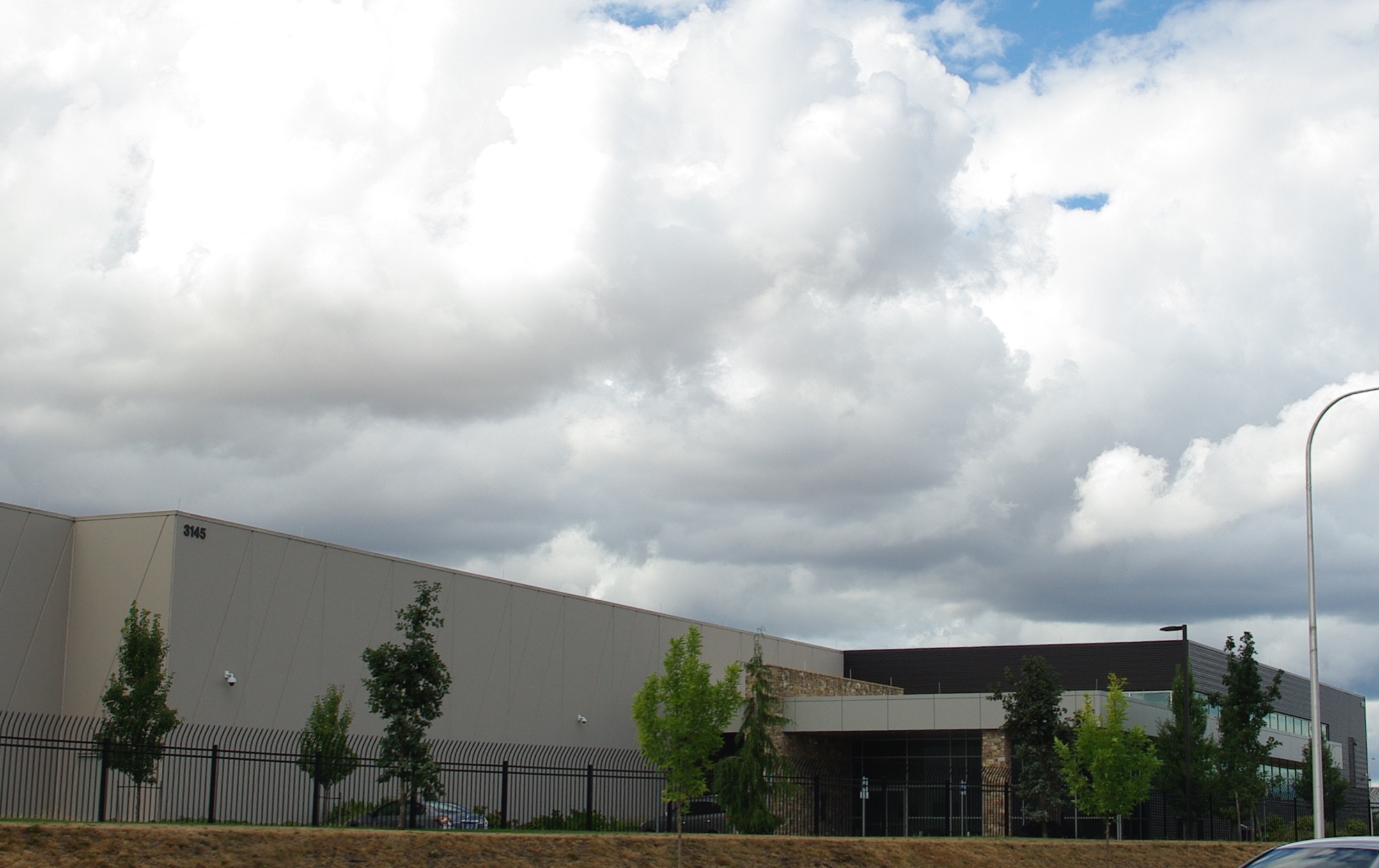
Image: Stack Infrastructure data center – Hillsboro, Oregon.jpg | Own work | License: CC BY-SA 4.0 | Source: Wikimedia | https://commons.wikimedia.org/wiki/File:Stack_Infrastructure_data_center_-_Hillsboro,_Oregon.jpg