Semiconductor manufacturing is one of those industries that sounds abstract until something goes wrong. Then it becomes visible everywhere: smartphone shortages, delayed GPUs, auto production bottlenecks, AI server constraints, and national security debates about supply chains. The reason is simple. Modern chips are not made by one company in one place. They are produced through a global system of design firms, foundries, equipment suppliers, and advanced packaging specialists, each with its own choke points.
If you want to understand the biggest players in semiconductor manufacturing, the right question is not just who makes the most chips. It is who controls the hardest steps, who owns the best process technology, and who can turn enormous capital spending into reliable output at scale. That is where the real power sits.
TSMC: the company that defines leading-edge manufacturing
Taiwan Semiconductor Manufacturing Co., or TSMC, is the most important pure-play foundry in the world. A foundry manufactures chips designed by other companies, and TSMC has become the default choice for leading-edge logic chips because it consistently delivers the best mix of performance, power efficiency, yield, and volume.
TSMC’s distinction is not simply that it is big. It is that it has turned manufacturing execution into a strategic moat. When people talk about “3nm” or “2nm” chips, they are usually referring to process nodes that TSMC helps define in practice through its ability to move from engineering to high-volume production faster and more reliably than rivals. That matters for companies building smartphones, GPUs, AI accelerators, and high-end CPUs, where a few percentage points of efficiency or yield can change the economics of an entire product line.
TSMC also benefits from scale. Advanced chip manufacturing requires extreme ultraviolet lithography, dozens of fabrication steps, and highly tuned process integration. The company’s enormous customer base helps justify the capital intensity of staying ahead. In practical terms, TSMC is the place where many of the world’s most valuable chip designs become physical products.
Samsung Foundry: the most serious challenger in advanced nodes
Samsung is the other major force in leading-edge logic manufacturing, and its foundry business matters because competition at the top end is so hard to sustain. Samsung combines memory leadership, logic manufacturing, and electronics scale under one roof, giving it advantages that most competitors cannot match.
What makes Samsung strategically distinctive is its willingness to invest aggressively in advanced process nodes and integrated device manufacturing capabilities. It is one of the few companies with both the technical ambition and balance-sheet muscle to challenge TSMC for leading-edge contracts. Samsung also plays across a wider semiconductor portfolio than most foundries, including DRAM and NAND memory, which gives it broader market relevance even when logic manufacturing cycles are uneven.
Still, the foundry race is not only about announcing nodes on a roadmap. It is about sustained yields, customer trust, and ecosystem depth. Samsung remains one of the industry’s most important manufacturing players precisely because it is still trying to close the gap where the market is most valuable.
Intel: manufacturing as a comeback strategy
Intel occupies a different position. It is not just a chip designer or a foundry. It has historically been both a designer and manufacturer, and now it is trying to use foundry services as part of a broader turnaround.
Intel’s technical story is about reasserting process leadership. For years, the company fell behind in manufacturing execution, which weakened its ability to control product performance and timing. Its current strategy is to rebuild credibility with new process technologies, advanced packaging, and a manufacturing model that can serve outside customers as well as its own product groups.
That matters because Intel still has assets few companies can match: deep fabrication expertise, a massive installed base in x86 computing, and strategic support from governments that want more semiconductor capacity in the United States and Europe. Intel Foundry is therefore more than a business line. It is an attempt to reshape the geography of chip manufacturing.
ASML: the company that makes the machines everyone else depends on
ASML does not fabricate chips, but it is one of the most consequential companies in semiconductor manufacturing because its lithography tools are essential for making the most advanced chips at all. Without ASML’s extreme ultraviolet, or EUV, machines, the leading edge of transistor patterning would be far harder and much slower to produce.
This is a crucial point for readers new to the industry: semiconductor manufacturing is not only about fabs. It is also about the equipment that makes the fabs possible. ASML’s unique position comes from years of engineering work, massive R&D spending, and a supplier ecosystem capable of producing some of the most complex machines ever built. Its monopoly-like position in EUV is one of the clearest examples of how a single toolmaker can shape the entire chip industry.
For governments worried about strategic dependence, ASML is a reminder that semiconductor power is distributed across the supply chain. A company may own the fab, but it still depends on specialized equipment from a limited number of vendors.
Applied Materials, Lam Research, and Tokyo Electron: the invisible backbone of the fab
When people talk about semiconductor manufacturing, equipment suppliers often get less attention than foundries. That is a mistake. Companies like Applied Materials, Lam Research, and Tokyo Electron provide the deposition, etch, cleaning, and process tools that make chip production possible at high volumes.
Their role is technically distinctive because each new generation of chips requires tighter control over materials, thinner layers, and more precise pattern transfer. At advanced nodes, manufacturing is less like stamping out identical parts and more like repeatedly shaping matter at the atomic scale with extraordinary consistency. These firms sit at the center of that problem.
They matter strategically because they sell into nearly every major fab in the world. Even when foundries compete fiercely, they often rely on the same class of tools to reach their targets. In other words, the equipment layer is where the industry’s shared industrial base lives.
GlobalFoundries: the scale player that chose a different lane
GlobalFoundries is not a leading-edge node champion, and that is exactly why it belongs in this conversation. The company made a strategic decision to step away from the most punishing race in advanced logic and focus on mature and specialty processes, where customers care more about reliability, cost, and long-term availability than the absolute newest node.
That positioning is important because not every chip needs the latest process. Automotive chips, connectivity silicon, industrial controllers, radio-frequency components, and a long tail of embedded devices often prioritize stability over cutting-edge transistor density. GlobalFoundries built a business around that reality.
Its role in the semiconductor industry is a reminder that manufacturing leadership is not one-dimensional. The most advanced node gets the headlines, but mature-node capacity is what keeps factories, cars, power systems, and industrial infrastructure running.
Why these companies matter together, not separately
The biggest players in semiconductor manufacturing are powerful for different reasons, but their real significance emerges when you see how they fit together. A GPU designer may rely on TSMC for fabrication, ASML and Applied Materials for the tools inside the fab, and an advanced packaging partner to assemble the final product into something usable at scale. A smartphone, an AI server, or an electric vehicle may depend on the output of several of these firms before a single chip reaches a customer.
This is why semiconductor manufacturing is such a strategic industry. It is capital intensive, technically unforgiving, and geographically concentrated. A few companies account for a disproportionate share of the most advanced capability, and that concentration affects pricing, product availability, and national policy.
For readers trying to follow the industry, the key takeaway is straightforward: the most important semiconductor companies are not just those with the largest revenue. They are the ones that control bottlenecks. In chipmaking, bottlenecks are power.
The bigger industry story: manufacturing is destiny
The semiconductor sector often gets discussed as if design is the whole story. It is not. Manufacturing determines what designs can actually ship, at what performance level, and at what cost. That is why a company like TSMC can shape product roadmaps across the consumer electronics and AI markets, why ASML can influence the pace of technological progress, and why Intel’s manufacturing ambitions matter far beyond its own product portfolio.
As demand grows for AI accelerators, high-bandwidth memory, advanced packaging, and energy-efficient compute, the companies that can manufacture at scale will have more leverage than ever. Semiconductor leadership is no longer only about making smaller transistors. It is about mastering an entire stack of process tools, materials, packaging methods, and supply chain coordination.
That is the real lesson of the industry’s biggest players: in semiconductors, manufacturing is not a back-end function. It is the business.
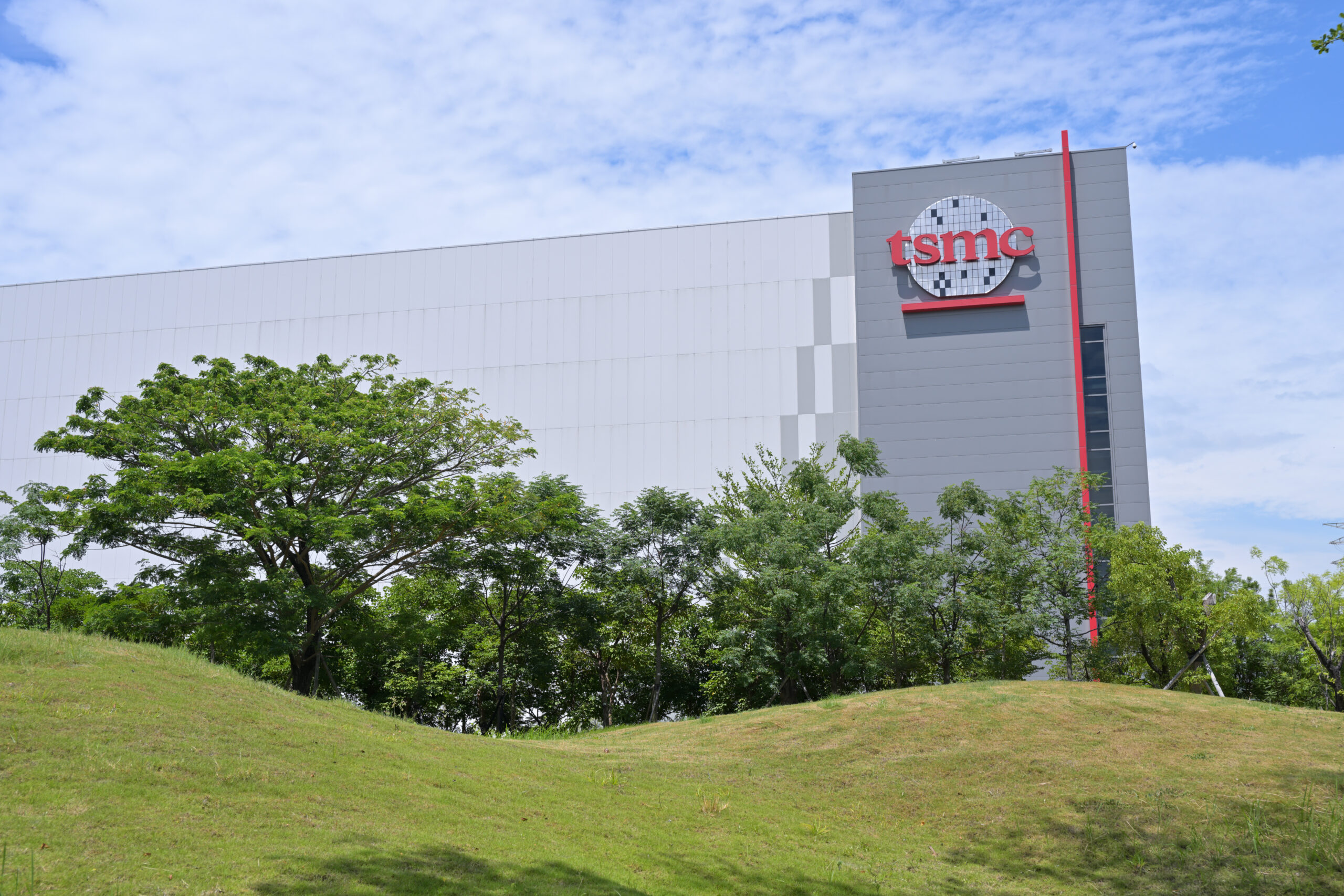
Image: TSMC AP2 building May 2025.jpg | Own work | License: CC BY 4.0 | Source: Wikimedia | https://commons.wikimedia.org/wiki/File:TSMC_AP2_building_May_2025.jpg