Packaging is no longer the back end of chipmaking
For years, semiconductor packaging was treated as the quiet final step in manufacturing: take the finished die, seal it, test it, ship it. That mental model no longer fits the industry. In modern compute, packaging is where a chip becomes a system, and where many of the hardest engineering limits now show up first.
The reason is simple. Transistor scaling still matters, but the performance gains from shrinking features are no longer enough on their own to keep pace with demand for AI training, inference, networking, and high-performance computing. Designers now rely on more memory bandwidth, denser interconnects, lower power loss, and better thermal control. Packaging is the layer that has to make those things possible without turning the device into an overheating, power-hungry bottleneck.
That is why advanced packaging has moved from a niche manufacturing specialty to a strategic industrial constraint. It sits between wafer fabrication and final assembly, but functionally it sits at the center of the stack: the point where silicon, memory, substrate, power delivery, and cooling all have to work together.
What packaging actually does
At its simplest, packaging protects the chip and connects it to the outside world. But the role is much broader in advanced devices. A package routes signals from the die to a substrate and then to the board. It helps manage heat. It supports power delivery. In more advanced forms, it can combine multiple dies, stack memory, or place components close enough to reduce latency and increase bandwidth.
That matters because today’s chips are rarely single, monolithic pieces of silicon doing one job. AI accelerators, server processors, networking silicon, and some automotive and industrial devices increasingly use chiplets and heterogeneous integration. One die may contain compute cores, another I/O, another cache, and high-bandwidth memory may sit nearby or on top. Packaging is what makes that architecture practical.
Without it, a designer is forced to cram more functionality onto one large die, which can reduce yield and raise cost, or accept a weaker system-level design. The package is therefore not just an enclosure. It is a performance enabler and, increasingly, a decision about economics.
The shift from transistor scaling to system integration
The industry used to talk mostly about node shrinks: 28 nanometers to 16, 7 to 5, 3 to 2, and so on. Those transitions still matter, but they do not solve every product problem. A modern accelerator can be limited less by transistor density than by how quickly it can move data in and out of memory, how much power it can draw through the package, or how much heat it can remove once it is running at full utilization.
That is why advanced packaging has become central to the economics of AI hardware. Compute is increasingly bottlenecked by data movement, not arithmetic. If a system cannot feed the chip with enough memory bandwidth, the silicon sits underused. Packaging technologies such as 2.5D integration, interposers, and 3D stacking are used to shorten those paths and raise effective bandwidth.
This is also why packaging is not merely a matter for chip designers. It affects foundries, outsourced assembly and test providers, substrate makers, memory suppliers, and datacenter operators. It is an industrial workflow problem: a chain of manufacturing decisions that determine whether the final system can hit its target power, cost, and performance envelope.
Why AI made packaging a board-level issue
AI workloads have pushed packaging into the center of compute architecture because they are unforgiving about memory and interconnect. Training large models requires moving huge volumes of data between compute and memory, and inference systems increasingly need high throughput with tight power budgets. The result is a hardware stack that depends on close coupling between accelerator dies and high-bandwidth memory, often packaged together in elaborate assemblies.
That has made technologies like HBM, silicon interposers, and advanced substrates strategically important. HBM is not just “fast memory”; it is part of a tightly integrated package strategy that can determine whether an accelerator is competitive. If memory bandwidth is insufficient, the best-designed compute die will not reach its potential.
Packaging also shapes how many accelerators can fit in a server or rack. Larger packages can raise thermal density and complicate board design. More power through smaller volumes means more demanding cooling and power delivery. In data centers, those constraints translate into practical limits on system density, electrical infrastructure, and total cost of ownership.
2.5D and 3D packaging: different answers to the same problem
Advanced packaging is not one technology but a family of approaches.
2.5D packaging typically places multiple dies side by side on an interposer or advanced substrate. This shortens the distance between components and improves bandwidth compared with traditional board-level integration. It is widely used where designers need large amounts of memory bandwidth and close die-to-die communication without fully stacking chips.
3D packaging goes further by stacking dies vertically. This can reduce footprint and interconnect length even more, but it raises heat and manufacturing complexity. Thermal management becomes harder when the upper die is stacked over another active layer, and the process window narrows as alignment and yield demands increase.
The choice between these approaches is not purely technical. It depends on product goals, thermal limits, cost tolerance, supply chain availability, and manufacturing maturity. In many cases, the “best” package is the one that makes the whole system manufacturable at scale, not the one that looks most advanced in isolation.
The hidden dependencies: substrates, yields, and thermal design
One of the reasons packaging is such an important constraint is that it relies on multiple specialized supply chains. High-end packages often need advanced organic substrates, redistribution layers, fine-pitch interconnects, and reliable assembly processes. If any one of those inputs is constrained, the entire system can be delayed.
Substrates are a good example. They are often invisible in public discussion, but they are essential to routing dense interconnects and supporting large packages. When demand rises faster than substrate capacity, that becomes a real production bottleneck. The same is true for assembly capacity and test capability, which can be much harder to scale than wafer production alone.
Yield is another issue. Larger, more complex packages increase the number of failure points. Even if individual dies are good, the assembled package may fail at final test. That can erase gains from chiplet-based design if the integration process is not mature enough. Advanced packaging therefore changes not just performance, but manufacturing economics. It can improve system flexibility while also adding cost, process complexity, and inspection burden.
Thermals are the last major constraint. Chips get hot because they consume power, and packaging affects how quickly that heat escapes. Materials, thickness, die placement, underfill, heat spreaders, and attachment methods all matter. In many high-end designs, thermal design is a first-order architectural decision, not a mechanical afterthought.
Why chiplets make packaging more valuable, not less
Chiplets are often described as a way to improve yield and lower cost by breaking a big chip into smaller pieces. That is true, but incomplete. Chiplets only work well when the package can deliver very dense, very reliable die-to-die communication. In other words, the chiplet model increases the importance of packaging rather than reducing it.
This is especially important for companies trying to mix process nodes. A design may use one node for compute, another for I/O, and another for memory-adjacent logic. Packaging is the integration layer that lets those choices coexist in one product. It gives designers architectural freedom, but that freedom comes with dependency on advanced assembly, substrate technology, and test.
The broader industrial implication is that packaging is becoming a competitive differentiator for semiconductor firms, not just a manufacturing utility. Companies that can co-optimize silicon design, package design, power delivery, and thermal behavior can ship systems that are easier to scale and potentially more cost-effective in deployment.
The industrial workflow behind the scenes
Understanding packaging as workflow, not just technology, helps explain why it is so central. A modern advanced package requires coordination across wafer fabrication, die dicing, substrate procurement, assembly, bumping, bonding, test, and system integration. Each step affects the next.
For example, design teams must think early about die size, bump pitch, thermal pathways, and how the package will connect to the board. Manufacturing teams must ensure the package can be assembled with acceptable yield. Customers—especially cloud operators, OEMs, and system integrators—must plan for the electrical and cooling consequences at the rack level.
This cross-functional dependency is why packaging cannot be treated as an afterthought. It changes the design cycle, the supplier base, and the cadence at which product generations can be brought to market. In a sector where lead times matter, that is a strategic variable.
The business consequence: packaging is now capacity planning
The phrase “advanced packaging” can sound like a feature upgrade. In reality, it is often a capacity planning problem. If a chipmaker cannot secure enough advanced packaging throughput, it cannot turn wafers into sellable systems at the needed volume. If substrate supply lags demand, the company may have wafer inventory but not finished product. If thermal requirements force larger server designs, deployment slows at the customer side too.
That is why packaging is increasingly discussed alongside fabs, HBM, and foundry capacity in industry planning. The limiting factor for a new accelerator program may not be transistor density at all. It may be the ability to assemble and test packages reliably at scale.
For policymakers and industrial planners, this is an important point. Semiconductor resilience is not only about building more fabs. It also requires investing in the materials, assembly, and testing ecosystem that turns wafers into functional compute products. Packaging is part of the industrial base, not a footnote to it.
What to watch next
The next phase of the industry will likely be defined by how well companies align three things: more compute, more memory bandwidth, and better power and thermal efficiency. That will keep advanced packaging in the spotlight, especially for AI accelerators, data center CPUs, networking silicon, and heterogeneous systems built from chiplets.
Expect packaging to remain a competitive boundary between chipmakers, outsourced assembly firms, and substrate suppliers. Also expect more scrutiny of where the capacity exists, how quickly it can be expanded, and which regions can support the full stack of materials, assembly, and test.
In the end, packaging matters because it is where semiconductor ambition meets manufacturing reality. The future of compute will not be decided by transistor counts alone. It will be shaped by the industrial layer that connects those transistors into a usable, power-efficient system.
Sources and further reading
- Semiconductor Industry Association (SIA) materials on supply chain and advanced manufacturing
- ASE Technology Holding annual reports and investor materials on advanced packaging
- Amkor Technology investor presentations and technical overviews
- TSMC public materials on advanced packaging platforms such as CoWoS and SoIC
- Intel public documentation on Foveros and advanced packaging strategies
- IEEE papers and conference proceedings on 2.5D/3D integration, interposers, and thermal design
Editorial note: specific capacity figures, market share claims, and supplier bottleneck details should be verified against current company filings and recent industry reports before publication.
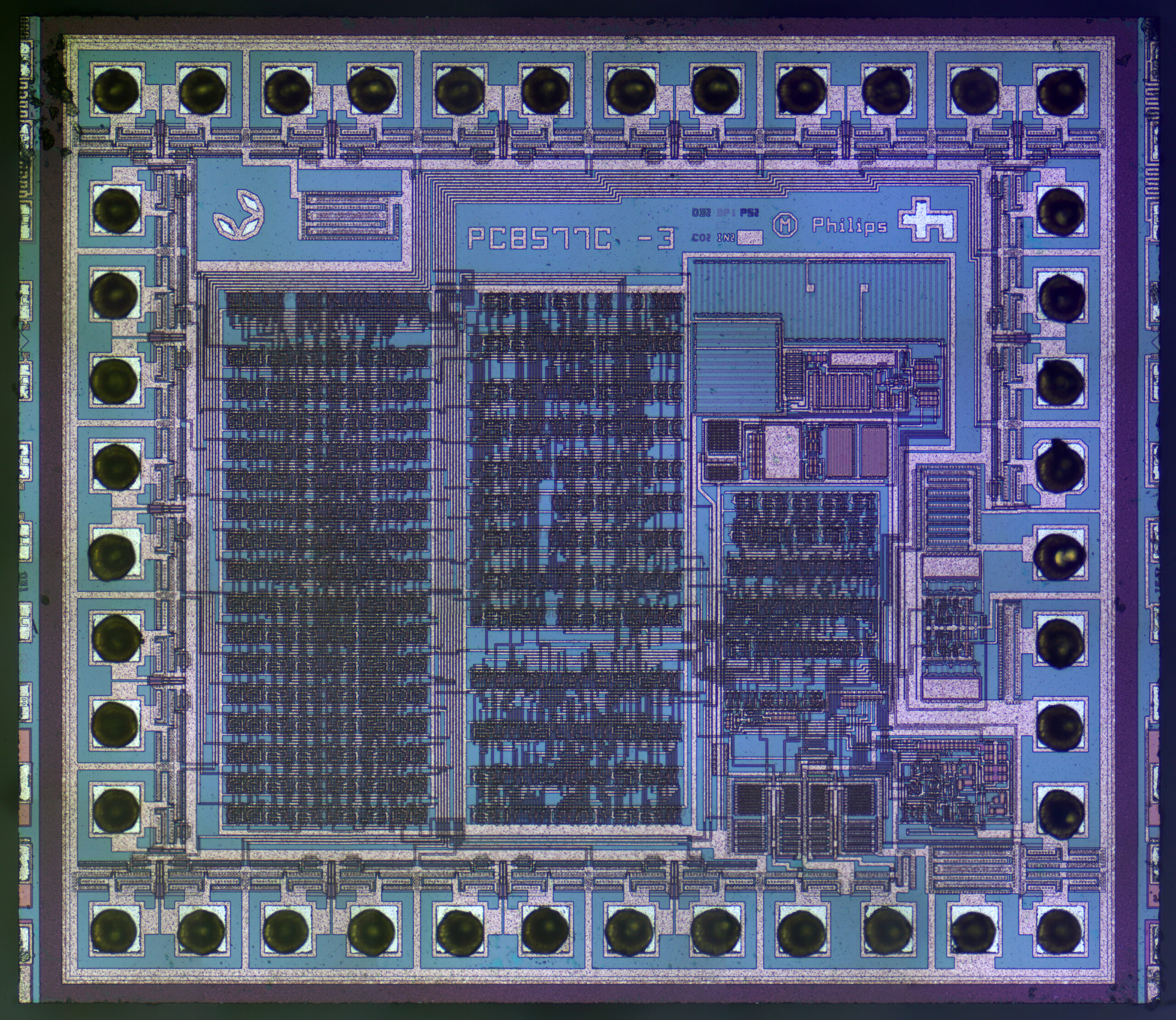
Image: NXP PCF8577C LCD driver with I²C (Colour Corrected).jpg | https://www.flickr.com/photos/187597251@N05/49899342293/ | License: CC BY-SA 2.0 | Source: Wikimedia | https://commons.wikimedia.org/wiki/File:NXP_PCF8577C_LCD_driver_with_I%C2%B2C_(Colour_Corrected).jpg