Artificial intelligence is entering education the way many technologies do: first as a convenience, then as an efficiency play, and finally as a policy problem. What began with tutoring apps and automated grading tools is now pushing deeper into the machinery of schooling—staffing, curriculum design, student support, assessment, procurement, and compliance.
That matters because education is not just another enterprise software market. Schools are labor-intensive, publicly funded institutions with tight budgets, strong unions in many places, and a legal duty of care to students. When AI arrives here, the stakes are not limited to test scores or classroom novelty. The real questions are about cost, trust, oversight, and which parts of education can be automated without eroding the human work that makes schooling function.
AI is changing schools by changing the work inside them
The most immediate impact of AI in education is not a robot teacher. It is administrative compression. Districts and universities are using AI systems to draft parent communications, summarize meetings, route support tickets, flag attendance patterns, and help staff manage routine paperwork. In theory, this reduces the hours educators spend on low-value administrative tasks. In practice, it can also shift labor expectations upward: if a system can generate lesson plans in seconds, does that mean teachers are supposed to produce more of them, faster, with less support?
This is where the labor question becomes unavoidable. Education systems are already strained by staffing shortages in special education, counseling, substitute coverage, and other high-friction roles. AI does not solve those shortages in a direct sense. It can, however, change how institutions allocate staff time. A school that automates parts of clerical work may reduce pressure on office staff, but it may also use the savings to justify leaner staffing models or larger class loads. That is not an abstract risk; it is the usual pattern whenever automation enters a labor-intensive service sector.
For teachers, the promise is time. AI tools can help with differentiated worksheets, first-pass feedback, translation, and content adaptation for students at different reading levels. The danger is that “time saved” gets recaptured by the institution rather than returned to the educator. If the net effect is more individualization without more planning time, schools can end up asking teachers to do higher-complexity work at the same speed. That is a productivity story, but not necessarily a humane one.
The biggest cost may be hidden in procurement, not software licenses
Education buyers often focus on the sticker price of a product, but AI changes the cost structure. A district does not just purchase a chatbot or an assessment engine. It must also manage data integration, account provisioning, security review, legal terms, staff training, and vendor oversight. That means the total cost of ownership can be far higher than the subscription fee suggests.
There is also an infrastructure issue. AI tools increasingly rely on cloud services, identity systems, data pipelines, and policy controls that many schools were never built to operate at scale. District IT teams, especially in smaller public systems, may lack the staff to evaluate model behavior, monitor data retention settings, or verify whether a vendor is training on student data. Even when a platform claims to be “education-safe,” the burden of due diligence usually lands on the district.
This is why procurement is becoming one of the central fronts in AI adoption. Schools are not buying a finished product; they are buying a relationship with risk. Every vendor contract raises questions: Where is student data stored? Can prompts be logged or deleted? Are outputs editable and auditable? What happens if the model gives harmful advice? Is the tool compatible with disability accommodations? These are not edge cases. They are the core operational details that determine whether AI can be used responsibly in a public education setting.
Assessment is where the trust problem becomes visible
Few parts of education are more sensitive than assessment, and AI is putting pressure on both sides of the grading equation. Students are using generative tools to draft essays, solve problem sets, and summarize readings. At the same time, schools are using AI-assisted tools to detect plagiarism, generate rubric-based feedback, and experiment with automated scoring.
Both trends create a credibility problem. Student use of AI makes traditional take-home assignments less reliable as a measure of individual work. But automated detection is not a clean fix. Text classifiers and “AI detectors” are widely known to be error-prone, especially for multilingual students and nonstandard writing styles. If a school relies too heavily on these tools, it risks punishing the wrong students while creating a climate of suspicion.
The deeper issue is that assessment design itself is changing. If a student can use an AI assistant on a homework assignment, educators have to decide whether the assignment is meant to measure raw recall, process, revision skill, or the ability to direct a machine effectively. That is not a minor pedagogical adjustment. It is a redesign of what counts as evidence of learning.
In some cases, the answer will be to move more assessment in person, or to emphasize oral defenses, project work, in-class writing, and iterative assignments that show process rather than just final output. Those shifts may improve educational quality, but they also require more teacher time and more institutional support. Again, the technology may reduce friction in one part of the system while increasing it in another.
Special education and language support may benefit first
Despite the caution, AI does have clear upside in areas where educational systems have long struggled to scale personalized support. Students with disabilities, English learners, and students who need repeated practice often benefit from tools that adapt in real time. Speech-to-text, text-to-speech, translation, reading simplification, and responsive tutoring can remove barriers that traditional classroom structures cannot always address.
That matters because many schools are already under legal and moral pressure to provide accommodations they do not have enough staff to deliver consistently. AI can help fill some of that gap by offering more immediate, low-friction support. But this should be understood as augmentation, not replacement. A model that helps a student draft a paragraph or rephrase a passage does not substitute for a special education teacher, a speech therapist, or a trained interpreter.
The practical test is whether the tool expands access without narrowing human judgment. If AI becomes a way to push more responsibility onto students with less adult support, the system is just digitizing scarcity. If it genuinely helps teachers notice patterns earlier, personalize instruction, and reduce routine barriers, it can improve outcomes without pretending to be a substitute for expertise.
Policy is lagging because schools move slower than software
Education policy is struggling to keep up because the system is fragmented. School districts, state agencies, universities, teachers’ unions, and federal regulators all have different authorities and different tolerances for risk. A technology policy that works for a private company may not work in a public school, where transparency, fairness, and recordkeeping matter more than speed.
Several policy questions are now unavoidable. Should schools be allowed to use student work to train third-party models? Under what conditions can AI-generated feedback count toward grading? Who is liable if a tool gives harmful advice about mental health, self-harm, or bullying? What privacy obligations apply when a system processes minors’ data? These are not theoretical edge cases; they are the kinds of governance issues that determine whether AI can be responsibly deployed at all.
Regulation will likely emerge unevenly. Some states and districts will set clear rules; others will adopt a patchwork of informal guidance and vendor promises. That creates a familiar problem in public-sector technology: the institutions with the weakest internal capacity often adopt the most risk by default, because they have the least ability to evaluate the systems they are using.
There is also a broader labor-policy angle. If AI materially changes teacher workload, lesson planning expectations, or support staffing, then districts may eventually face collective bargaining disputes over job scope and surveillance. Many school systems already use digital tools to monitor attendance, productivity, or classroom behavior. AI could intensify that dynamic if administrators treat it as a management layer rather than a support tool.
The daily-life impact will be uneven, and that is the point
For families, AI in education will not feel like a single transformation. It will show up as small, cumulative changes: faster responses from schools, more personalized practice, more automated nudges, more digital interfaces, and possibly more confusion about what counts as legitimate student work. Some parents will welcome that. Others will worry that schools are outsourcing judgment to tools they do not fully understand.
Students will experience the most visible version of the transition. They will need to learn not just subject matter, but how to work with AI responsibly: when to use it, how to verify it, what it can and cannot do, and how to document their own thinking. That is a new kind of literacy. But it should be taught carefully, because “AI literacy” can become a slogan that masks poor policy. Knowing how to prompt a model is not the same as knowing when not to trust it.
For education systems, the bigger risk is that AI is adopted as a cost-control mechanism before it is adopted as a learning tool. That sequence would repeat a familiar pattern in public institutions: automation is introduced to absorb budget pressure, then normalized before anyone has measured its effect on quality, equity, or labor. Once embedded, those systems are hard to roll back.
What a sane adoption strategy looks like
The strongest education strategy is not “AI everywhere” or “AI nowhere.” It is selective deployment with clear boundaries. Schools should prioritize low-risk, high-return uses first: administrative drafting, translation, accessibility support, teacher prep assistance, and workflow automation that does not directly determine grades or student discipline. Anything touching high-stakes decisions should face stricter review, human oversight, and documentation.
Districts should also demand basic governance from vendors: data-use limits, retention controls, auditability, accessibility compliance, and straightforward language about model behavior. If a provider cannot explain where data goes and how outputs are reviewed, it is not ready for a school environment.
Most important, education leaders need to define success in human terms. A good deployment is not one that merely saves money or increases output. It is one that improves instruction, reduces administrative burden, preserves fairness, and expands access without compromising trust. That is a much higher bar than most software companies are used to, but schools are not software buyers first. They are custodians of public responsibility.
Sources and further reading
- U.S. Department of Education, Office of Educational Technology: guidance and reports on AI in education
- UNESCO guidance on generative AI in education and research
- OECD work on AI, education, and labor impacts
- National Center for Education Statistics data on school staffing and technology capacity
- State education department guidance on student data privacy and AI use policies
Editorial note: Specific district-level adoption examples, vendor terms, and legal interpretations should be verified against current contracts, state policy, and local school board guidance before publication.
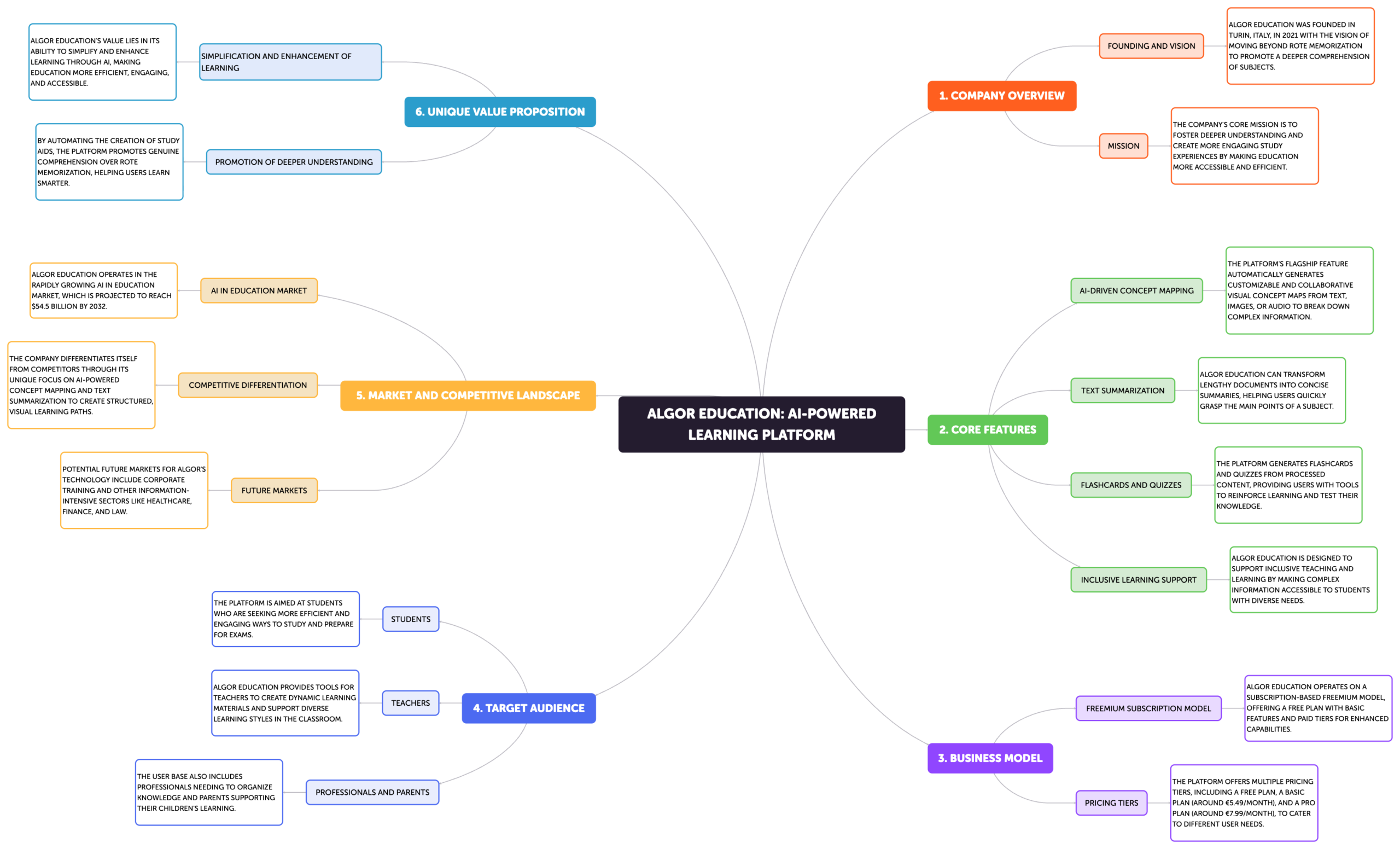
Image: Algor Education AI-Powered Learning Platform.png | Own work | License: CC0 | Source: Wikimedia | https://commons.wikimedia.org/wiki/File:Algor_Education_AI-Powered_Learning_Platform.png