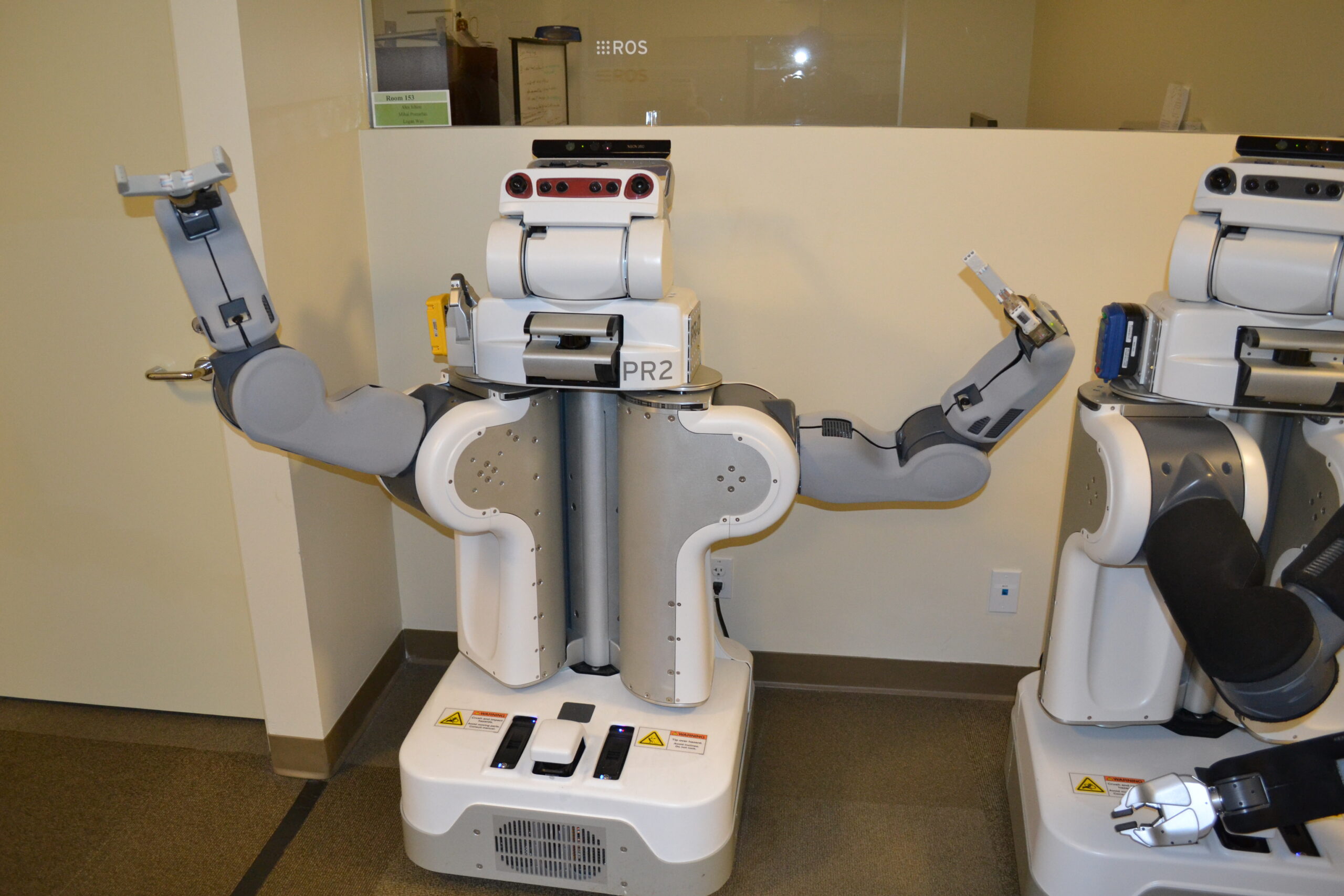
Robots Are Replacing Tasks, Not Entire Factories
The question of whether robots will replace human workers in manufacturing sounds simple, but the real answer is more operational than dramatic. In most factories, robots are not dropping into a blank slate and taking over a human job from start to finish. They are being inserted into specific steps in a production workflow where the economics, precision, and repeatability make sense.
That distinction matters. A robot can weld, pick, place, palletize, inspect, or screw with high consistency. But manufacturing is not just a sequence of repetitive motions. It is a system of material handling, quality control, changeovers, exception handling, maintenance, scheduling, and downstream logistics. Human workers still do a lot of the work that keeps that system from stalling.
So the better question is not whether robots replace workers. It is where robots fit in the stack, which tasks they absorb, and what kinds of labor remain valuable once automation is deployed.
Where the Robot Actually Sits in the Stack
Factory automation is layered. At the lowest level are the physical machines: robotic arms, gantry systems, autonomous mobile robots, sensors, grippers, vision systems, and safety hardware. Above that are control systems such as programmable logic controllers, industrial PCs, and motion-control software. Higher up sit manufacturing execution systems, warehouse management software, quality systems, and planning tools that coordinate production across shifts and sites.
A robot arm is only as useful as the systems around it. If the gripper cannot handle variation in parts, if the vision system is unreliable, if the line layout forces excessive downtime, or if the upstream supply of components is inconsistent, automation becomes expensive theater instead of productive capacity.
This is why deployment in manufacturing is often less about raw robot capability than integration. A plant does not buy “a robot” in the abstract; it buys a worked-out cell that fits its cycle time, part geometry, tolerance requirements, safety envelope, and labor model. In practice, the hardest work is often in fixtures, tooling, integration software, and uptime engineering.
The Jobs Most Exposed Are the Most Structured
Robots tend to displace the most structured tasks first. That includes repetitive pick-and-place operations, spot welding, packaging, palletizing, and some forms of machine tending. These jobs are attractive automation targets because the input is standardized, the environment can be constrained, and the ROI is easier to calculate.
Automotive manufacturing has long been the classic example. Welding and paint shops are heavily automated because the parts are relatively consistent and the economics reward scale. Electronics assembly also uses robotics in specific steps, especially where precision and throughput matter. Warehousing and distribution, while not manufacturing in the narrow sense, have become major proving grounds for robots because their tasks can often be decomposed into structured movements and scanning workflows.
The more a task depends on dexterity, visual interpretation, and improvisation, the harder it is to automate. Human hands still outperform machines in many irregular, high-mix environments. A worker can notice a bent tab, adjust for an off-spec component, or reorient a part that slipped in transit. That flexibility is hard to replicate economically, even as machine vision and force sensing improve.
Economics Sets the Pace, Not the Hype Cycle
Manufacturers do not adopt robots because the technology is exciting. They adopt robots when the business case clears a hurdle: labor scarcity, wage pressure, quality losses, injury reduction, throughput gains, or the need to reshore production with tighter process control. In many plants, the initial capital expense is only one part of the calculation. Integration, software, commissioning, maintenance, and retraining often determine whether the project succeeds.
The economic logic also varies by company size. Large manufacturers can amortize automation across many identical lines and larger production volumes. Small and mid-sized factories often face a different reality: they may need flexible systems that can handle short runs and frequent changeovers, but those are often more complex and harder to justify financially.
That is why collaborative robots, or cobots, have attracted attention. They are marketed as easier to deploy and safer to place near human workers. In some cases, that is true. But cobots are not magic labor substitutes. They still require programming, end-effectors, process design, and safety validation. If the application is not well suited to a cobot, the system can be slower than a person and only marginally easier to manage.
The economic case for robots is therefore uneven. In high-volume, stable production, automation can be compelling. In low-volume, high-mix environments, it often remains partial and selective.
What Human Workers Still Do Better
Human labor remains essential in areas where variability dominates. Workers handle line restarts, diagnose faults, perform preventive maintenance, adapt to supply disruptions, and manage exceptions that fall outside the trained behavior of a machine. They also do the kind of cross-functional work factories rely on but rarely advertise: communicating across shifts, monitoring quality trends, and making on-the-fly adjustments to keep production moving.
There is also a difference between executing a task and owning the process. A robot may be able to place a component, but a person is often still responsible for deciding whether the component should be placed, whether the line should be run, whether a machine should be cleaned, or whether a batch should be held for inspection.
That means the labor market impact of robotics is more likely to be a reshaping of roles than a total disappearance of factory work. Some repetitive positions shrink. Others become more technical. New jobs appear in installation, controls integration, mechatronics, systems maintenance, data analysis, and production engineering.
Safety and Compliance Are Part of the Cost Structure
Robots do not operate in a vacuum. Industrial deployment is constrained by safety standards, guarding requirements, insurance, and facility design. Traditional industrial robots often need cages or fenced cells to keep people out of dangerous motion paths. Cobots can be placed closer to workers, but that does not eliminate risk; it changes the safety analysis and the use case.
Factories also need to think about failure modes. A robot that drops a part may slow a line. A robot that misidentifies a component can create quality defects downstream. A robot that is difficult to troubleshoot can become a liability if maintenance teams lack the training or vendor support to keep it running. In other words, automation shifts risk rather than eliminating it.
For that reason, the best robot deployments are usually boring in the best sense of the word: tightly bounded, well documented, and designed around predictable operating windows. The flashy demo matters less than the ability to run 24/7 with acceptable uptime and low scrap.
AI Will Help, But It Will Not Remove the Need for Industrial Discipline
Recent progress in machine vision, planning software, and learning-based control is expanding what robots can do. Systems are getting better at recognizing parts, adapting grasp strategies, and handling more variation than older automation tools could tolerate. That opens the door to broader use in mixed-product environments and more flexible cells.
Still, the practical bottleneck is often not intelligence in the abstract. It is industrial discipline. AI can help a robot perceive and respond, but a factory still needs fixture design, reliable sensors, clean data, robust exception handling, and a maintenance culture that can support the system over years, not weeks.
This is where a lot of public discussion goes off the rails. It imagines a future in which a robot simply learns a job and replaces a person. Manufacturing does not work that way. Production is a physical process, bound by wear, tolerances, scheduling, and the cost of downtime. Intelligence helps, but the factory still needs engineering.
The Real Impact: Fewer Repetitive Roles, More Technical Ones
For workers, the long-term effect of robotics is likely to be uneven. Some jobs will disappear or shrink, especially roles built around repetitive motion in stable environments. But many factories will continue to need people, just with different skills. The most durable human roles are likely to be those that combine mechanical understanding, process judgment, and operational troubleshooting.
That implies a transition problem as much as a technology problem. If plants automate without investing in training, the result can be a thinner workforce with more fragile operations. If they pair automation with upskilling, they can increase throughput while retaining institutional knowledge on the floor.
Policy can matter here too, though specifics vary by country and region. Workforce development programs, apprenticeship pipelines, and support for technical education can make automation less disruptive and more productive. The question is not whether technology changes labor. It does. The question is whether the transition creates broadly shared gains or concentrates benefits while pushing risk onto workers.
The Bottom Line for Manufacturing
Robots are not about to replace all human workers in manufacturing. They are better understood as force multipliers that excel at stable, repetitive, physically demanding tasks and struggle when the environment is messy, variable, or poorly integrated.
The factories that benefit most from robotics are not the ones with the most machines. They are the ones that understand where automation belongs in the workflow, what it costs to install and maintain, and which human tasks become more valuable once the line is partially automated.
In that sense, robots are changing manufacturing less by erasing labor than by redefining it. The durable advantage goes to companies that treat automation as an operating system for the factory, not a headline.
Sources and further reading
- International Federation of Robotics (IFR) reports and World Robotics publications
- U.S. Bureau of Labor Statistics: Occupational Outlook and manufacturing employment data
- National Institute of Standards and Technology (NIST): industrial robotics and automation resources
- OSHA guidance on industrial robot safety and safeguarding
- IEC 61508 / ISO 10218 / ISO/TS 15066 standards for industrial and collaborative robot safety
Image: PR2 robot with advanced grasping hands.JPG | Own work | License: CC BY-SA 3.0 | Source: Wikimedia | https://commons.wikimedia.org/wiki/File:PR2_robot_with_advanced_grasping_hands.JPG