Robotics is no longer just about movement
Boston Dynamics has become one of the clearest examples of a company that builds robots for the real world rather than for lab demonstrations. That distinction matters. In industrial settings, the hard part is rarely whether a machine can move, lift, balance, or climb. The harder problem is whether it can do useful work every day in spaces designed for people, around changing objects, inconsistent lighting, and workflows that were never optimized for automation in the first place.
That is where Boston Dynamics fits in the stack. It is not selling a single machine in isolation. It is trying to sell a combination of hardware, perception, software, and deployment discipline that can slot into logistics, inspection, material handling, and other repetitive tasks where labor is scarce or expensive. The economics of the business are shaped by the same constraint that governs most automation programs: a robot only matters if it can be deployed reliably, maintained affordably, and integrated into the customer’s existing operations.
For Teranova readers, the interesting question is not whether Boston Dynamics can make robots that are technically impressive. It clearly can. The question is which workflows are finally ready to absorb them, and what it takes for advanced robotics to cross from spectacle into infrastructure.
Where Boston Dynamics sits in the industrial stack
Boston Dynamics’ portfolio is easier to understand if you view it as a set of tools for different layers of industrial automation. Spot is the most visible example: a quadruped robot built for inspection and remote monitoring in environments that are hard, dangerous, or simply inefficient for people to traverse repeatedly. Stretch is aimed at warehouse and distribution work, especially trailer unloading and carton handling. Atlas, the humanoid platform, has become the company’s symbol for general-purpose robotics research and advanced manipulation, though its commercial role is still more exploratory and should be treated carefully until deployment details are public and stable.
This matters because each robot maps to a different economic problem. Spot is about replacing routine human walking and observation in industrial sites, from energy infrastructure to large facilities. Stretch is about throughput: reducing the labor and fatigue burden in material handling, one of the most persistent bottlenecks in logistics. Atlas, if and when it becomes a scalable product, points toward a more ambitious category of tasks where the environment was built for humans and cannot be easily redesigned around fixed automation.
That is the practical frame. Boston Dynamics does not build robots to chase a generic “general intelligence” story. It builds machines for specific operational niches where the combination of mobility, perception, and manipulation has just enough value to justify the complexity.
The core engineering problem: robustness, not performance demos
Advanced robots look extraordinary in controlled video because controlled video strips away the conditions that make automation difficult. Industrial deployment is almost the opposite. Floors are dirty. Objects are inconsistently placed. Human workers are impatient. The environment changes. Software must tolerate edge cases because edge cases are the job.
Boston Dynamics’ engineering reputation rests on solving robustness problems that many robotics teams struggle with: locomotion over uneven terrain, recovery from slips and disturbances, stable operation over long periods, and movement in spaces that include stairs, ramps, pallets, trailers, and clutter. The company’s work in perception and control is central here. A robot that can balance beautifully but cannot detect what changed in the environment is not commercially useful.
In industrial robotics, the full stack usually includes:
- Mechanical design that can survive real work, not just one polished demo run.
- Actuation and power systems that balance force, efficiency, runtime, and durability.
- Perception to understand the layout of a facility and identify objects or safe paths.
- Control software that can execute movement reliably and recover from failure states.
- Fleet management and integration tools so operations teams can schedule, monitor, and maintain robots like other production equipment.
The important point is that every one of those layers affects deployment cost. A robot that requires constant manual intervention is not an automation asset; it is a high-end pilot project. The economic objective is autonomy that can be trusted enough to reduce labor burden rather than merely reshuffle it.
Spot: inspection as an automation wedge
Spot is the clearest example of Boston Dynamics’ industrial logic. Inspection is a strong use case because many facilities already perform repetitive visual checks, and those checks often involve risk, inconvenience, or travel across large sites. Power plants, manufacturing floors, warehouses, and remote infrastructure all generate routine inspection tasks that are valuable but not always efficient for people to do at scale.
In this setting, Spot’s value comes from mobility and data capture. It can traverse areas where wheeled systems might struggle, and it can carry sensors for visual inspection or specialized monitoring. That makes it useful not because it “replaces a person” in some broad sense, but because it shifts how inspections are done: from a human walking a route to a robot collecting consistent, repeatable data.
That consistency is often underrated. Industrial operators care about trends, anomalies, and repeatability. If a robot can gather the same kinds of observations every day from the same angles, the data becomes more useful over time. In that sense, robotics is not only a labor story. It is a data infrastructure story too.
There are constraints, of course. Spot still depends on a customer’s workflow architecture: what it is inspecting, how data is stored, who reviews it, and whether the organization has a maintenance model for charging, repairs, calibration, and software updates. The robot is only one node in a larger operational system.
Stretch and the warehouse economics of repetitive labor
If Spot shows how Boston Dynamics approaches inspection, Stretch shows how it approaches throughput. Warehouse and distribution centers have a simple but brutal problem: a lot of labor goes into handling packages and cartons that are individually modest but collectively enormous in volume. Tasks like trailer unloading are physically demanding, repetitive, and difficult to staff consistently. That creates a strong economic case for automation if a robot can handle variability without requiring a fully standardized environment.
Stretch is designed around that pressure point. Its value proposition is not abstract intelligence. It is the capacity to move cartons and support material handling workflows where labor availability, turnover, and physical strain are ongoing cost drivers. In the warehouse context, automation is not just about peak speed. It is about sustained operation, predictable output, and reduced dependency on hard-to-retain labor in roles that are repetitive and injury-prone.
That is why industrial robotics vendors often succeed or fail on deployment details. A system must fit into existing facility layouts, line rates, conveyor connections, carton dimensions, and safety procedures. The business case depends on whether the robot can function without forcing a costly redesign of the entire site. For many operators, the ability to automate one constrained bottleneck is more realistic than attempting a wholesale transformation.
Stretch reflects that philosophy. It is a task-specific machine shaped by the economic reality of logistics rather than by the fantasy of a robot that can do everything.
Why humanoids remain strategically important, even before they are practical
Atlas occupies a different role in Boston Dynamics’ story. Humanoid robots attract attention because they promise compatibility with human-built environments. That is a powerful idea: if a robot can move like a person, perhaps it can work where people already work without major infrastructure changes.
But the commercial challenge is enormous. Humanoids inherit all the hard problems of robotics at once: balance, manipulation, perception, task planning, battery life, safety, and durability. They also have to do this at an acceptable price point while remaining reliable enough for industrial buyers, who tend to value uptime and maintenance predictability over novelty.
For that reason, humanoids should be viewed as a strategic platform rather than an immediate replacement for existing automation. The near-term value of Atlas is likely to be in advancing capabilities that eventually migrate into products, partnerships, or future industrial systems. The long-term promise is real, but the deployment path is still the main issue.
That path matters because the robotics market is not won by the most impressive prototype. It is won by the platform that can be installed, supported, serviced, and scaled across many sites with tolerable operating expense.
The hidden constraint: integration is the business
Most people think about robots as devices. Industrial buyers think about systems. That difference explains why advanced robotics takes so long to commercialize.
A factory, warehouse, or utility site already has a workflow. Introducing a robot means touching software systems, safety rules, human roles, maintenance schedules, and often the physical layout of the site. The closer a robot gets to taking on a useful task, the more it must behave like a dependable industrial appliance and not like an experimental machine.
This is where Boston Dynamics’ approach becomes especially relevant. The company has spent years proving that robots can move through the kinds of spaces where real work happens. The next step is less glamorous: making those robots economical to deploy at scale. That means software support, serviceability, uptime, training, and customer-specific integration become as important as the robot’s mechanical capability.
For industrial operators, the question is rarely whether robotics is possible. It is whether the payback period makes sense when you account for installation, maintenance, workflow redesign, and the cost of exceptions. Advanced robots earn their place when they reduce friction, not when they merely impress engineers.
What Boston Dynamics tells us about the next phase of automation
Boston Dynamics is useful as a case study because it exposes the real shape of robotics adoption. The industry is moving away from the idea that a robot must be a perfect stand-in for a human and toward a more practical model: robots as specialized machines that handle the awkward, repetitive, or hard-to-staff parts of industrial work.
That shift has implications beyond one company. It suggests that the most valuable near-term robotics deployments will cluster around clear operational pain points: inspection in sprawling facilities, repetitive material handling, and tasks that are dangerous or expensive to perform manually. It also suggests that the winners will be companies that understand deployment, not just motion.
Boston Dynamics has built its reputation on extraordinary mechanics. Its real challenge now is industrial fit. If it can keep translating technical sophistication into reliable workflows, it will remain one of the most important names in robotics—not because its machines look futuristic, but because they start to make economic sense where work is actually done.
Sources and further reading
- Boston Dynamics product pages for Spot, Stretch, and Atlas
- Boston Dynamics technical blogs and deployment case studies
- U.S. Occupational Safety and Health Administration guidance on industrial safety and automation
- Material handling and warehouse automation coverage from industry publications such as Modern Materials Handling
- Annual reports and investor materials from major logistics and robotics-adjacent companies for market context
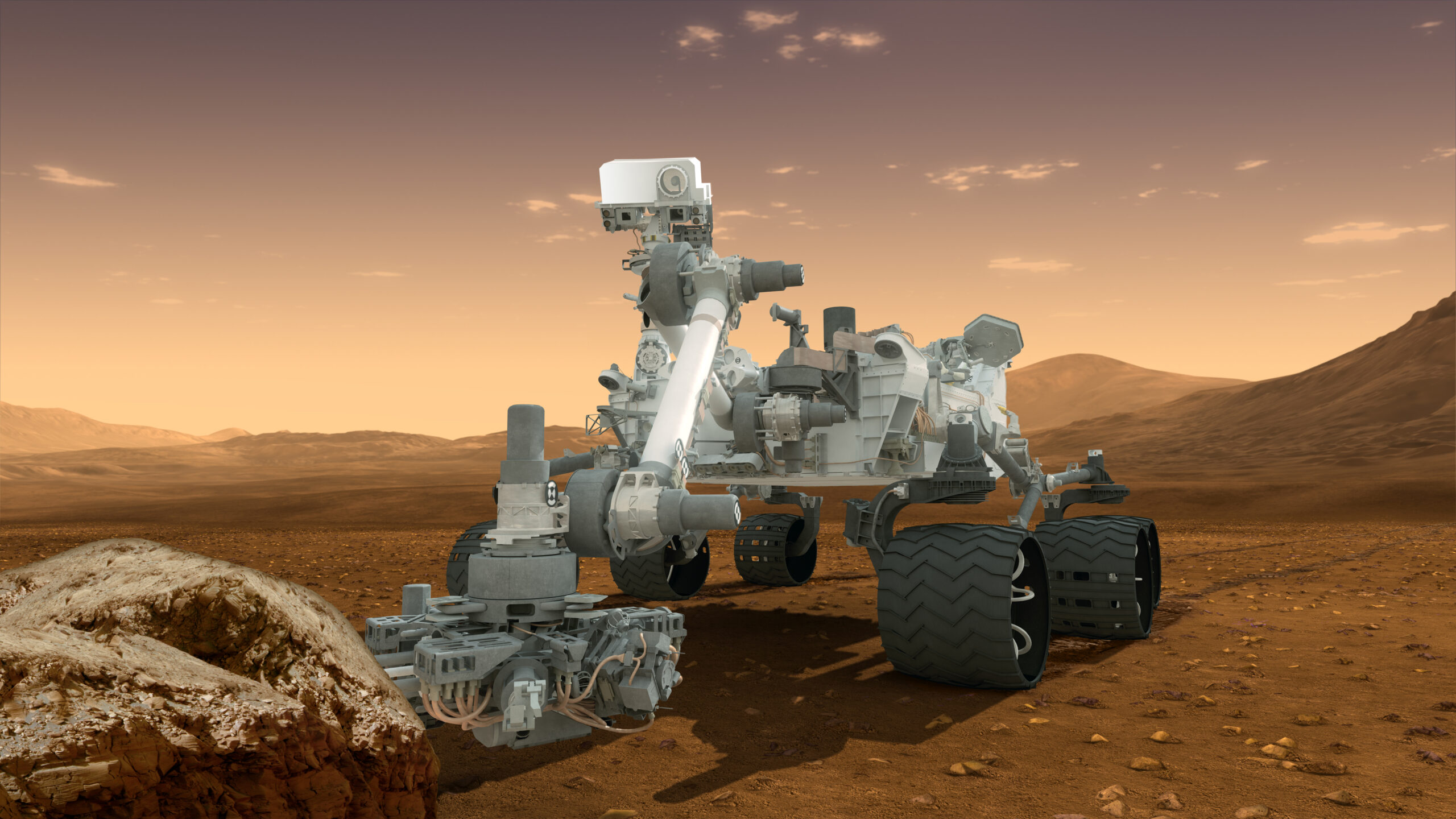
Image: Curiosity – Robot Geologist and Chemist in One!.jpg | http://www.nasa.gov/mission_pages/msl/multimedia/pia15791.html | License: Public domain | Source: Wikimedia | https://commons.wikimedia.org/wiki/File:Curiosity_-_Robot_Geologist_and_Chemist_in_One!.jpg