Automation is a system, not a machine
When people ask whether robots will replace human workers in manufacturing, the question often assumes the robot is a single, self-contained substitute for a person. That is not how modern factories work. A factory robot is only one element in a broader system that includes fixtures, tooling, cameras, motion control, conveyors, safety systems, programmable logic controllers, and the software that coordinates all of it.
That matters because the hard part of automation is rarely the arm itself. Industrial robot arms are mature technology. The real challenge is making them reliable enough to handle messy, variable, real-world production without constant human intervention. In practice, the bottlenecks are usually perception, gripping, part variability, and integration with upstream and downstream processes.
So the right answer is not a simple yes or no. Robots are absolutely replacing some human tasks in manufacturing, and in specific settings they are replacing labor roles. But they are also creating new work in maintenance, programming, systems integration, quality engineering, and operations. The deeper story is that automation replaces tasks faster than it replaces entire jobs, and it does so unevenly depending on the product mix, labor costs, and technical complexity of the production line.
Why the robot arm is the easy part
Industrial robots have been used for decades in welding, painting, palletizing, and pick-and-place operations. These applications are attractive because they involve repeatable motions in controlled environments. If a part arrives in the same place every time, and the robot performs the same sequence every time, the system can run at high throughput with relatively low error rates.
That predictability is what makes robotic automation so powerful. A robot does not tire, does not need shift changes, and can often sustain cycle times that are hard for human workers to match. But this advantage only appears after significant engineering work. The robot itself may be cheap relative to a full production line, yet the total cost of deployment includes end-of-arm tooling, safety fencing or collaborative safety systems, software, integration labor, test runs, and ongoing maintenance.
In other words, manufacturers are not just buying a robot. They are buying a production capability.
The real bottlenecks: perception, grasping, and variability
If you want to understand where automation still struggles, start with three technical problems: seeing parts correctly, grasping them reliably, and handling variation.
Perception is the robot’s ability to understand what is in front of it. In a factory with tight tolerances and consistent part presentation, this is straightforward. In a warehouse-adjacent or mixed-SKU environment, the challenge grows quickly. Parts may be nested, reflective, oily, deformed, partially obscured, or coming down a conveyor in inconsistent orientations. Machine vision systems help, but they are not magic. They require calibration, lighting control, and software tuned to the specific task.
Grasping is often even harder. A robot can only move a part if its end effector can reliably capture it. That is why grippers, suction cups, torque sensors, force feedback, and custom tooling matter so much. A robot arm without the right gripper is like a truck without the right loading dock. The mechanical interface determines what kinds of work can actually be automated.
Variability is the enemy of high-throughput automation. Human workers are extremely good at compensating for variation. They can adjust grip, infer intent, and improvise when a part is slightly out of spec. Robots are improving at this, especially with advances in machine learning, but production environments still punish uncertainty. If a line can only run when everything is perfect, the robot may be technically impressive and operationally disappointing.
Why factories still need people even after automation
Robots reduce the need for humans in repetitive, physically taxing, or hazardous tasks. They do not eliminate the need for people to design, supervise, repair, and optimize the system.
That is especially true in discrete manufacturing, where product changes are common. Automotive plants are a classic example of automation at scale, but even there, the line is full of human expertise. Engineers handle process changes, technicians troubleshoot faults, and operators intervene when parts jam, sensors drift, or upstream equipment fails. A robot may assemble a component faster than a person, but it cannot by itself manage the full factory environment.
This is one reason collaborative robots, or cobots, became a major category. Cobots are designed to work near people under specific safety constraints. They are often slower than traditional industrial robots, but they are easier to deploy in smaller facilities and can be useful for low-volume, high-mix production where a fully fenced, high-speed cell would be too rigid or too expensive. Still, cobots are not a labor-free solution. They shift workers into adjacent roles such as setup, part feeding, inspection, and exception handling.
The labor question, then, is not whether people disappear. It is which people remain and what they do.
Economics decide what gets automated first
Manufacturing automation is often portrayed as a technology story, but the pace of adoption is usually economic. A robot gets deployed when the business case is clear enough to justify the capital expense, integration effort, and risk of downtime.
High-volume production is the easiest place to automate because the robot’s fixed cost can be spread across many units. That is why welding, packaging, palletizing, and repetitive material handling saw early adoption. The higher the labor cost, the more pressure there is to automate. The more dangerous or ergonomically punishing the task, the more attractive a robot becomes. Companies also automate when quality defects are expensive, because machines can provide more consistent execution than fatigued or rapidly changing labor teams.
But small and mid-sized manufacturers often face a different calculus. Their production runs may be shorter, their SKUs more varied, and their engineering teams leaner. A robot that saves labor on paper may still be a poor fit if it requires months of integration or ongoing specialist support. In those settings, the true constraint is not whether a robot exists, but whether the plant has the infrastructure to use it productively.
This is why the integration ecosystem is so important. Robot vendors, machine vision companies, system integrators, tooling makers, industrial automation software firms, and controls suppliers all shape the economics of deployment. In many cases, the winner is not the most advanced robot, but the solution that is easiest to install, debug, and keep running.
What changes when AI enters the cell
Recent progress in AI has made robots more adaptable, especially in perception and motion planning. Vision models can help identify parts in cluttered scenes. Learning-based control can improve grasp selection. Simulation can accelerate training and testing. These advances matter because they reduce the amount of hard-coded engineering required for each task.
But there is an important distinction between laboratory capability and factory reliability. Manufacturing is a harsh environment. Dust, vibration, reflectivity, safety constraints, and 24/7 uptime expectations all make deployment harder than a demo video suggests. A model that works in one cell may fail in another because the lighting changed, the part supplier changed, or the upstream process drifted slightly.
That is why factory automation remains a hybrid discipline. The most effective systems combine AI with deterministic controls, physical fixtures, quality gates, and well-defined operating envelopes. The future is not an all-seeing general robot that can do everything. It is a stack of specialized technologies that extend what machines can do while preserving the predictability manufacturers need.
Will robots replace human workers?
The practical answer is: some workers, some tasks, and in some plants more than others. Robots are most likely to replace work that is repetitive, dangerous, ergonomically difficult, or highly standardized. They are far less likely to replace jobs that require dexterity across varied products, rapid judgment, coordination across unstructured environments, or high-touch quality decisions.
In a well-automated facility, the labor profile changes. There are fewer manual handlers and more technicians, engineers, and operators who monitor the system. The most valuable human skill shifts from direct physical execution to exception management and process improvement. This can be a good outcome for productivity and workplace safety, but it also means displacement for workers whose roles are built around routine manual tasks.
The social impact depends on how companies and policymakers manage that transition. If automation expands faster than training, wage mobility, and job transition support, the benefits will concentrate in capital owners and highly skilled technical labor. If the transition is managed well, robotics can reduce injury, increase output, and support domestic manufacturing in places where labor shortages make production difficult to sustain.
What to watch next
For readers tracking the future of manufacturing, the most important signals are not flashy robot demos. They are the operational details that determine whether a system can survive on a real production floor:
- End-effector versatility: better grippers, suction systems, and tool changers broaden the range of tasks one robot can perform.
- Machine vision robustness: systems that tolerate lighting changes, part variation, and clutter are far more deployable.
- Integration with controls: robots must fit cleanly into PLC-driven industrial environments, not sit beside them as isolated islands.
- Changeover speed: faster reprogramming and simpler fixture adjustments make automation viable for mixed-product factories.
- Maintenance and uptime: the best robot is the one that runs consistently, not the one that looks most advanced in a demo.
There is no meaningful version of manufacturing automation in which humans vanish from the floor altogether. The more realistic future is a layered production model: robots handle the repeatable physical work, software coordinates the process, and people handle the edge cases, optimization, and accountability. That is not a compromise. It is the operating model of modern manufacturing.
Sources and further reading
For editorial review and fact-checking, consider verifying against the following sources:
- International Federation of Robotics (IFR), World Robotics reports
- U.S. Bureau of Labor Statistics, occupational data on industrial and manufacturing jobs
- National Institute of Standards and Technology (NIST), robotics and manufacturing automation resources
- Association for Advancing Automation (A3), industrial and collaborative robot market materials
- OECD work on automation, labor markets, and task displacement
- World Economic Forum reports on manufacturing automation and workforce transition
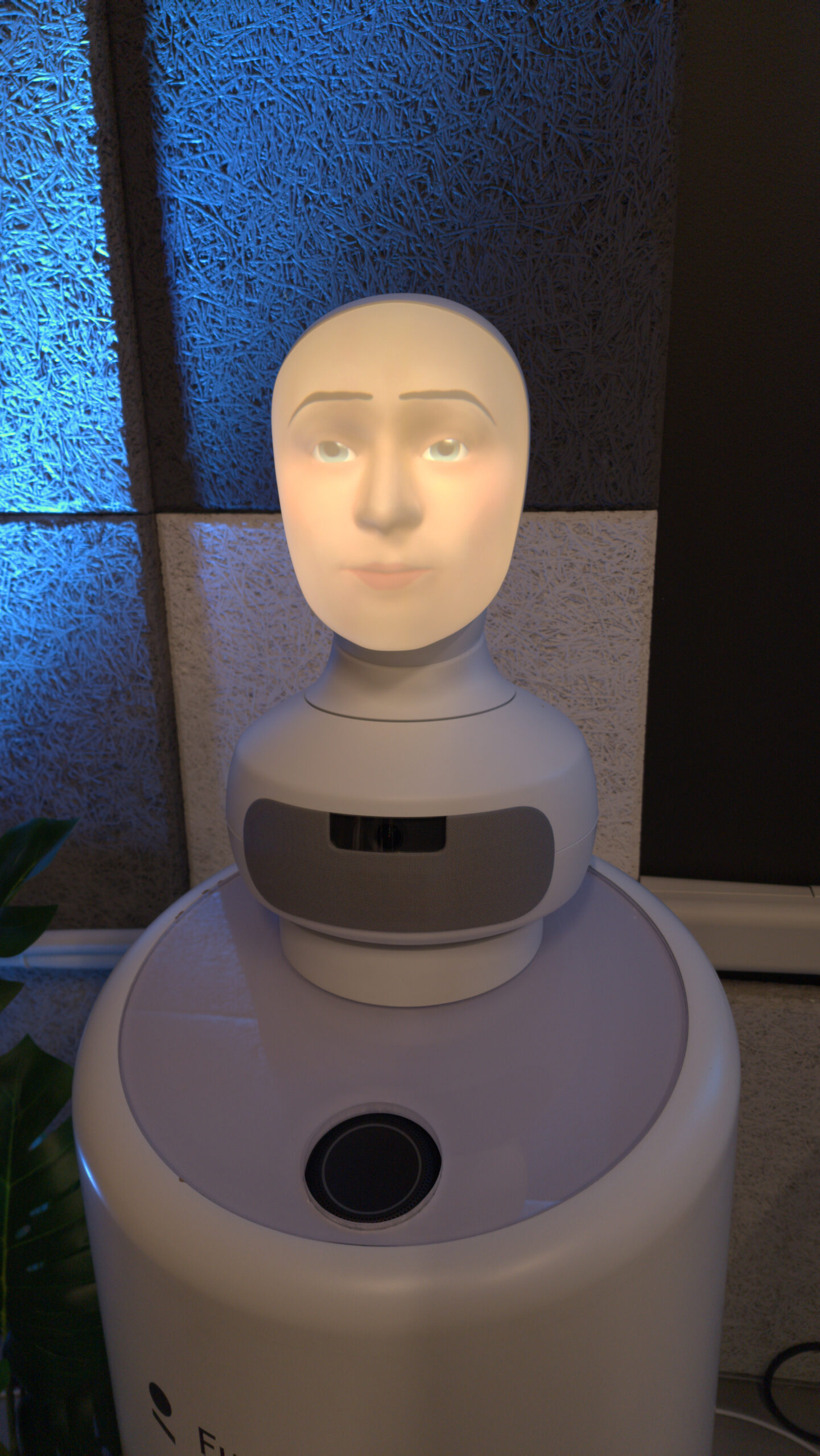
Image: A Furhat Robot Head.jpg | Own work | License: CC0 | Source: Wikimedia | https://commons.wikimedia.org/wiki/File:A_Furhat_Robot_Head.jpg