The middle class is being changed by task automation, not a single job killer
Automation is often described as a story of machines replacing people. That is too simple. The more accurate story is about tasks: software, robots, and AI systems are steadily unbundling jobs, taking over the most repeatable, measurable, and scalable parts of work while leaving behind the parts that require judgment, coordination, persuasion, or physical improvisation.
That distinction matters because the middle class has long been built on jobs that are not purely manual and not purely elite. They are the roles that sit between the extremes: office administrators, bookkeepers, production supervisors, logistics coordinators, radiology technicians, customer support staff, paralegals, procurement specialists, and technicians who keep complex systems running. These are the jobs most exposed when companies decide that a workflow can be standardized, instrumented, and handed to software or machines.
What is changing, then, is not only employment levels. It is the internal structure of middle-class work: the number of people needed, the mix of skills required, and the wage premium attached to each task. In practice, automation tends to compress routine work, elevate oversight roles, and concentrate value in the firms and workers who can design, deploy, and maintain the stack.
What the automation stack actually is
To understand the pressure on the middle class, it helps to look at the automation stack as an industrial system rather than a single technology. At the bottom are sensors, cameras, industrial controllers, GPUs, and other compute resources that let machines perceive and process data. On top of that sit software layers: workflow engines, robotics orchestration, machine vision, forecasting systems, and increasingly, AI models that can interpret text, images, and structured operations data.
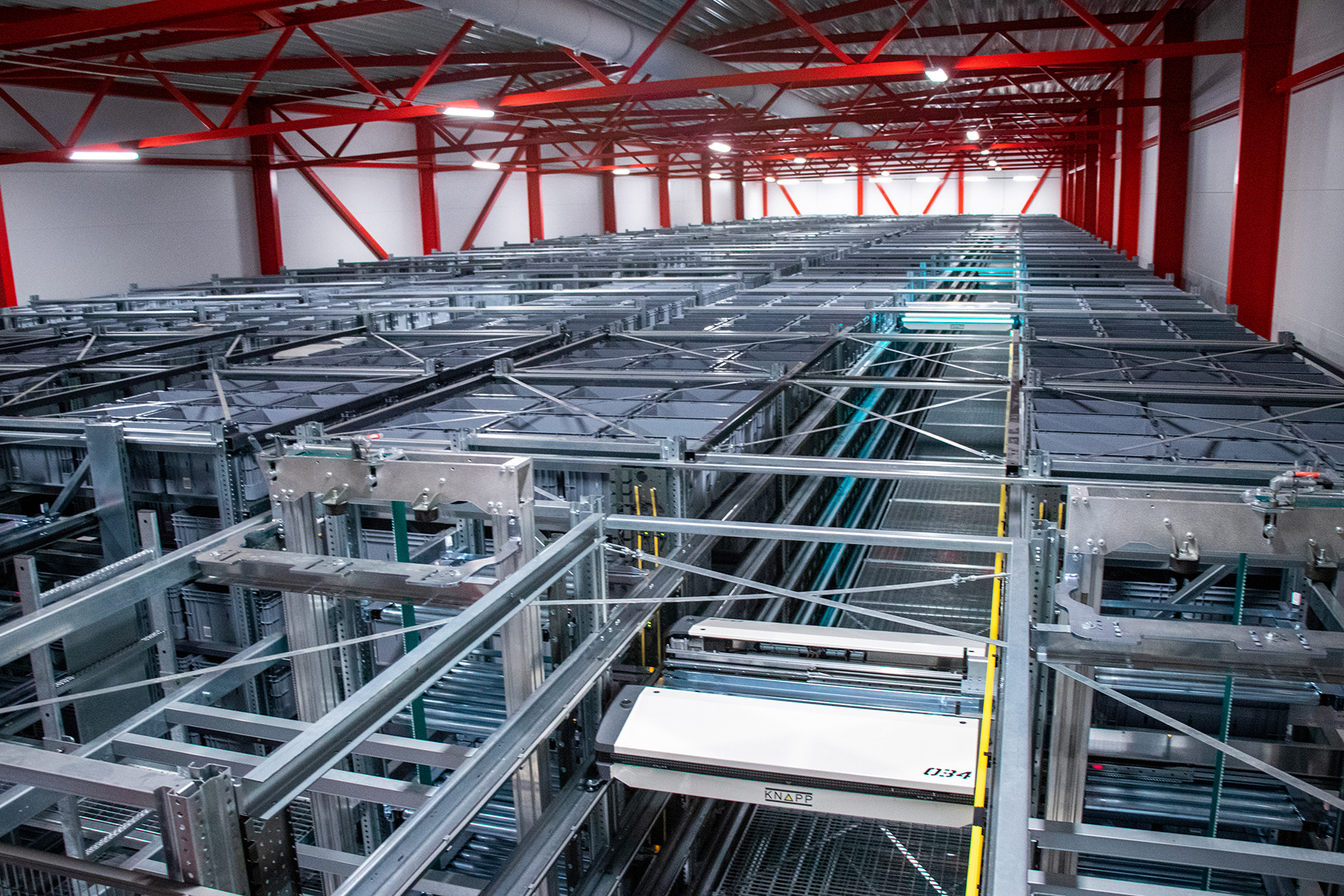
This stack matters because each layer reduces the cost of deciding, scheduling, inspecting, or moving something. In a warehouse, that might mean automated picking, route optimization, and inventory tracking. In an office, it might mean invoice matching, customer triage, contract review, or scheduling. In a hospital, it can mean prior authorization workflows, imaging analysis support, and administrative automation. The technology does not need to fully replace a role to change the economics of that role. It only needs to eliminate enough repetitive labor to alter staffing, bargaining power, and career ladders.
That is why the current wave of automation is broader than the old image of factory robots. Industrial robotics still matters, but so do cloud platforms, enterprise software, data centers, and the GPU supply chain that makes modern AI systems viable at scale. The bottleneck is no longer only mechanical dexterity. It is compute, integration, and the quality of the workflow being automated.
Why middle-class work is especially exposed
Middle-class jobs have historically depended on a stable bargain: workers supplied reliable execution, and employers rewarded that reliability with wages, benefits, and upward mobility. Automation disrupts that bargain in two ways.
First, it changes which tasks are valuable. If a company can automate scheduling, documentation, QA checks, or routine customer interactions, then the remaining human work becomes narrower and more supervisory. That can be good for the people who move into high-leverage roles, but it often reduces the number of positions available overall.
Second, automation changes who can do the work. Software and machines are scalable assets. Once deployed, they can be replicated across sites, shifts, and geographies with less variation than a human labor force. That creates a winner-take-more dynamic for firms that own the systems and can spread the fixed cost across a large base of activity. Smaller firms may adopt automation to survive, but they often do so under tighter margins and with less room to absorb transition costs.
The result is a labor market that increasingly rewards a few categories:
- Designers and integrators who build automation systems.
- Operators and supervisors who monitor exceptions rather than perform every step manually.
- Specialists with tacit knowledge who handle edge cases, quality control, and customer relationships.
- Highly elastic workers who can move between tools and processes as systems change.
That is not the same as broad middle-class prosperity. It is a reshaping of the ladder.
Industrial automation did not end the middle class, but it changed its geography
The U.S. and other advanced economies have been through automation waves before. Manufacturing automation improved productivity, raised output, and in some sectors supported higher wages for the workers who remained. But it also reduced the number of stable, well-paid production jobs available to non-college workers. The geography of opportunity shifted toward places with advanced manufacturing, logistics hubs, corporate headquarters, and technical services.
That pattern matters today because modern automation is no longer confined to factories. Warehouses, call centers, accounting departments, legal operations, and healthcare administration are all targets. The technologies are different, but the labor logic is similar: standardize the process, measure it, and automate the repeatable portion first.
For communities that relied on a large base of routine middle-class employment, the effects can be cumulative. As firms streamline operations, local spending power can weaken, small businesses lose customers, and the tax base becomes more volatile. The headline job losses do not capture the full story. Automation changes the economic ecosystem around work, not just the payroll.
AI is accelerating the administrative squeeze
Generative AI has added a new layer of pressure because it targets tasks that were once considered semi-skilled human territory: drafting, summarizing, classifying, searching, and responding. These are not trivial functions. They sit at the core of many middle-class white-collar jobs.
But AI systems have clear constraints. They are good at pattern completion and language manipulation, not guaranteed truth. They can speed up document review, but they still require human validation. They can draft a response, but they cannot be trusted blindly with regulated decisions, liability-heavy communications, or high-stakes judgment. That means the near-term effect is often not full replacement, but labor compression: fewer people doing more with better tools.
This has a subtle but important consequence. Entry-level white-collar work has traditionally been a training ground. Junior staff learn by doing the repetitive work that senior staff no longer want. If automation removes too much of that work too quickly, the pipeline of experience can narrow. In other words, AI may not just take tasks; it may disrupt how people move into the middle class in the first place.
The real constraint is integration, not demos
Public discussion of automation often focuses on impressive demos: a robot arm that sorts objects, an AI agent that writes code, a model that answers questions fluently. But the constraint inside real organizations is integration. A useful automation system must connect to legacy software, comply with security and audit requirements, fit existing workflows, and handle the messiness of exceptions.
This is why adoption often moves slower than the headline technology suggests. Companies can buy the software or the robot, but they still need data pipelines, change management, retraining, maintenance contracts, and someone responsible when the system fails. In a warehouse, that can mean uptime, calibration, and safety compliance. In an office, it can mean governance, access control, documentation, and legal review. In a hospital or bank, the constraints are even sharper because error tolerance is low and regulators are watching.
That bottleneck has a direct labor-market implication: automation does not erase all jobs uniformly. It tends to shift labor demand toward the people who can operate within complex systems. Technicians, systems engineers, analysts, and process managers may gain importance even as routine clerical work declines.
Wages, bargaining power, and the middle-class squeeze
The middle class is not only defined by income. It is defined by stability, predictability, and a credible path from entry-level work to a better life. Automation can weaken all three.
When employers can substitute software for routine labor, they often gain leverage in wage negotiations. When a job becomes easier to monitor and benchmark, workers may face more surveillance and less discretion. When a role is split into a small number of high-skill positions and a larger number of contingent support roles, the middle of the distribution thins out.
That does not mean every outcome is negative. Automation can eliminate drudgery, reduce injury, and free workers for better work. In logistics, for example, machine assistance can lower physical strain. In healthcare, automation can reduce administrative burden. In manufacturing, robots can handle dangerous or repetitive tasks. But those gains are not distributed automatically. They depend on who captures the productivity improvement: workers, consumers, shareholders, or a narrow set of technical specialists.
That distribution question is the core middle-class issue. Productivity growth alone does not guarantee broad prosperity. The institutional settings around labor markets, education, tax policy, and corporate investment determine whether automation becomes a wage engine or a wage divider.
What policy and business leaders should watch next
The next phase of automation will likely be shaped by a few practical constraints rather than abstract fears about artificial intelligence. Energy availability, data center buildout, GPU supply, industrial integration, cybersecurity, and the cost of retraining all affect how quickly automation scales. So do regulation and liability. A company can deploy a model in a demo; it is harder to deploy one in a way that survives audits, lawsuits, and operational failures.
For policymakers, the key issue is not to freeze automation, which would be neither realistic nor desirable. The challenge is to keep the transition legible and upwardly mobile. That means supporting technical education, apprenticeships, portable benefits, and retraining pathways that lead to real jobs, not just credentials. It also means recognizing that automation can hollow out the middle unless institutions help workers move into the new supervisory, technical, and maintenance roles the systems create.
For employers, the lesson is equally practical: automation is most valuable when it is treated as a redesign of work, not a headcount cut disguised as innovation. The companies that do this well usually invest in process mapping, worker training, exception handling, and reliability. The companies that do it badly often discover that the cheapest system on paper becomes the most expensive one in practice.
The middle class is being rebuilt around systems competence
Automation is changing the middle class because the modern economy increasingly rewards people who can work with systems, not just within them. That includes the engineers who design the stack, the technicians who keep it running, and the managers who understand where human judgment still matters. It also includes workers who can adapt as tools change faster than job titles do.
The older middle class was built on routine, repetition, and long internal career ladders. The emerging one is more contingent, more technical, and more dependent on continual learning. Whether that becomes a broader social bargain or a narrower elite advantage will depend on how quickly institutions adapt to the realities of automated production, automated administration, and the compute infrastructure behind both.
What is clear already is that automation is not just trimming the edges of work. It is redrawing the center.
Sources and further reading
- U.S. Bureau of Labor Statistics, Occupational Employment and Wage Statistics
- OECD reports on automation, tasks, and labor-market polarization
- World Economic Forum, Future of Jobs reports
- International Federation of Robotics, World Robotics reports
- U.S. Congressional Research Service materials on AI, automation, and labor implications
- Brookings Institution research on task automation and labor-market exposure
Image: Automation T2.jpg | Own work | License: CC BY-SA 4.0 | Source: Wikimedia | https://commons.wikimedia.org/wiki/File:Automation_T2.jpg