Automation Is No Longer the Question. Deployment Is.
The idea of a fully automated factory has moved from futurist concept to practical business discussion. In many plants today, robots already weld, pick, pack, inspect, move materials, and sort inventory. Vision systems catch defects. Software schedules production. Sensors monitor vibration, temperature, and throughput. In other words, the modern factory is already automated in layers.
The real question is not whether machines can do the work. It is whether a manufacturer can automate enough of the workflow to make the plant more profitable, more resilient, and easier to run than a human-intensive alternative. That distinction matters. A fully automated factory is not one giant robot; it is a tightly coordinated stack of hardware, software, power, networking, safety systems, and process design.
That is why the future of automation will be decided less by dramatic robotics demos and more by operational economics. The winners will be factories where automation is deployed in the right sequence, on the right tasks, with the right tolerance for downtime and change.
What “Fully Automated” Really Means on the Floor
In industrial terms, “fully automated” does not mean zero humans ever enter the building. It usually means the core production flow can run with minimal manual intervention across long shifts, with people handling exceptions, maintenance, engineering, quality oversight, and supply coordination. A factory can be highly automated while still depending on technicians, process engineers, and remote operators.
The stack typically looks like this:
- Material intake and logistics: pallets, bins, reels, and parts are received, tracked, and routed.
- Production handling: robots, conveyors, AGVs, and AMRs move components between stations.
- Primary processing: CNC machines, pick-and-place systems, molding lines, welding cells, or assembly robots perform the work.
- Inspection and quality control: machine vision, metrology tools, and sensor data verify output.
- Scheduling and orchestration: manufacturing execution systems coordinate jobs, changeovers, and maintenance windows.
- Power and facilities: compressed air, cooling, electrical distribution, and edge compute keep the line stable.
The factory becomes “fully automated” only when these systems are integrated enough that a product can move from raw input to finished output with little manual handling. The practical bottleneck is rarely the robot arm itself. It is usually the interfaces between systems: part presentation, labeling, calibration, inspection, and exception handling.
The Hidden Economics: Labor Is Only One Line Item
Companies often talk about automation as a response to labor shortages, wage inflation, or the difficulty of staffing repetitive shifts. Those are real pressures, but they are only part of the financial picture. The bigger calculation is total system cost.
A plant with heavy automation may reduce direct labor, but it also increases capital expenditure, software integration costs, maintenance requirements, and the need for specialized engineering talent. A robot does not call in sick, but it does need calibration, spare parts, uptime monitoring, and process tuning. If the supply chain changes shape too often, the factory may spend more time reprogramming than producing.
This is why automation economics are highly sensitive to product consistency. If a plant makes millions of near-identical items, automation can pay back quickly. If the product mix changes every week, the business case gets harder. The cost of retooling flexible robotic systems can erase the labor savings if the line is constantly being reconfigured.
That makes full automation most attractive in industries where three conditions overlap:
- High volume
- Repeatable workflows
- Strict quality or traceability requirements
Semiconductors, battery manufacturing, electronics assembly, food packaging, pharmaceuticals, logistics, and certain automotive processes all fit that profile to varying degrees.
Where the Tech Fits in the Stack
It is easy to think of robotics as the visible layer of automation, but the more important action is happening underneath. A robot needs data, instructions, and reliable timing. That means every factory aspiring to full automation depends on a much wider technology stack than the arms and grippers on the floor.
Compute: Modern factories increasingly use edge processors and local servers to run machine vision, control loops, anomaly detection, and predictive maintenance models. This is not necessarily cloud-first. Real-time decisions often need to happen close to the machine, where latency is predictable and network disruptions do not stop production.
Sensors and vision: Cameras, lidar, force sensors, encoders, thermal systems, and acoustic monitoring provide the raw signal layer. If the line cannot see the part, the robot cannot handle it reliably. In many cases, machine vision is the difference between a toy demo and a production-ready deployment.
Industrial networking: Factories need deterministic communication. Consumer-grade networking is not enough. Industrial Ethernet, time-sensitive networking, and tightly managed wireless systems help synchronize motion, inspection, and safety systems.
Software orchestration: The manufacturing execution system is often the brain of the operation, coordinating inventory, sequencing, traceability, and machine availability. Without software discipline, automation becomes a collection of isolated islands.
Power and thermal infrastructure: Robotic factories are not just software projects. They are energy systems. High-density automation can increase electrical load, cooling demand, and dependency on resilient backup power. This is where the broader infrastructure conversation comes in: a highly automated factory is only as stable as its utility feed, thermal design, and maintenance strategy.
Why Semiconductors and Data Centers Matter Here
The future of automation is being shaped by two industries that are not always mentioned in the same breath as factory floors: semiconductors and data centers. Both are essential enablers.
Semiconductors provide the compute density that makes machine vision, control systems, and on-device inference possible at industrial scale. Better chips mean better edge AI, more local processing, lower latency, and improved reliability. As factories become more data-driven, they need the kind of specialized processors that can operate in harsh environments while supporting real-time analytics.
Data center thinking also matters because manufacturing is becoming a software-and-telemetry business. Plants generate massive streams of operational data, and the organizations that extract value from that data tend to outperform those that treat automation as a one-time equipment purchase. The line between factory control systems and enterprise software is getting thinner.
In practice, that means the future automated factory will be designed with the same seriousness as a modern compute facility: redundancy, observability, energy planning, and disciplined maintenance. The difference is that instead of keeping servers online, the goal is keeping production moving.
The Hard Problems: Changeovers, Exceptions, and Maintenance
The most difficult parts of factory automation are not the repetitive tasks robots were built for. They are the messy edge cases that humans usually absorb without thinking. A misaligned part, a damaged pallet, a different supplier tolerance, an unexpected packaging variation, or a tool drift can slow or stop an otherwise elegant system.
That is why the smartest automation programs focus on exception rates, not just average throughput. A line that runs fast 95 percent of the time but fails on the last 5 percent may still require constant human intervention. A truly automated factory needs graceful recovery: the ability to detect anomalies, isolate faults, reroute work, and restart without long downtime.
Maintenance is another decisive issue. Predictive maintenance promises to detect failures before they happen, but it only works when sensor data is good and the models are calibrated to the actual machine environment. Poorly instrumented systems can generate false confidence. The best factories treat maintenance as part of the production design, not an afterthought.
What Will Scale First
Full automation will not arrive uniformly across industry. It will spread first where the economics are clearest and the workflows are most structured. Expect acceleration in:
- Battery and electronics manufacturing: high precision, high repeatability, strong traceability demands
- Warehousing and fulfillment: material movement is highly automatable and increasingly software-defined
- Food and beverage packaging: standardized handling with a strong need for hygiene and consistency
- Semiconductor fabs: already heavily automated, with further gains from better orchestration and inspection
- Automotive subsystems: especially weld, paint, and parts handling operations
Less structured environments will lag. Factories that build highly customized products, face variable part geometry, or rely on frequent human judgment will automate more slowly. That does not mean they will not benefit from robotics; it means they will adopt partial automation first, then layer in more intelligence as the process stabilizes.
The Real Future: Not Lights-Out, but Less Fragile
The most realistic future for fully automated factories is not a dark building run entirely by software. It is a plant that is dramatically less fragile than today’s labor-dependent operations. It can absorb shortages, handle demand swings, maintain quality, and recover from disruptions with fewer people on site.
That is a meaningful shift. It changes factory design, workforce composition, capital planning, and even geography. A more automated plant can be located where energy, land, logistics, and connectivity make the most sense, not just where labor is cheapest. It also changes what companies value: uptime, interoperability, observability, and resilience become as important as raw throughput.
For manufacturers, the next decade will not be defined by whether robots replace factories. It will be defined by whether factories can be engineered as integrated systems. The winners will not be the ones with the most robots on the floor. They will be the ones that understand automation as an operating model, not a purchase order.
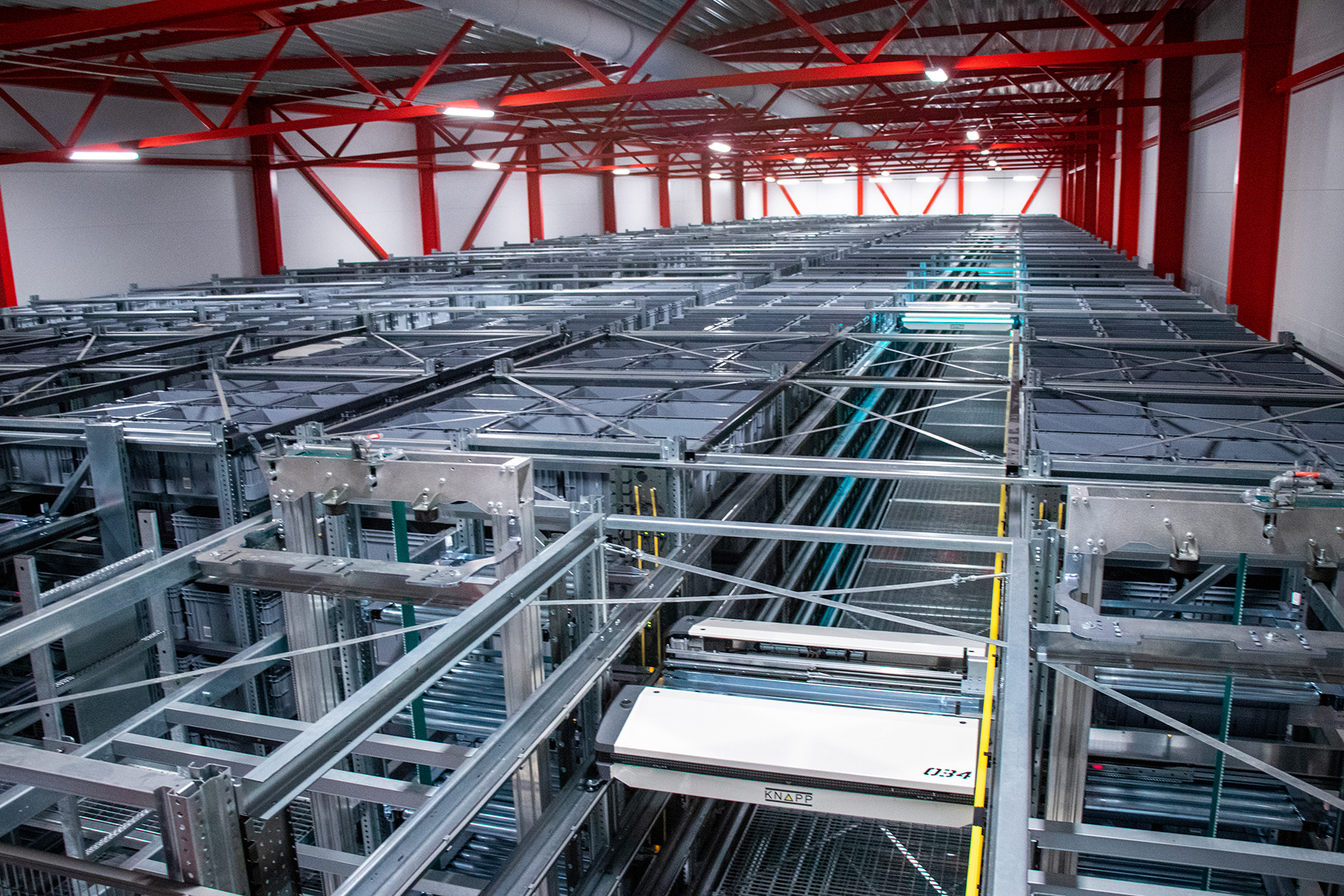
Image: Automation T2.jpg | Own work | License: CC BY-SA 4.0 | Source: Wikimedia | https://commons.wikimedia.org/wiki/File:Automation_T2.jpg