Warehouse robotics is often described as a labor story. That framing is too simple. The real shift is architectural: warehouses are being redesigned around the constraints of software orchestration, material flow, and machine uptime. Robots matter not because they remove humans from the building, but because they let operators re-engineer the building itself.
In practice, that means the warehouse is becoming a tightly coupled system of inventory software, mobile robots, fixed automation, charging infrastructure, sensors, and human workers assigned to the tasks machines still struggle to do well. The winners are not the companies with the most robots on the floor. They are the ones that can integrate those robots into a dependable operating model.
The old warehouse was built around labor availability
Traditional warehouses were designed around people walking, picking, packing, sorting, and moving goods through a facility. The layout often reflected the economics of labor: a cheap enough workforce, enough shift coverage, and a management model that could absorb inefficiencies with headcount. As e-commerce, shorter delivery windows, and labor shortages tightened the system, that model became harder to sustain.
Warehouses are exceptionally sensitive to friction. Every extra step a worker takes, every minute a cart waits for replenishment, every mis-shelved item that breaks inventory accuracy adds cost downstream. Robotics changes the equation by attacking these hidden delays. The goal is not simply fewer people. It is more predictable throughput per square foot, per hour, and per dollar of labor.
That shift has made automation more attractive for operations that used to avoid it. In older models, robotics was often justified only in very high-volume environments. Now operators are looking at mixed systems where robots handle repetitive transport, while people focus on exception handling, quality control, and tasks that require dexterity or judgment.
The core stack: WMS, robots, sensors, and orchestration
Modern warehouse robotics lives or dies on software integration. A robot fleet cannot be judged in isolation; it needs to be coordinated with the warehouse management system (WMS), warehouse execution system (WES), and the physical realities of the facility. The WMS knows what inventory exists and where it should be. The WES decides what should move next. The robots execute those moves, often in coordination with conveyors, sorters, vertical lift modules, or automated storage and retrieval systems (AS/RS).
Autonomous mobile robots (AMRs) are the most visible part of the stack. Unlike fixed conveyor lines, AMRs can navigate dynamic environments and adjust routes as aisles clog, demand changes, or work cells shift. Some carry totes, some tow carts, and some bring shelves to pick stations. They rely on a mix of lidar, cameras, wheel odometry, and software mapping to move safely and efficiently. The machine vision and navigation software matter as much as the chassis.
AS/RS systems take a different approach. Instead of moving robots through a warehouse, they move goods through a dense storage architecture using shuttles, cranes, or lifts. These systems are especially useful where space is expensive and inventory density matters. They can dramatically increase storage capacity, but they also impose a different kind of dependency: if the software, mechanical lifts, or retrieval logic fails, a large part of the facility can stall.
The key point is that robotics is not one technology. It is a stack. The warehouse now resembles a data center in one important respect: hardware is only useful when the control plane is reliable. If inventory records are wrong, task dispatch is delayed, or fleet management is poorly tuned, automation simply accelerates bad decisions.
Where robotics adds value fastest
Not every warehouse task is equally automatable. The fastest gains usually come from repetitive, high-frequency movements with clear constraints. Transporting goods between inbound receiving, storage, picking, packing, and shipping is a prime example. So is goods-to-person picking, where robots bring inventory to a worker instead of forcing a worker to travel across the building.
These workflows are attractive because they are measurable. Operators can quantify travel time, pick rates, dock-to-stock cycle time, and order accuracy. Robotics delivers value when it compresses those metrics in a repeatable way.
Sorting is another area where automation has matured. High-throughput sortation systems can route parcels, totes, or cartons with less variability than human-driven handling. That matters in e-commerce, grocery, and parcel networks where the volume of small, fast-moving orders can overwhelm manual labor during peak periods.
But the biggest strategic advantage often comes from labor reallocation, not elimination. If robots handle travel and transport, human workers can spend more of their time on exception processing, damaged goods, mixed-SKU orders, cycle counting, and supervision. That matters because warehouse productivity is often limited less by raw worker effort than by how much of that effort is spent walking, waiting, or searching.
The hard part is not the robot. It is the facility redesign
Warehouse robotics projects fail for familiar reasons: poorly mapped workflows, legacy software that cannot talk to the new system, facilities that were never designed for traffic density, and operators who underestimate change management. A robot installed into a bad process does not fix the process. It exposes it.
Floor conditions, aisle widths, rack geometry, lighting, charging access, and network coverage all become part of the engineering problem. AMRs need predictable paths and stable wireless connectivity. AS/RS systems need structural fit, power provisioning, and maintenance access. Vision systems need consistent illumination and clean line-of-sight. Even something as basic as pallet quality can affect automation reliability if loads are unstable or dimensions vary too much.
Integration is also operational, not just technical. A facility may need to retrain workers, revise shift patterns, update safety procedures, and redesign how exceptions are escalated. Robotics introduces a new class of dependency: uptime management. If a fleet is down, the warehouse does not simply work more slowly; it can lose its internal rhythm. That is why service contracts, spare parts strategy, software updates, and vendor support become part of the business case.
Economics: robotics pays back through consistency
The investment case for warehouse robotics is usually framed in labor savings, but the better way to think about it is throughput stability. A robot system that performs consistently across shifts and demand cycles can reduce the hidden costs of overtime, turnover, rework, and missed shipping windows. For operators handling volatile order volumes, that predictability may matter more than a headline reduction in headcount.
Still, robotics is capital intensive. Hardware purchase, installation, software licensing, integration, maintenance, and facility modification all add to the total cost of ownership. That means deployment strategy matters. Some operators choose phased rollouts, starting with a narrow use case such as tote transport or pick assistance before expanding to broader automation. Others lease or use robotics-as-a-service arrangements to reduce upfront capital burden, though the long-term economics depend on utilization and contract terms.
Scale also changes the math. A system that is marginal in a small warehouse may become compelling in a high-volume distribution center with dense inventory turnover. Conversely, a flexible human-centric operation may still win where product variety is extreme, order profiles are unpredictable, or building constraints make automation awkward.
The practical takeaway is that robotics should be evaluated as infrastructure, not gadgetry. The question is not whether a robot can perform a task in a demo. The question is whether the whole facility can sustain that task at production volume without creating new bottlenecks elsewhere.
Why the labor story is still central, but incomplete
Robotics is changing job content as much as job count. Warehouses still rely on people, but the work is shifting toward oversight, intervention, maintenance, systems operation, and quality control. That creates demand for technicians, supervisors, software-literate operators, and maintenance staff who can keep automated systems running. It also creates pressure on companies to invest in training, because a robot-rich facility fails fast if no one understands how to recover from faults.
This is where the broader social impact becomes visible. In regions where warehouses have become major employers, automation affects the local labor market, wage structure, and skills demand. In some cases, robotics can make facilities more viable in markets where labor is scarce or turnover is high. In others, it can reduce the number of entry-level roles that once served as a gateway into logistics work. Both effects can be true at once.
That tension is part of why warehouse automation should be discussed with more precision than slogans about replacement or efficiency. The actual outcome depends on facility design, local labor conditions, order mix, and management discipline. Robotics does not erase the human warehouse. It reorganizes it.
What to watch next
The next stage of warehouse robotics is likely to be less about standalone machines and more about coordination across the entire fulfillment stack. Expect tighter integration between inventory systems and robot fleets, better task allocation software, more adaptive vision systems, and facilities designed from the start around mixed human-machine workflows.
Three trends are worth watching. First, more modular deployments: operators want automation that can scale without a full building overhaul. Second, more software-defined control: the value shifts toward orchestration layers that can manage heterogeneous fleets. Third, more pressure on energy and network infrastructure: charging, cooling, wireless coverage, and power distribution become part of the automation budget.
That last point matters more than it first appears. As warehouses become denser and more automated, the facility itself starts to look like critical infrastructure. Power quality, battery management, maintenance intervals, and system observability are no longer back-office details. They are core operational constraints.
In that sense, warehouse robotics is not just transforming logistics. It is changing what a warehouse is. The building is becoming a software-governed machine, and the real competition is to make that machine reliable enough to run at scale.
Sources and further reading
- Material Handling Institute (MHI) industry reports on warehouse automation and supply chain technology
- International Federation of Robotics (IFR) publications on service robots and industrial automation trends
- Amazon Robotics public materials and engineering overviews
- Gartner research on warehouse management systems and warehouse execution systems
- Vendors’ technical documentation for AMRs, AS/RS, and warehouse control software, subject to editorial verification
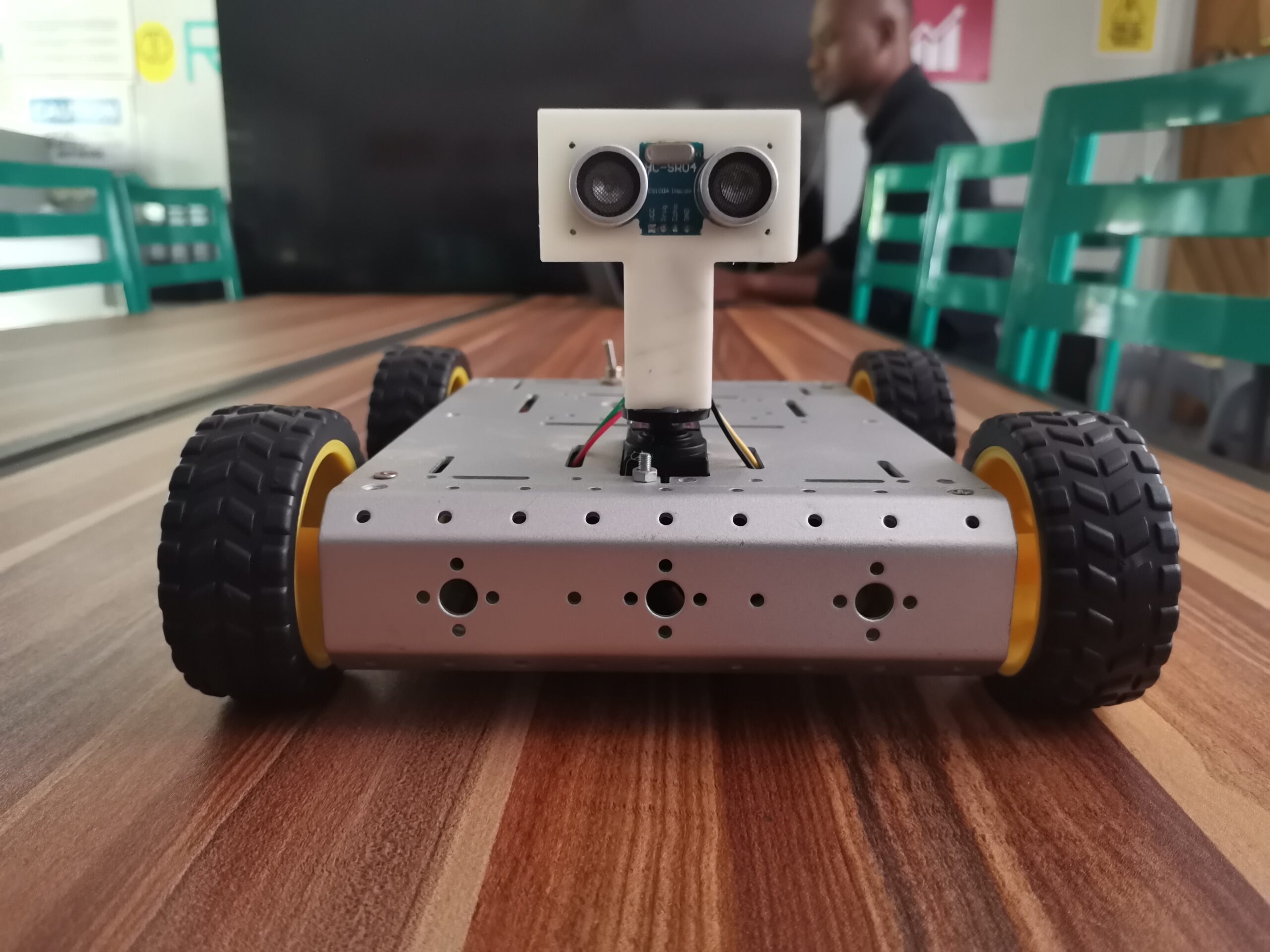
Image: Obstacle avoidance robot car.jpg | Own work | License: CC0 | Source: Wikimedia | https://commons.wikimedia.org/wiki/File:Obstacle_avoidance_robot_car.jpg